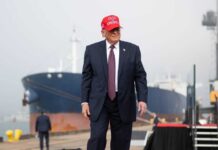
President Trump has launched an aggressive “blockade” targeting Venezuela’s shadow tanker fleet, cutting off the socialist regime’s primary revenue lifeline.
Story Highlights
- Trump orders blockade of sanctioned oil tankers moving Venezuelan crude, starving Maduro’s regime of critical revenue
- Venezuela holds world’s largest proven oil reserves but relies on illegal shadow fleet to evade U.S. sanctions
- Sanctioned trader profited $500 million from Chevron-produced crude since July, exposing corruption loopholes
- Administration seeks U.S. oil company return to Venezuela but faces industry reluctance due to political risks
Trump Implements Maximum Pressure Strategy
Trump announced the blockade targeting over thirty sanctioned vessels operating in Venezuelan waters, marking a decisive shift from the previous administration’s weak enforcement policies. The immediate seizure of the tanker Skipper demonstrates this administration’s commitment to dismantling the illegal networks that have enriched socialist dictator Nicolás Maduro while impoverishing the Venezuelan people. Venezuelan crude exports have already dropped sharply as sanctions-evading operators scramble to avoid asset seizures and criminal prosecution.
Watch: https://youtu.be/s63YM8hf0R4?si=sJ6VzJTw2GQRTi8O
Sanctioned Networks Exploit American Energy Partnerships
Panamanian trader Ramón Carretero, sanctioned for his ties to the Maduro family, has profited approximately $500 million since July through a trading company that sold all crude from Chevron’s Petroboscán field operations. This arrangement highlights how corrupt actors have manipulated legitimate American business operations to enrich themselves while circumventing sanctions designed to pressure the socialist regime. Chevron produces roughly 240,000 barrels daily, representing over twenty percent of Venezuela’s total output and funneling $2.4 billion into the economy annually.
The revelation exposes fundamental flaws in previous oversight mechanisms that allowed sanctioned individuals to capture trading profits from American-produced Venezuelan crude. Trump’s enforcement strategy targets these corruption networks while maintaining strategic American energy interests in Venezuela’s vast petroleum reserves, ensuring patriots rather than socialist cronies control future development opportunities.
World’s biggest oil reserve holder faces US chokehold as Trump targets Venezuela’s shadow tanker fleet https://t.co/KndFSrWKcA #usa #feedly
— Music World 360 (@MusicWorld360x) December 18, 2025
Strategic Positioning for Post-Maduro Recovery
Trump administration officials are courting major American oil companies to prepare for Venezuela’s eventual return to legitimate governance, though industry executives remain cautious about sanctions risks and political instability. Venezuela’s proven reserves exceed even Saudi Arabia’s holdings, representing a strategic national security asset that could reduce American dependence on hostile foreign suppliers. The administration’s dual-track approach combines maximum pressure on Maduro’s revenue streams with preparation for American companies to reclaim assets stolen through socialist nationalization.
This strategic framework positions America to benefit from Venezuela’s eventual liberation from socialist tyranny while denying the current regime resources needed to maintain its oppressive apparatus. The blockade demonstrates how decisive leadership can protect American interests while supporting the Venezuelan people’s struggle against authoritarian rule.
Sources:
Trump revised Chevron’s Venezuela deal. Maduro’s oil trader profited
What Trump’s Venezuela oil blockade means for Maduro and the world
Trump asks oil companies to return to Venezuela — and gets no takers