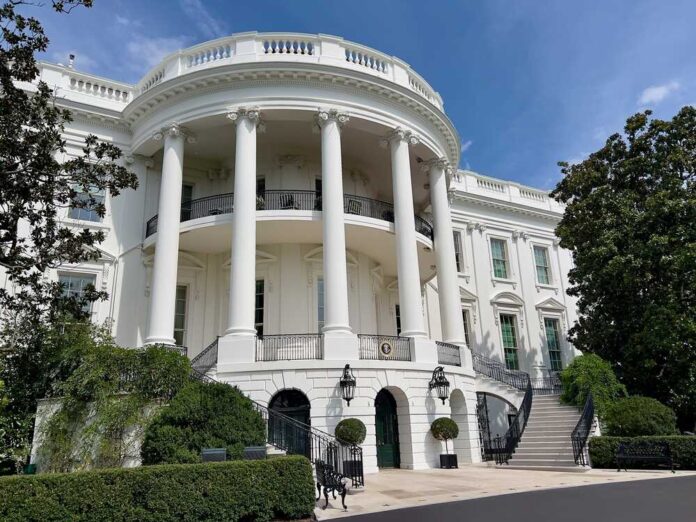
A new display at the White House mocks former President Biden, raising questions about presidential decorum under Trump’s administration.
Story Highlights
- Trump unveiled a “Presidential Walk of Fame” featuring an autopen image instead of Biden’s portrait.
- The autopen symbolizes alleged absentee leadership during Biden’s presidency.
- Critics claim this move erodes traditional bipartisan respect.
- Trump’s actions reflect the use of official settings for partisan purposes.
Trump’s Display Sparks Controversy
On September 24, 2025, President Trump unveiled a new “Presidential Walk of Fame” at the White House. Instead of featuring a portrait of his predecessor, Joe Biden, Trump displayed an image of an autopen. This device, used to replicate signatures, was meant to mock Biden’s presidency as impersonal or managed by aides. The display has sparked intense debate, with some viewing it as a satirical jab at Biden, while others see it as a breach of decorum traditionally shown to former presidents.
Trump’s decision to use the White House for this political statement has drawn mixed reactions. Supporters see it as clever political theater, highlighting their frustrations with what they perceive as Biden’s absentee leadership. However, critics argue that this move breaks with the tradition of bipartisan respect for former presidents and sets a precedent for using official spaces for partisan displays. This incident has intensified debates over the role of symbolism in U.S. politics.
Watch: Trump Mocks Biden With Autopen Portrait At White House Presidential Walk of Fame |Firstpost America
Historical Context and Symbolism
The autopen has been used by presidents for decades, including both Democratic and Republican administrations. Trump’s accusation that Biden’s administration overly relied on the autopen suggests a narrative of diminished capacity. However, there is no evidence indicating Biden used the autopen more than his predecessors. This move by Trump is part of a broader pattern of using political symbolism to question the legitimacy and engagement of his opponents.
Previous presidents have occasionally omitted predecessors in White House displays, but rarely with such overt mockery. Trump’s administration has a history of utilizing official settings for partisan messaging, as seen in the 2020 Republican National Convention events at the White House. This latest incident continues that trend, raising questions about the impact of such practices on political norms and public trust.
Reactions and Implications
The unveiling of the autopen portrait has led to polarized reactions across media and social networks. Critics have labeled the move as “pathetic” and “childish,” accusing Trump of damaging the dignity of the presidency. Meanwhile, Biden’s camp has reiterated that his decisions were made personally, and the autopen was merely a tool for convenience.
The display remains unchanged, and the story continues to dominate political news cycles. It exemplifies the divisive nature of current U.S. politics, highlighting the erosion of traditional norms and the increasing use of spectacle in political communication. The long-term implications could include further partisan divisions and a shift in public perceptions of presidential decorum.
Sources: