Trump’s “Cuba will be next” remark is colliding with a war-weary MAGA base that backed him to end America’s cycle of open-ended interventions.
Story Snapshot
- President Trump has reportedly signaled Cuba as the next target of U.S. pressure after Iran, following major U.S. actions in Venezuela and Iran.
- A January 29, 2026 executive order declared a national emergency over alleged Cuban threats and triggered an oil blockade that worsened Cuba’s fuel and power crisis.
- Cuba’s March 2026 grid collapse and long blackouts have fueled protests, repression, and continued mass emigration.
- Experts cited in the research warn that removing a single leader may not change a system built around a durable security apparatus.
Trump’s “Next” Comment Lands During Iran War Fatigue
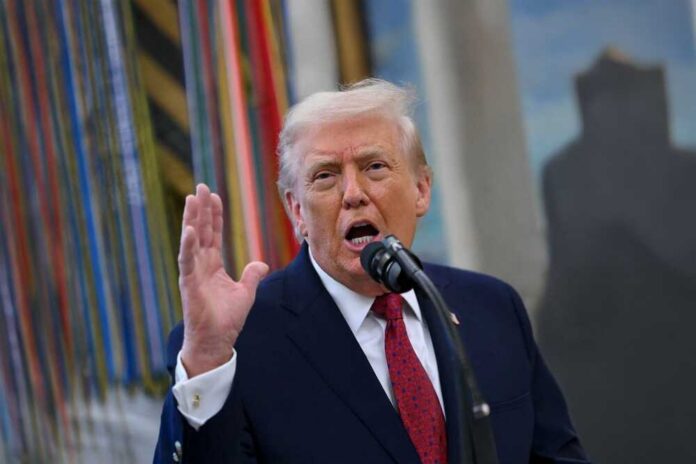
President Donald Trump’s reported statement that Cuba “will be next” arrived as the United States remains at war with Iran and conservative voters argue over how far Washington should go abroad. The research describes a sequence of U.S. actions in early 2026—capturing Venezuela’s Nicolás Maduro and a U.S.-Israeli operation that killed Iran’s Supreme Leader—followed by new pressure on Havana. For voters expecting fewer new conflicts, the rhetoric raises immediate questions about scope, goals, and exit ramps.
TIME’s account frames the Cuba posture as something short of a traditional invasion, emphasizing economic blockade and diplomacy aimed at removing President Miguel Díaz-Canel rather than a sweeping, long-term occupation. That distinction matters, but it does not eliminate risk. Economic coercion still produces unintended effects, and any escalation can drag the U.S. deeper than planned. The limited public detail about what “next” means—sanctions, covert action, or military planning—adds to uncertainty and internal division on the Right.
The Legal Trigger: A National Emergency and an Oil Blockade
The clearest documented step is Trump’s January 29, 2026 executive order declaring a national emergency tied to alleged threats by the Cuban government. The research says the order accused Cuba of aiding adversaries such as Russia, China, and Iran, and cited human rights abuses, setting the basis for an oil blockade. That policy lever has immediate strategic logic—energy is the regime’s lifeline—but it also tightens the moral and political vise: when fuel stops, hospitals, water systems, and food supply chains strain first.
Cuba’s leadership has publicly blamed U.S. sanctions for the island’s worsening shortages, while also confirming meetings with U.S. officials on bilateral issues. The research indicates Díaz-Canel has discussed areas like commercial ties and potential openings, including engaging with U.S. investment and exiles. That creates a narrow lane for negotiation, but it also shows how quickly “pressure” becomes a complex bargaining process. For Americans wary of government overreach, the big concern is mission creep: unclear goals can keep emergency measures in place indefinitely.
Cuba’s Energy Collapse, Public Unrest, and Heavy-Handed Repression
The pressure campaign is unfolding amid a genuine Cuban breakdown. The research describes blackouts that can last up to 15 hours, a March 2026 national power grid collapse, and shortages of food and medicine that have pushed more citizens to flee. Protests have flared, including reported vandalism of a Communist Party office in Morón, while authorities respond with repression. This is not just a geopolitical chessboard; it is a humanitarian and governance crisis that can destabilize the region.
Human rights reporting cited in the research underscores how Havana handles dissent. The research references more than 700 political prisoners tied to the 2021 protests and notes that releases—such as a Vatican/U.S.-brokered deal in 2025—did not end systemic crackdowns. That matters for U.S. policy debates because it supports the argument that the problem is structural, not just personal. At the same time, the research also notes uncertainty about how quickly the system could collapse, given the regime’s entrenched security control.
What “Leadership Removal” Can and Can’t Change
Analysts quoted in the research warn that focusing on Díaz-Canel alone may not deliver a democratic transition because Cuba’s security and party apparatus runs deeper than any one figure. The Bush Center’s view, as summarized in the research, is that Washington should demand broader democratic reforms rather than assuming a single leadership swap solves the problem. The Lansing Institute’s assessment, also summarized, suggests regime hardening is the most likely near-term outcome and an immediate collapse is unlikely.
For conservatives who are tired of “regime change” disasters, those warnings are a flashing caution light. If the system is resilient, punitive measures can last for years while ordinary people suffer and Washington keeps escalating to show “results.” That dynamic—pressure, backlash, escalation—has defined too many post-9/11 foreign policy episodes. The research does not provide a detailed post-change plan, and it specifically highlights concerns that a Venezuela-style approach without a clear end state could invite chaos.
The bottom line for skeptical Trump voters is that constitutional self-government starts with clarity and accountability at home. A national emergency declaration, an oil blockade, and talk of “taking” a weakened country demand rigorous oversight, clearly stated objectives, and a defined off-ramp—especially while America is already at war with Iran. The research shows real threats and real repression in Cuba, but it also shows real uncertainty about outcomes. Without clear limits, foreign entanglements have a way of becoming permanent.
Sources:
Pressure on Havana Is Mounting. What Comes Next for Cuba Matters.
Addressing Threats to the United States by the Government of Cuba
Political Stability in Cuba: Risks of Power Change and Potential Consequences