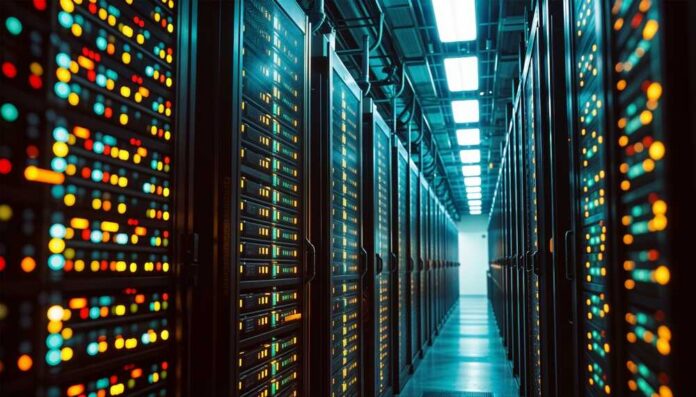
Voters now say they would rather live next to a nuclear power plant than an AI data center, and that tells you almost everything about where the mood of the country has gone.
Story Snapshot
- Grassroots opposition has stalled or blocked tens of billions of dollars in AI data center projects across red and blue states alike.
- Residents blame these facilities for rising electric bills, heavy water use, diesel fumes, and industrial “noise pollution” creeping into suburbs.
- Experts argue local communities get secrecy, subsidies, and higher costs while Big Tech and Wall Street reap the benefits.
- Supporters say data centers are critical infrastructure for jobs and national competitiveness, but that argument is wearing thin on the ground.
How AI Data Centers Went From Boring Warehouses To Political Villains
Most people never thought about the buildings behind their email, streaming, or AI tools until the bills and the bulldozers showed up at the same time. A recent wave of organizing has blocked about eighteen billion dollars of United States data center projects and delayed roughly forty-six billion dollars more, which is not the footprint of a fringe complaint.[5] What used to be a backstage utility has become a front-page fight because the costs are visible, local, and immediate, while the benefits feel distant and vague.
Communities from Utah to Maine to Memphis now treat the phrase “hyperscale campus” as a warning label, not a promise. The Economist’s reporting describes statewide bans on new hyperscale facilities, local referendums, and intense public hearings where residents describe sleepless nights and fears about property values.[4] Grassroots groups, at least one hundred forty-two of them across two dozen states, have formed around issues such as utility bills, water use, noise, and loss of green space.[5] That scale of pushback is rare for a technology still marketed as the future of prosperity.
Power, Water, And Pollution: The Concrete Grievances Driving The Backlash
Opposition hardens when abstract “innovation” shows up as a higher power bill. A Harvard tech and data policy expert points to widespread concern that data centers raise electricity rates and force utilities into expensive new infrastructure, with those costs often passed to regular households.[2] Food and Water Watch estimates that a single hyperscale AI facility can use as much electricity as up to two million homes, helping drive rate spikes and keeping aging gas and coal plants online longer than planned.[1] That is a hard sell to families watching their monthly statements double.
Water turns a technology story into a survival story, especially in dry regions. Analysts estimate United States data centers’ cooling needs alone could rival indoor water use for roughly eighteen and a half million households within a few years.[1] The Lincoln Institute describes mid-sized facilities consuming as much water as a small town, with larger sites needing up to five million gallons per day. Harvard’s expert adds that roughly two-thirds of new builds are landing in water-stressed areas, compounding scarcity concerns rather than easing them.[2] For farmers, homeowners, and small towns, that feels less like progress and more like encroachment.
Why “Jobs And Growth” No Longer Close The Deal
Corporate talking points lean heavily on tax revenue and employment, but people are doing the math. The Economist notes that data center defenders stress property tax streams and the idea that these buildings “spit out money for local schools.”[4] Yet the same Harvard expert calls them “a bad deal for communities,” pointing out that state and local governments have given up more than a billion dollars in revenue through tax breaks in Virginia and Georgia alone, even as the centers provide relatively few permanent jobs.[2] Conservative instincts about corporate welfare and crony capitalism line up squarely with that critique.
Residents also notice that proximity does not translate into better service or opportunity. Faster cloud services do not lower the local power bill, and the servers humming next door do not guarantee higher wages on Main Street.[2] A Pew-linked survey cited by CMS Wire found only about six percent of respondents believed AI infrastructure improves nearby quality of life, while more believed it hurts local environments and household energy costs.[2] When the upside feels largely national or global but the downside is on your street, skepticism is not NIMBYism; it is basic common sense.
Culture Clash: Secrecy, Trust, And The “Vibes” Problem
Even where the numbers are disputed, secrecy corrodes trust. Harvard’s expert describes contracts loaded with nondisclosure agreements and heavy redactions that keep communities from understanding water, power, or pollution impacts until after deals are signed.[2] PBS and other investigations highlight permitting pathways that tuck big emission sources into obscure categories, limiting public hearings and scrutiny. From a conservative perspective that values local control and transparency, closed-door subsidies to trillion-dollar firms look less like development and more like a rigged game.
We need nuclear energy for AI data centers, @elonmusk. The nat gas generators are not good for neighbors and ppl are really pushing back. Nuclear is clean
— TifferT𝕏 (@TiffanyEngr) May 29, 2026
There is also a psychological dimension the Economist calls “vibes.”[4] People hear nonstop about AI killing jobs, destabilizing culture, and concentrating wealth, then discover the physical embodiment of that system landing in their backyard. Inside Climate News reports that voters mostly talk about rate hikes, not global climate metrics, when they complain about data centers.[3] That focus on household economics, property, and local pollution is exactly where broad, cross-partisan coalitions usually form in American politics.
Is The Backlash Overblown, Or A Harbinger Of A Bigger Fight?
Not everyone buys the revolt narrative. Slow Boring argues the “AI backlash” is overstated and that much opposition reflects the usual infrastructure siting fight rather than a deep rejection of the technology itself. Industry leaders warn that without rapid buildout, the United States could surrender technological and economic advantage to China, and they promote cleaner power sources like nuclear or geothermal as eventual fixes.[4] Those arguments resonate with some national security hawks and growth advocates, but they do not erase the local grievances.
The real question is whether political leaders can reconcile legitimate local harms with national ambitions. American conservative values point toward a straightforward test: no secret subsidies, no socialized costs for privatized profits, and no environmental burdens dumped on communities that lack the clout to push back. If AI data centers want a social license to operate, they will have to meet that test with verifiable numbers, open contracts, and genuine respect for the people living in the shadow of their walls.
Sources:
[1] Web – Why Everyone Hates AI Data Centers
[2] Web – AI backlash is focused on data centers. Here’s what must change
[3] Web – The AI Data Center Backlash Is Now Impossible to Ignore – CMS Wire
[4] YouTube – Why are AI data centres facing a backlash? | The Economist
[5] Web – Data center executives fret over the industry’s increasingly toxic …