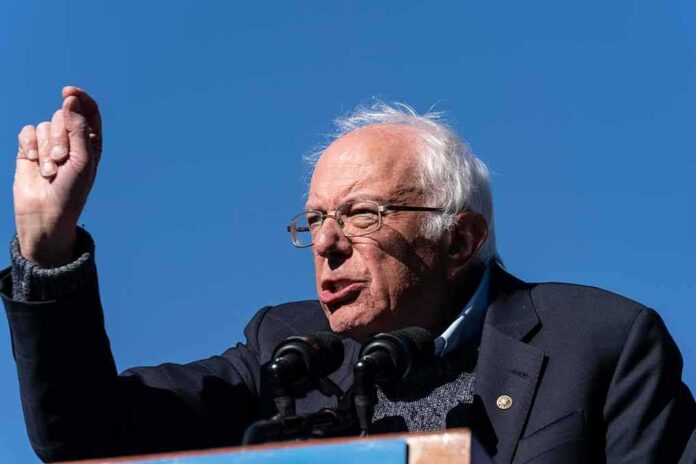
From a historic New York pulpit, Sen. Bernie Sanders used a foreign-policy speech to push sweeping global agendas that clash with America-first priorities.
Story Highlights
- Sanders delivered a foreign-policy address at Riverside Church on the eve of the United Nations meetings.
- His team and friendly outlets framed the talk as a “major” global message tied to inequality, climate, and artificial intelligence.
- The Nation published the speech text and highlighted his calls for change in U.S. foreign policy.
- Coverage stressed Riverside’s symbolism as the site of landmark antiwar speeches.
Sanders Chooses Riverside Church to Project Global Message
Sen. Bernie Sanders delivered a foreign-policy address at New York City’s Riverside Church on Monday, timed to the week of the United Nations General Assembly. Fox platforms listed the event as a live address at the historic venue, underscoring its profile and timing. His advisory promoted it as a major speech at a site linked to famous antiwar moments, signaling a bid to frame U.S. policy as part of a larger moral fight over global power and priorities.
Sanders previewed the theme on his social account, calling inequality, concentrated wealth, climate change, and artificial intelligence global challenges. He urged viewers to join him at Riverside on the eve of the United Nations gathering in New York City. By picking this stage and moment, he sought to press Washington toward a broader reset, putting social and environmental aims at the center of foreign policy. Supporters cast that as overdue; critics see it as costly and unfocused.
What Sanders Said and How Allies Amplified It
The Nation published the speech text and billed it as a major foreign-policy address delivered at Riverside Church. The outlet’s framing emphasized public fatigue with the status quo and a push for policy change across security and aid debates. Spanish-language coverage also quoted Sanders on military spending and poverty, reinforcing that he used the platform to tie defense budgets to social tradeoffs at home and abroad, with rhetoric aimed at shifting priorities away from traditional hard-power tools.
Fox’s listing showed mainstream interest in the event’s timing and setting, highlighting that Sanders chose a storied venue on the eve of global meetings. His advisory leaned into Riverside’s symbolism, noting past addresses by Dr. Martin Luther King Jr. and Nelson Mandela, which added moral weight to his message while inviting comparisons to prior antiwar appeals. That symbolism helps allies package his agenda as a values-based alternative to current policy directions.
Why the Venue Matters and What It Signals Now
Riverside Church has long served as a platform for high-profile foreign-policy critiques, including Dr. Martin Luther King Jr.’s “Beyond Vietnam” speech. Historians and archives treat that address as a landmark challenge to U.S. policy, and modern summaries often recall Riverside as a home for moral arguments against war and for global justice. Sanders’s choice taps that legacy to suggest today’s fights over budgets, aid, and global order echo those past moral disputes.
That symbolism matters because it shapes how media and voters interpret the message. Staging the speech before United Nations week links Sanders’s priorities to international forums that often press for climate rules, social spending, and limits on national sovereignty. Many conservatives warn those pushes load costs onto American workers, burden small businesses, and risk diluting U.S. security and energy strength. Sanders’s framing invites that clash, in public, on a famous stage.
How This Collides With America-First Policy Debates
Calls to shift funds from defense to social programs arrive as the United States faces threats from hostile regimes, cyber attacks, and chaos at key borders. Voters who back strong borders, domestic energy, and a tough military posture will hear Sanders’s program as the old globalism in new clothes. They see higher taxes, more regulation, and green mandates that raise prices at the pump and on power bills, while rivals stockpile missiles and exploit weak enforcement abroad.
"Sen. Sanders (I-VT) Delivers Foreign Policy Speech Ahead of U.N. General Assembly
Ahead of the United Nations General Assembly, Sen. Bernie Sanders (I-VT) delivers a foreign policy address at New York City's historic Riverside Church."https://t.co/YKTa0ZQiZw— Conrad Hubbard (@conradhubbard) September 22, 2026
President Trump entered a second term pledging peace through strength, energy dominance, and secure borders. That vision contrasts with Sanders’s redistribution-first message and United Nations-centered signaling. The core divide is simple: should U.S. power deter enemies while freeing American workers to thrive, or should Washington move money from defense toward global social aims? Sanders used Riverside to argue the latter. Voters will decide which path keeps America safe, free, and prosperous.
Sources:
facebook.com, thenation.com, foxbusiness.com, forth.news, eldiario.es