
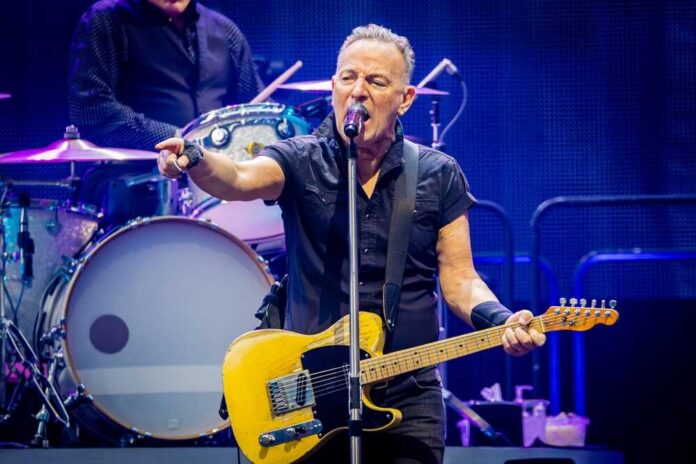
Bruce Springsteen just turned his “working man” legend into a live, loud referendum on whether wealthy celebrities still get to lecture America about power and money.
Quick Take
- Springsteen opened his “Land of Hope and Dreams American Tour” in Minneapolis with pointed political speeches aimed at the Trump administration.
- He accused the White House of enriching itself “by billions of dollars” while working Americans struggle, escalating his long-running habit of mixing music and politics.
- Critics fired back immediately, calling his message hypocritical given reports of his own extreme wealth, private-jet lifestyle, and steep ticket prices.
- The flashpoint wasn’t just politics; it was authenticity—whether a billionaire-priced show can credibly speak for people living paycheck to paycheck.
Minneapolis: When the Concert Became the Closing Argument
Springsteen launched this chapter in Minneapolis, and the set list came with something extra: four political speeches that aimed straight at the Trump administration’s character and conduct. He didn’t stick to vague “do better” language. He framed the moment as a moral emergency and cast Washington as a place where ordinary people get squeezed while insiders cash out. That rhetorical choice guaranteed the headlines—and guaranteed a counterpunch.
Springsteen’s sharpest line accused the president and his family of enriching themselves “by billions of dollars” through corruption “unmatched in American history.” He also described an America morphing into a “reckless, unpredictable, predatory rogue nation,” language calibrated to sound like warning sirens rather than partisan sniping. He reportedly brushed off the backlash as part of the job, signaling that he expected blowback and planned to keep talking anyway.
The Price Tag Problem That Won’t Stay Offstage
Political speeches from artists don’t usually trigger a cultural brawl by themselves. The accelerant here is money—specifically, the gap between Springsteen’s onstage empathy and the market reality of attending his shows. Reports highlighted ticket prices ranging from roughly $200 to as high as $1,100 for a scheduled stop at Nationals Park in Washington, D.C. For many fans, that number doesn’t feel like “community.” It feels like a gated entrance.
Critics also pointed at the broader image: the private jets, the elite circuits, and the accumulation of wealth that comes from decades of touring and business success. None of that is illegal or inherently immoral. American conservatives generally respect earned success. The friction starts when a performer builds a brand on blue-collar struggle, then speaks as if he’s still in the same economic foxhole as the people staring at grocery bills and property taxes.
Joe Concha’s Critique: From Working-Man Bard to Elite Scold
Commentator Joe Concha framed Springsteen as part of a familiar pattern: celebrities who once spoke like outsiders now sound like the establishment they used to oppose. That critique lands because it isn’t really about one musician; it’s about a class of cultural authorities that rarely share the consequences of their own prescriptions. When the messenger lives above the rules most Americans live under, the message reads less like solidarity and more like scolding.
Concha’s argument also echoes a deeply conservative intuition: credibility flows from skin in the game. Americans can tolerate disagreement; they struggle with double standards. If Springsteen wants to argue that leadership corrupts itself through wealth and influence, the public will naturally ask whether he applies the same suspicion to any powerful figure—including himself—who profits at scale. That doesn’t invalidate his right to speak. It tests whether his speech persuades.
Why the Hypocrisy Charge Hits Harder in 2026 America
This controversy isn’t happening in a vacuum. Ticket prices across live entertainment have surged, and many middle-aged fans who grew up with arena rock now measure every discretionary purchase against inflation, healthcare costs, and retirement math. A concert becomes a “should we?” conversation, not an impulse buy. When a performer then delivers a populist sermon about struggling workers, people don’t process it as poetry; they process it like a bill.
The other reason the hypocrisy narrative spreads fast is that it has a simple storyline: “billionaire lectures the working class.” Social media thrives on short moral equations, and this one writes itself. At the same time, common sense requires a second thought: a rich person can still criticize corruption. Wealth doesn’t automatically disqualify someone from having principles. The problem is unresolved tension, not automatic guilt.
The Open Loop: Can a Stadium Prophet Still Sound Like a Neighbor?
Springsteen’s career was built on songs that made Americans feel seen—factory towns, late-night drives, the dignity of work, the ache of falling behind. That identity still pulls crowds, even when the tickets sting. His Minneapolis speeches show he wants to be more than a nostalgia act; he wants to be a conscience with a guitar. The question hanging over the tour is whether fans will hear conviction—or contradiction.
Bruce Springsteen blasts rich men in America as critics call out his billions https://t.co/Pjf9nHdvHv #FoxNews
— Greg Shields (@GregShield83077) April 10, 2026
Watch what happens next: if ticket prices remain sky-high, the “working man” narrative keeps bleeding credibility no matter how heartfelt the speeches sound. If he acknowledges the pricing reality—or finds ways to bring more regular people into the room—his critique regains muscle. Conservatives don’t demand that successful Americans apologize for winning. They demand honesty about who’s paying, who’s profiting, and who gets to speak for the folks doing the paying.
Sources:
Bruce Springsteen’s rich life makes it hard to relate to average people: Joe Concha
Bruce Springsteen slammed as ‘traitor’ after ripping America during Minneapolis concert rant