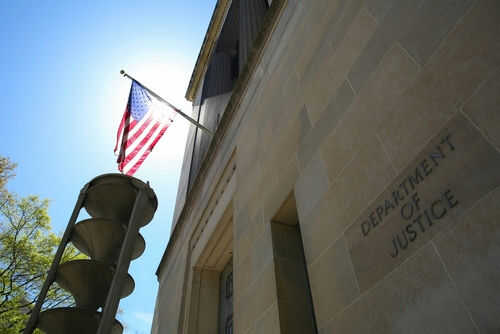
The Justice Department’s sudden about-face on Trump-era orders targeting major law firms is turning a constitutional dispute into a live test of whether Washington can punish lawyers for the clients they represent.
Story Snapshot
- DOJ first moved to drop its appeals defending Trump executive orders aimed at specific law firms, then reversed course within a day.
- Federal judges had already blocked the orders in multiple cases, calling them unconstitutional retaliation tied to client representation.
- Four firms—WilmerHale, Jenner & Block, Perkins Coie, and Susman Godfrey—won district court rulings and are fighting to keep the orders permanently sidelined.
- Nine other firms avoided sanctions by striking deals that reportedly included roughly $1 billion in pro bono commitments aligned with administration-supported causes.
DOJ’s whiplash puts the appeals back in play
DOJ asked the D.C. Circuit to keep its appeals alive after briefly signaling it would abandon the cases. Reporting indicates DOJ filed to voluntarily dismiss the appeals on March 2, 2026, with a brief due March 6, then retracted the dismissal request on March 3 and urged the court to proceed. DOJ offered no public explanation for the reversal, and the targeted firms opposed the move in court filings.
DOJ asks appeals court to restore Trump's executive orders targeting law firms, just 4 days after moving to drop defensehttps://t.co/LfuMnP2TzX pic.twitter.com/PzXrnMVGVC
— Everly Smith (@aEverlySmith) March 7, 2026
The rapid shift matters because it keeps uncertainty hanging over whether the executive branch can use access to federal contracts, buildings, and security clearances as leverage against legal representation. The courts are now left to interpret not only what the orders did in practice, but whether the government’s shifting litigation posture signals weakness, strategy, or simple deadline pressure—none of which DOJ has clarified in the public record.
What the executive orders tried to do—and why judges blocked them
The executive orders, issued in March and April 2025, targeted specific firms and reportedly sought to bar them from certain federal work and restrict access tied to government facilities and roles. The core allegation in the lawsuits was that the government was retaliating against firms based on who they represented or the causes they handled. Multiple district court judges agreed, issuing rulings that struck down or blocked the orders as unconstitutional.
Those rulings emphasized a basic American principle: the government cannot coerce private citizens—or their attorneys—into adopting an approved “party line” as a condition of doing business with the state. That concern is not abstract. If lawyers fear losing livelihoods for taking on politically unpopular clients, everyday Americans can lose access to effective counsel. Even many conservatives who support President Trump’s policy goals can recognize the danger of letting any administration set that precedent.
A divided legal industry: litigators fight, others cut deals
The legal industry’s response split into two camps. Four firms sued and won early court victories. Meanwhile, reports say nine firms reached settlements designed to avoid the executive orders’ penalties, including pledges totaling roughly $1 billion in pro bono work for administration-supported initiatives. That split triggered backlash inside the profession, including attorney resignations at some settling firms and broader debate about whether dealmaking undermines the independence of the bar.
For voters who are tired of elite institutions playing politics, the settlements raise a separate question: should access to normal federal contracting be conditioned on political or ideological “service” commitments? The reporting does not establish all terms of the agreements beyond the broad pro bono pledge figure, so it’s difficult to fully assess the fairness of the arrangements. But the optics reinforce why clear, constitutional guardrails matter.
Constitutional stakes: limiting government power protects everyone
The strongest throughline in the court decisions described in the reporting is that the orders crossed a constitutional line by linking punishment to speech and association—here, the act of representing certain clients. That is precisely the kind of power conservatives typically reject when it appears as DEI mandates, politicized licensing, or bureaucratic retaliation. Limited government means the rules apply no matter who holds the levers of power, and courts exist to stop executive overreach.
DOJ asks appeals court to restore Trump's executive orders targeting law firms https://t.co/F9YbAFMKij ………..Those executive orders were illegal to begin with…….
— joseph jones (@jones_jose13244) March 7, 2026
DOJ’s decision to push forward with appeals keeps that principle unresolved at the appellate level. If the D.C. Circuit ultimately agrees with the lower courts, the result could reaffirm that lawyers and clients cannot be strong-armed through administrative penalties. If the government succeeds, future presidents—left or right—could be tempted to target disfavored groups using contracting and access rules instead of arguing the merits in open court.
Sources:
DOJ Abandons Defense of Orders Targeting Law Firms
Trump Big Law Firms Executive Orders Justice Department
Justice Department drop defense Trump’s executive orders targeting law firms
Justice Department drop defense Trump executive orders law firms
Trump Justice Department law firms