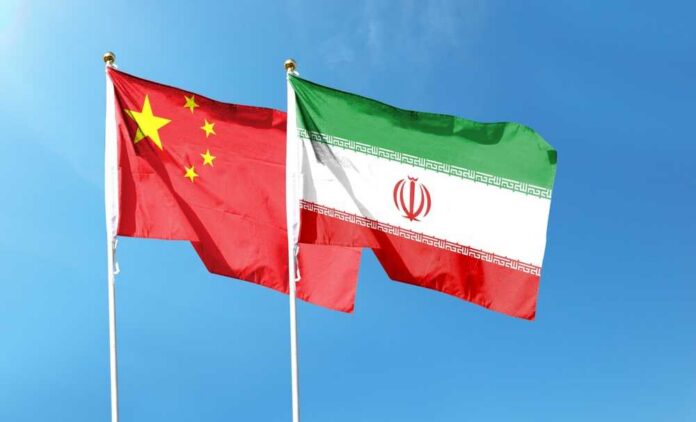
America can win a fight with Iran and still lose deterrence if the war drags on long enough for China and Russia to spot an opening.
Quick Take
- Operation Epic Fury began Feb. 28, 2026, with U.S.-Israeli strikes that reportedly killed Iran’s Supreme Leader Ali Khamenei and hit key military infrastructure.
- The White House has signaled a 4–6 week window to achieve objectives, but Iranian retaliation across the region raises the risk of a longer, messier campaign.
- Iran has targeted U.S. bases across multiple Gulf states and hit shipping near the Strait of Hormuz, where disruptions can quickly translate into higher energy prices.
- A prolonged conflict can strain U.S. munitions, air and naval rotations, and leadership attention—resources central to deterring China and Russia in other theaters.
Operation Epic Fury’s Scope Is Bigger Than a “Limited Strike”
Operation Epic Fury kicked off on February 28, 2026, with a major opening wave described as roughly 900 strikes in 12 hours, aimed at Iranian leadership and military infrastructure. Reporting in the provided research says Khamenei was killed, making this a high-stakes campaign rather than a symbolic exchange. The U.S. objective set is expansive: dismantling nuclear, missile, and naval threats and pushing Iran toward “complete surrender” or leadership change.
Iran’s response has been regional, not local. The research describes retaliatory barrages toward Israel and attacks aimed at U.S. positions and facilities across the Gulf, including bases in Bahrain, the UAE, Kuwait, Jordan, Saudi Arabia, and Qatar. That matters because a fight spread across multiple host nations complicates defensive coverage and increases the odds of miscalculation. Every additional salvo forces the U.S. to allocate more air defense, ISR, and strike capacity just to keep personnel and partners protected.
The White House Timeline Meets Iran’s Strategy of Endurance
White House messaging cited in the research points to a 4–6 week campaign, paired with President Trump urging internal Iranian pressure against the regime and ruling out a ground invasion while committing to intense strikes. That timeframe may be realistic for specific target sets, but it collides with Iran’s stated posture of continued retaliation until its enemies are “defeated.” When one side is time-bound and the other side is signaling endurance, the central question becomes whether U.S. objectives are achievable without escalation.
Some details remain disputed, underscoring fog-of-war risks that grow with time. The research notes a deadly strike at a school in Minab with about 160 reported dead, while Israel denies responsibility and the U.S. is described as investigating. Incidents like this are not just tragic; they can become operational turning points that drive international pressure, affect basing permissions, and harden enemy resolve. The longer a campaign runs, the more these contested events accumulate and shape the battlefield.
Hormuz Pressure Turns Foreign Policy Into Kitchen-Table Inflation
Iran’s leverage is not limited to missiles. The research highlights threats and attacks tied to the Strait of Hormuz, a chokepoint linked to about 20% of global oil flows. Disruptions—whether from direct attacks, insurance spikes, rerouted shipping, or heightened naval risk—can quickly hit Americans at the pump. For voters who remember years of inflation and fiscal mismanagement, energy instability is not an abstract “geopolitical issue”; it is an immediate cost that squeezes families and small businesses.
Extended War Risks Strategic Overstretch Against China and Russia
The deterrence problem is structural: prolonged Middle East operations consume the same finite assets needed to signal strength elsewhere. The research frames the main concern plainly—air and naval forces, munitions stockpiles, logistics, and senior-level focus can be pulled toward Iran at the expense of readiness in Europe and the Indo-Pacific. Deterrence against peer competitors depends on credible capacity to surge and sustain, not merely the ability to strike hard in a single theater.
The research also flags tensions involving Russia, including reporting that Russia may be supplying Iran intelligence. Even without direct involvement, adversaries benefit when the U.S. is tied down, because they can test boundaries in other regions while American decision-makers and deployments are absorbed. The available sources do not provide detailed, theater-by-theater force numbers, so the analysis remains directional—but the principle is clear: multi-theater strain is exactly what competitors watch for when gauging American bandwidth.
For conservatives who prioritize peace through strength, the key issue is aligning ends and means. The research shows ambitious goals—regime pressure, dismantlement of major capabilities, and regional defense under retaliation—paired with a finite timeline and a stated avoidance of ground invasion. If objectives require sustained suppression of missiles, drones, and maritime threats, then deterrence against China and Russia becomes partly a math problem: time, munitions, and attention are not unlimited, even for the United States.
Sources:
https://eismena.com/en/article/war-us-israel-vs-iran-timeline-2026-2026-03-04