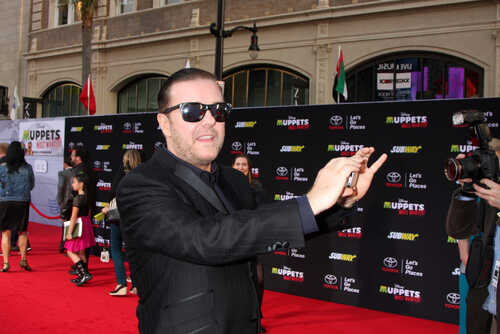
A nurse’s attempt to excuse a grotesque workplace remark by blaming Ricky Gervais blew up—because the comedian publicly said, flatly, it was never his joke.
Story Snapshot
- A Nursing and Midwifery Council (NMC) tribunal upheld a six-month suspension for nurse James Murray over intimidation and explicit talk at work.
- The case traces back to a July 2022 incident at St Andrews Hospital in Fife, Scotland, involving shouting at a colleague and later a “deeply shocking” conversation about children.
- Murray claimed one of the comments was a joke he heard from Ricky Gervais; the tribunal rejected that defense.
- On March 10, 2026, Gervais responded on X denying he ever wrote or said anything like it in any setting.
How a Workplace Blowup Turned Into a National Headline
James Murray, a nurse with a long career at St Andrews Hospital in Fife, Scotland, faced disciplinary action tied to conduct from July 2022. Reports describe him shouting offensive language at a female colleague, making a rude gesture, and later participating in explicit discussion with another colleague. The NMC tribunal treated the pattern as intimidation and unprofessional behavior, especially given the healthcare setting and the sensitivity of the subject matter.
The most inflammatory portion of the case centered on an explicit remark about sexual maturity involving children—language the tribunal described as “deeply shocking” and inappropriate for any professional environment, let alone a ward where patients could overhear staff. Murray argued the comment was meant as a joke, not a serious statement. The panel did not accept that framing as a meaningful mitigation given what was said, where it was said, and how it affected colleagues.
The Tribunal’s Core Finding: Conduct, Not “Comedy,” Controlled the Outcome
The NMC panel’s reasoning focused on workplace standards and intent as it applies to bullying or undermining colleagues. Coverage of the tribunal said the panel rejected Murray’s explanation that he did not intend harm, concluding his behavior displayed a serious lack of judgment and crossed professional lines. The decision matters because it shows how regulators treat “banter” defenses: the setting, power dynamics, and impact can outweigh any claim that words were meant humorously.
The record described in reporting also undercuts the idea that the case hinged on a single off-color line. The tribunal heard about multiple actions on the same day—yelling, gestures, and continued crude talk after a reprimand—suggesting a broader conduct problem rather than one misunderstood quip. Even with mention of a previously clean record, the sanction still landed at a six-month suspension, reflecting how seriously UK regulators treat conduct that risks public trust.
Ricky Gervais Issues a Clear Public Denial
The story spread beyond healthcare circles because Murray tried to attach a famous name to the remark. On March 10, 2026, Ricky Gervais responded publicly on X to the reports, stating the joke was not his and that he had never said anything like it in any format—stand-up, sketch, screenplay, or privately. That denial removed the celebrity angle Murray leaned on and re-centered the case on the nurse’s own choices.
What This Reveals About Speech, Accountability, and Institutional Power
Americans watching from across the Atlantic will recognize a familiar dynamic: institutions policing language often becomes a debate about free expression. This case is narrower than the typical political speech fight because it involves a licensed healthcare professional on duty, with patients potentially within earshot. The available reporting does not suggest the tribunal punished Murray for political views; it punished him for conduct regulators said intimidated coworkers and violated basic professional boundaries.
Still, the episode also shows how quickly public narratives can be manipulated through misattribution. Claiming “a comedian said it” does not convert workplace misconduct into protected comedy, and it can drag uninvolved public figures into reputational damage. The facts available also leave limits: reporting does not detail any appeal, and it does not provide independent evidence that Gervais ever used the line. What is clear is that the tribunal ruled on workplace behavior—and Gervais publicly denied ownership of the remark.
Ricky Gervais says he never made 'deeply shocking' joke nurse was suspended for https://t.co/iBL4YArZSG pic.twitter.com/W14DGziDPN
— LADbible (@ladbible) March 10, 2026
For readers tired of institutions excusing bad behavior with slick talking points, this case is a reminder that accountability sometimes still exists—especially in professions where public trust is the whole job. The NMC’s decision signals that “it was a joke” is not a magic phrase when speech is crude, targeted, and disruptive on a hospital ward. And by stepping in to deny the attribution, Gervais reinforced a basic principle: responsibility belongs to the person who said it.
Sources:
Ricky Gervais responds after nurse suspended over “deeply shocking” joke claim
“Not my joke”: Ricky Gervais debunks allegations after nurse suspended over viral comment
Ricky Gervais rejects nurse’s claim over “disgusting” child joke
Ricky Gervais denies telling joke after nurse suspended