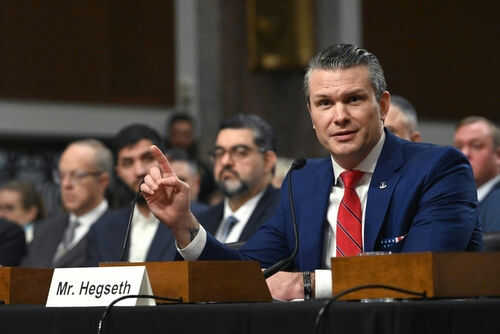
Defense Secretary Pete Hegseth told House Democrats questioning the Iran war that they represent “America’s biggest adversaries,” in a shocking accusation that critics of the two-month-old conflict are more dangerous than the enemy itself.
Story Snapshot
- Hegseth faced six hours of hostile questioning on April 29, revealing a $25 billion war cost estimate with no end timeline
- Defense Secretary accused Democratic lawmakers of “handing propaganda to enemies” and being “reckless to troops” for demanding accountability
- War sparked by shifting justifications: administration first claimed nuclear sites “obliterated,” then cited “imminent nuclear threat” to justify ongoing operations
- Thirteen U.S. service members killed, munitions shortages reported, and Iran closed Strait of Hormuz while fuel prices spike nationwide
Patriotism Test Replaces Accountability in Hearing
Pete Hegseth transformed his first congressional testimony since the U.S.-Israel war against Iran began into a referendum on lawmakers’ loyalty rather than a review of military strategy. When California Representative John Garamendi pressed him on contradictory justifications for the conflict, Hegseth shot back with “Who are you cheering for?” The exchange exemplified a six-hour hearing where the Defense Secretary deflected oversight questions by questioning critics’ patriotism. This tactic raises serious concerns about whether elected representatives can fulfill their constitutional duty to oversee military operations without being accused of treason by the very officials they’re tasked with monitoring.
Twenty-Five Billion Dollars and Counting
The Pentagon disclosed for the first time that the war has cost taxpayers approximately $25 billion over roughly 60 days of operations. Representatives Ro Khanna and Adam Smith highlighted that this figure excludes broader economic impacts from rising fuel and food prices caused by Iran’s closure of the Strait of Hormuz. Munitions shortages are straining the defense industrial base, echoing supply chain problems that plagued earlier Middle East engagements. When pressed for a total cost projection or exit timeline, Hegseth provided neither, insisting only that Iran’s nuclear sites remain under 24/7 monitoring. This open-ended financial commitment comes as everyday Americans already struggle with inflation, making the absence of a strategic endgame particularly frustrating for citizens tired of endless wars draining resources from domestic needs.
Shifting Justifications Erode Trust
The administration initially celebrated strikes last year as having “obliterated” Iran’s underground nuclear facilities, yet Hegseth now argues the war remains necessary due to an “imminent nuclear threat” from those same supposedly destroyed sites. Representative Garamendi called this “astounding incompetence” and accused officials of misleading both President Trump and the American people. This pattern mirrors past conflicts where shifting rationales—from weapons of mass destruction to nation-building—left the public questioning whether leaders ever had a coherent plan. The contradiction fuels bipartisan suspicions that government elites prioritize justifying their decisions over honestly assessing outcomes, a dynamic that deepens the divide between Washington and citizens demanding transparency.
Additional incidents compound accountability concerns. A U.S. strike on an Iranian girls’ school killed children, and a retaliatory attack in Kuwait claimed American lives, yet Hegseth dismissed these as inevitable friction in what he termed “astounding military success.” Military survivors contradicted his optimism, telling representatives that progress claims amount to “falsehood” while force protection gaps persist. Representatives Pat Ryan and Chris Deluzio demanded answers on troop safety protocols, receiving assurances that investigations continue. Meanwhile, protests erupted on Capitol Hill as lawmakers debated, reflecting public unease over casualties and costs. Hegseth’s combative posture—labeling oversight “defeatist” and claiming broad public support—contrasts sharply with polling anxieties about another prolonged Middle East entanglement spiking gas prices and bleeding tax dollars without a clear victory condition.
Quagmire or Strategic Success
Democrats framed the conflict as a quagmire resembling past failures, while Hegseth insisted tactical gains prove strategic wisdom. The disconnect highlights a familiar Washington problem: officials defend decisions by attacking questioners rather than addressing substance. For Americans on both left and right frustrated by government dysfunction, this hearing exemplifies how elites evade accountability. Conservatives worry mission creep will drain resources from border security and domestic priorities; liberals fear endless war and civilian casualties. Both camps share skepticism that leaders care more about political survival than solving the crises making the American Dream unreachable for millions working hard but falling behind economically.
The long-term implications remain uncertain. Without a defined endgame, the war risks entrenching U.S. forces in another multi-year conflict, sustaining energy market volatility and diverting funds from infrastructure, veterans’ care, or deficit reduction. Hegseth’s rhetoric—branding congressional oversight as enemy propaganda—sets a dangerous precedent where legitimate questions about costs, casualties, and strategy get dismissed as disloyalty. This erodes the checks and balances foundational to the republic, empowering executive overreach at the expense of representative government. Whether the operation achieves its nuclear denial objective or devolves into the quagmire critics predict, the April 29 hearing revealed a troubling reality: those demanding answers face accusations of betrayal, leaving taxpayers funding a war whose leaders refuse to define success or admit miscalculation.
Sources:
In hostile hearing, Democrats accuse Hegseth of misleading Trump and country on Iran war progress