
Iran’s missiles just torched Dubai’s luxury hotels in a brazen attack on U.S. allies, exposing the dangerous fallout from weak past policies that emboldened Tehran.
Story Snapshot
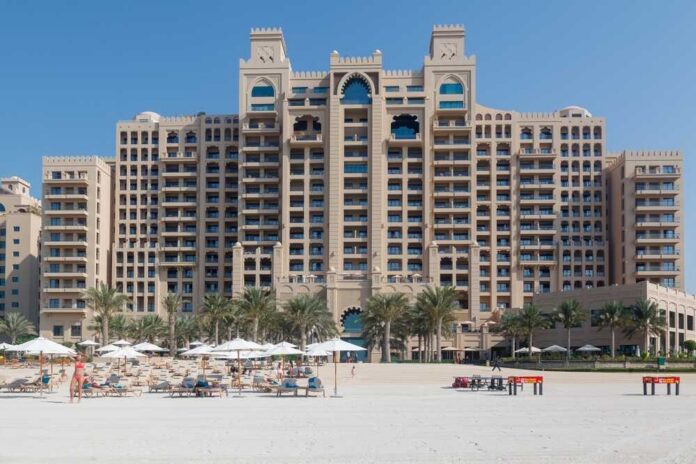
- Iranian missiles struck Fairmont The Palm and Burj Al Arab hotels on March 1, 2026, igniting fires and injuring four people.
- Attacks targeted civilian economic hubs in Dubai, UAE, to pressure President Trump’s administration amid U.S.-Israel operations against Iran.
- Jebel Ali Port operations halted, threatening 36% of Dubai’s GDP and global supply chains.
- Gulf airspace closed, sparking panic and expatriate flight risks in a city where 88% of residents are foreigners.
- Experts warn of catastrophic global shockwaves unless conflict ends swiftly.
Iran Targets U.S. Allies’ Economic Lifelines
On March 1, 2026, Iranian missiles and drones hit Dubai’s Fairmont The Palm hotel, sparking fires near the entrance and injuring four people. Additional strikes damaged the iconic Burj Al Arab, filling social media with images of flames engulfing luxury landmarks. This retaliation followed U.S. and Israeli military campaigns against Iran. Dubai authorities contained initial blazes, but panic spread among residents rushing to airports. The strikes mark a shift from military to civilian targets, aiming to inflict maximum economic pain on American partners in the Gulf.
Critical Infrastructure Under Siege
Debris from an intercepted missile set a berth ablaze at Jebel Ali Port, the Middle East’s largest container facility and source of 36% of Dubai’s GDP. Operations suspended immediately, freezing hundreds of ships near the Strait of Hormuz amid fears of closure. Smoke rose near Burj Khalifa after a drone interception, while Etihad Towers in Abu Dhabi sustained debris damage. Kuwait City International Airport faced drone attacks. Gulf airspace shut down, crippling Dubai’s role as a global airline hub and disrupting international travel and trade.
Economic Model Faces Collapse
Dubai built its prosperity on perceptions of safety, drawing international capital, 88% expatriate residents, and booming tourism, finance, and ports. Iranian strikes shattered this “safe oasis” image, threatening the core economic model. Short-term chaos includes civilian injuries, hotel damages, and supply chain halts. Long-term risks involve mass expatriate exodus, undermining real estate and employment. Global markets brace for shockwaves from exposure to Dubai’s finance, air, and shipping sectors, far worse than the 2009-2010 real estate crisis.
President Trump’s firm stance against Iranian aggression now faces direct tests, as Tehran pressures U.S. allies to demand an end to operations. Limited government intervention in free markets aligns with conservative principles, but protecting American partnerships demands strength against such provocations. The UAE prioritizes stability and civilian safety, while investors assess heightened regional risks.
A fire broke out at the Fairmont the Palm in Dubai after debris fell from an Iranian missile attack, with several injured and crews responding. – The Independent
Read more: https://t.co/m56kI66f7g
— Newswav (@newswav) March 2, 2026
Expert Warnings Signal Urgency
Marko Kolanovic, former JPMorgan chief strategist, called the crisis “catastrophic” without quick resolution, noting Dubai’s expatriate-heavy population and sector vulnerabilities could ripple globally. Cinzia Bianco of the European Council on Foreign Relations described it as Dubai’s “ultimate nightmare,” with no return to prior security. Iran’s calculated hits on economic hubs seek to force political concessions from the Trump administration. Regional explosions began February 28 across Dubai, Bahrain, Jordan, and Kuwait, escalating the U.S.-Israel-Iran conflict into broader Middle East instability.
Sources:
Fortune: Iran attacks Dubai tax-free haven