
Even with evacuation warnings, Israel’s newest Beirut strikes are leaving ordinary Lebanese families scrambling amid a Hezbollah-built war machine embedded in civilian neighborhoods.
Story Snapshot
- Israeli airstrikes hit Hezbollah-linked sites in Beirut’s southern suburbs on March 5, following renewed evacuation warnings.
- Early reports cited at least three deaths and six injuries in the Lebanese capital as explosions rocked Hezbollah stronghold areas.
- Displacement and pressure on hospitals and shelters intensified, while concrete “cleanup” details remained limited in early reporting.
- The strikes unfolded inside a wider Israel–Hezbollah escalation tied to a broader regional conflict involving Iran.
Evacuation Warnings, Then Strikes in a Hezbollah Stronghold
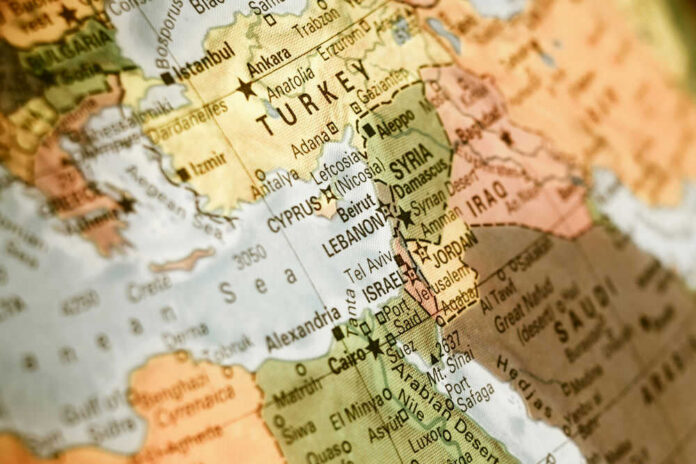
Israel’s military renewed evacuation warnings and then carried out airstrikes on March 5 in Beirut’s southern suburbs—areas broadly described in reporting as Hezbollah strongholds. Accounts cited explosions and impacts near sites Israel said were connected to Hezbollah facilities and operatives. Lebanese officials and media carried initial casualty figures, while the pace of events made verification and full accounting difficult in real time. The operational pattern—warnings followed by strikes—was emphasized across multiple reports.
The immediate human reality is familiar in modern urban warfare: people move fast, belongings get left behind, and families scatter to safer areas or temporary shelters. Reports described residents fleeing damaged neighborhoods and local services straining under the sudden surge. Because the strikes continued over several days, the March 5 impacts landed on top of earlier disruption, complicating the public’s ability to return, assess damage, or begin sustained repairs.
What “Cleanup” Looks Like When the Situation Is Still Unfolding
The research available so far offers only partial visibility into formal cleanup operations. Early coverage noted humanitarian aid distribution—basic items like sleeping bags and mattresses—alongside shelters activating for displaced families. That suggests a response posture focused first on keeping people alive and housed rather than rebuilding. In practical terms, debris removal and building stabilization often require security guarantees, access routes, and intact municipal capacity—conditions that can be hard to meet while strikes and warnings persist.
That limitation matters for readers trying to understand the “after” of the strike cycle. When armed groups operate from dense civilian areas, physical recovery becomes inseparable from security conditions. If warnings and strikes continue, cleanup crews, civil defense, and utility repair teams typically face delays, restricted movement, and uncertainty about where the next impact zone will be. The result is a drawn-out, stop-and-start recovery even when damage is localized.
Casualty Numbers Vary as the Broader War Accelerates
Initial Beirut-specific figures cited three deaths and six injuries on March 5, while broader reporting on the week’s escalation cited higher cumulative death and injury totals across the conflict timeline. That gap does not automatically indicate misinformation; it more often reflects the difference between a single incident report and rolling tallies that aggregate multiple days and locations. The research also indicates the situation was evolving quickly, with hospitals described as overwhelmed and shelters under pressure.
Context: Hezbollah’s Role, Iran’s Influence, and Why Beirut Keeps Getting Pulled In
The March 5 strikes fit into a larger Israel–Hezbollah conflict sequence described as accelerating in early March, following Hezbollah rocket and drone attacks and an expanding regional confrontation involving Iran. Reports framed Hezbollah as an Iran-backed militant force with deep infrastructure and influence in parts of Lebanon, including Beirut’s southern suburbs. Israel, holding air superiority, has relied on warning-and-strike tactics aimed at degrading militant capabilities while attempting—at least procedurally—to reduce civilian exposure.
For an American audience tired of ideological fog, the clearest takeaway is structural: when an armed proxy embeds among civilians, normal civic life becomes collateral to its military calculus. The available reporting does not provide granular, verified “cleanup” metrics street-by-street, and it would be reckless to pretend otherwise. What it does show is a cycle of warnings, strikes, displacement, and emergency aid—an unstable environment where true cleanup is postponed until security conditions change.
Sources:
https://www.timesofisrael.com/liveblog-march-02-2026/