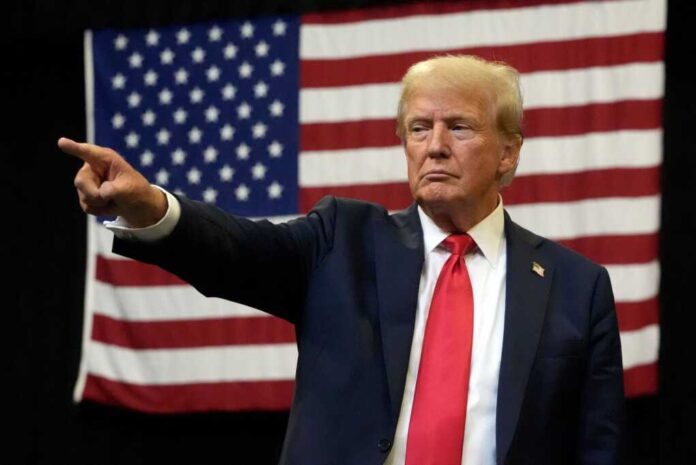
After months of saber-rattling and talk of possible military action, President Trump is now turning confrontation with Colombia’s leftist leader Gustavo Petro into hard-nosed negotiations.
Story Snapshot
- Trump has shifted from openly mulling intervention in Colombia to inviting President Petro to the White House for direct talks.
- The thaw comes just days after U.S. forces captured Venezuela’s Nicolás Maduro, raising the stakes for Latin America and U.S. security.
- Petro, a former guerrilla and sharp critic of U.S. actions, is using nationalist rhetoric while still seeking cooperation with Washington.
- The planned meeting could reshape counter‑narcotics strategy, border security, and how America confronts socialist regimes in the region.
From War Talk to White House Invitation
President Trump’s public posture toward Colombia shifted dramatically in the first week of January. After repeatedly blasting Colombia as “very sick” and accusing President Gustavo Petro of tolerating cocaine production, Trump openly floated the idea of U.S. intervention following the Special Forces operation that captured Venezuelan leader Nicolás Maduro and his wife. Days later, Trump announced that he had held a cordial phone call with Petro and extended a White House invitation, praising Petro’s tone and explanations.
For conservative Americans who remember decades of weak responses to drug cartels, border chaos, and leftist regimes, this sequence matters. Trump first showed that Washington is again willing to act decisively, striking across the border to bring Maduro into custody. Confronted with Petro’s loud criticism and hints of armed resistance, Trump did not back down from his tough rhetoric on drugs and sovereignty, but then pivoted to direct dialogue, putting responsibility on Petro to cooperate or be exposed.
Watch: https://www.youtube.com/watch?v=74sjV_5NUuI
Petro’s Radical Background and Anti‑U.S. Rhetoric
Gustavo Petro is not a typical U.S. partner. A former M‑19 guerrilla who rose through the left-wing political movement, Petro has sought to move Colombia away from traditional U.S.-backed anti-drug tactics toward regulation debates and social programs. Since taking office in 2022, he reopened ties with Venezuela’s Maduro and positioned himself as part of a regional bloc skeptical of American power. He harshly criticized U.S. deportation policies, naval drug-interdiction strikes, and the Maduro capture as violations of Latin American sovereignty.
Petro’s rhetoric escalated as tensions rose. After the U.S. revoked his visa in 2025 over a pro‑Gaza demonstration in New York, Petro doubled down on speeches portraying Washington as an arrogant empire stalking Latin America. When Trump’s comments about Colombia and intervention circulated, Petro told crowds he was ready to “take up arms again” against any U.S. aggression, invoking his guerrilla past and warning that an attack would “awaken the jaguar” of popular resistance. At the same time, he insisted Colombia has kept cooperating on drug trafficking despite what he called insults and threats.
Why Trump’s De‑Escalation Still Serves American Interests
Trump’s decision to move from threats to talks does not signal weakness; it reflects leverage. By acting forcefully in Venezuela and making clear that the United States will no longer tolerate narco-states and complicit leaders, Trump established a new baseline. The subsequent phone call turned that pressure into an opportunity. Petro now faces a choice: work with a White House that has shown it can both act militarily and negotiate, or risk bearing blame if relations deteriorate and security spirals.
Potential Shake‑Up of Drug Policy and Regional Order
The planned Washington meeting could open a broader renegotiation of how the United States and Colombia fight the cocaine trade. For decades, programs like Plan Colombia relied on eradication, security aid, and close cooperation with more conservative governments. Petro wants more emphasis on social development and regulation, while still needing U.S. resources. Trump can use the summit to demand measurable results on trafficking and border flows, tying future cooperation and economic benefits to clear Colombian commitments against cartels and guerrilla-linked networks.
Trump Now Turning Tensions into Talks with Colombia's President Petro https://t.co/599liKJCk8
— Expeditious Feed (@Expeditiousfeed) January 9, 2026
Sources:
Trump–Colombia tensions thaw after months of heated exchanges