
Europe’s energy “diversification” is being stress-tested again as Vladimir Putin signals Russia could cut gas flows just as war-driven supply shocks push prices higher.
Story Snapshot
- Vladimir Putin told Russian state TV Russia could halt gas shipments to Europe if the EU moves ahead with new restrictions starting in late April 2026.
- European gas prices jumped in early March after Iran-war fallout disrupted LNG supply, including a reported Qatar production halt that tightened global markets.
- EU officials argue Europe is better prepared than 2022 due to reduced Russian dependence and expanded LNG capacity, but price spikes still hit households and industry.
- Russia appears to be using energy leverage preemptively, framing the EU as an “unreliable” partner while hinting at shifting volumes to other buyers.
Putin’s warning targets EU sanctions scheduled to bite in April
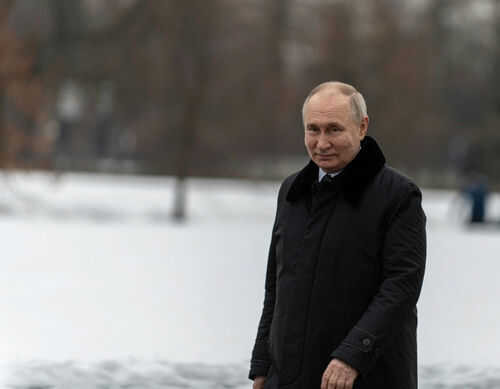
Vladimir Putin’s latest signal is not a confirmed cutoff, but a warning shot aimed at Brussels. In remarks aired on Russian state television and reported March 4–5, Putin suggested it could be “more beneficial” for Russia to stop shipping gas to Europe if the European Union proceeds with planned restrictions on Russian gas purchases beginning in late April 2026, with further tightening envisioned into 2027. Russian supplies are still flowing, but the political message is clear: Moscow wants leverage before the rules change.
The immediate factual takeaway is timing. Europe is heading into its seasonal storage refill period, when buying demand rises and price sensitivity increases. A public Russian threat during refill season compounds uncertainty for utilities, industrial buyers, and governments already facing inflation pressures. The sources do not establish an exact date of Putin’s televised remarks, but they consistently place the reports in early March. No source confirms an actual reduction in deliveries yet—only the stated possibility.
Iran-war supply disruptions are amplifying Europe’s vulnerability to price shocks
Energy markets tightened sharply after the conflict involving Iran triggered broader supply fears and real disruptions in liquefied natural gas. Research provided indicates Qatar—an essential player in global LNG—halted production amid the regional turmoil, affecting a market that handles roughly one-fifth of global LNG trade. Europe’s benchmark TTF price rose from €31.9/MWh on Feb. 28 to €54.3/MWh by March 3, a swift move that raises costs even without physical shortages.
This matters because Europe’s energy risk today is less about total dependence on Russia and more about global competition during crises. Research shows the EU now receives a large share of LNG from the United States, with additional supplies from Qatar, Norway, Algeria, and Nigeria. That diversification reduces the odds of the 2022-style cliff edge, but it does not eliminate the painful reality of surge pricing when global LNG supply is disrupted and Asia competes for cargoes.
EU officials say “not 2022,” but the bill still lands on families and industry
European officials and analysts cited in the research stress that 2026 is structurally different from 2022. Before Russia’s Ukraine invasion, Europe relied on Russia for roughly half of its natural gas, largely by pipeline. After 2022, the EU cut those imports dramatically—about two-thirds—while fast-tracking LNG terminals and alternate suppliers. That infrastructure buildout is why Brussels argues it can manage a squeeze better than during the peak panic years.
Price spikes still function like a tax on everyday life. Higher natural gas prices raise power prices, household heating costs, and input costs for manufacturers, especially in energy-intensive economies. Research includes examples from the 2022 crisis in which sharp, politically driven disruptions fed extreme national price surges. The current reports suggest a more moderate shock so far, but the same dynamic remains: the consumer and the factory floor absorb the volatility, regardless of which capital started it.
Russia’s leverage is smaller than before, but the threat is designed to bite
Russia no longer dominates Europe’s gas balance the way it once did, yet the Kremlin can still influence Europe’s margins—and headlines—by threatening remaining flows. The research frames Putin’s comments as preemptive, tied to looming EU restrictions rather than a sudden emergency cutoff. That distinction matters for credibility: it reads as bargaining and pressure, not a confirmed operational change. It also gives Moscow flexibility to escalate later if it judges the political cost to Europe is rising.
The EU’s policy direction adds another layer. Brussels continues pushing lower-carbon transitions and electrification, but the research underscores a basic constraint conservatives will recognize: energy systems still run on physical fuel availability, not slogans. If the Iran war drags on and shipping routes or LNG output remain constrained, Europe’s “diversified” portfolio can still translate into higher prices, rationing risk for industry, and renewed political instability—especially if Russian volumes are deliberately redirected elsewhere.
Limited public details remain unresolved in the provided materials, including the precise date and transcript context for Putin’s TV remarks and whether any immediate changes to export volumes are being scheduled. What is established is the convergence of three pressures at once: a sanctions calendar, a war-driven LNG disruption, and a sensitive storage refill season. That combination is why this story is landing now—and why European leaders may soon be forced to choose between energy affordability and hardline policy posture.
Sources:
Iran war revives spectre of energy crisis in Europe, fuelling economic anxiety (Euronews)
Oil and gas stocks as Iran-Israel-US tensions hit markets (The Telegraph)