

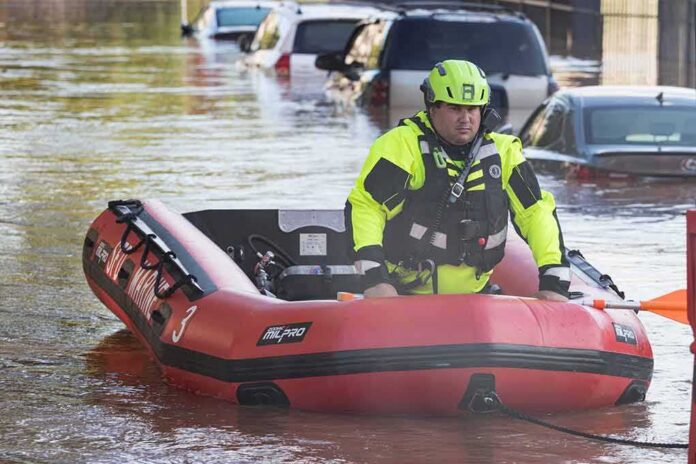
New York’s governor declared a State of Emergency as a fast-strengthening nor’easter threatens dangerous coastal flooding, strong winds, and power outages through the weekend.
Story Highlights
- Governor Kathy Hochul declared a State of Emergency for eight New York counties as a coastal storm approaches.
- Officials warn of dangerous coastal flooding, strong winds, and possible power outages from Friday through Sunday.
- Forecast discussions note the exact storm track could still shift, changing where the worst hits.
- Emergency operations and utility crews are being readied to speed response and power restoration.
Hochul’s Emergency Declaration and Core Risks
Governor Kathy Hochul declared a State of Emergency for Bronx, Kings, Nassau, New York, Queens, Richmond, Suffolk, and Westchester Counties as a powerful coastal storm moves in. Her office warned about strong winds, heavy rain, coastal flooding, and possible power outages through Sunday, and urged New Yorkers to avoid unnecessary travel and prepare supplies. The order allows rapid deployment of state help and resources. The message is clear and direct: take this storm seriously and be ready now.
New Yorkers along the shoreline face the greatest risk. Long Island, New York City’s low-lying neighborhoods, and river mouths could see water rise onto roads and into some homes during high tides. Officials said wind gusts and saturated ground raise the chance of downed trees and lines. Drivers were warned about ponding on roadways and poor visibility in heavier bands. Utility crews and emergency teams are staged to clear debris and restore power after the worst passes.
What Forecast Confidence Means for Your Plan
National Weather Service forecast discussions say guidance has moved into better agreement on the storm’s track, with moderate confidence on key impacts. But small shifts in the center can still change which communities get the heaviest rain, strongest winds, and highest coastal flooding. That is normal for nor’easters. Residents should expect evolving updates and check local alerts each morning and evening to adjust travel, school, and work plans as new data arrives.
Forecasters and state leaders often blend strong hazard language with honest notes about uncertainty. That approach gives people time to act while models fine-tune the details. The weekend timing matters. High tides stack with onshore winds, which can push water into bays and inlets. That can turn a routine rainy day into a flooding problem for coastal blocks. Sandbags, charged phones, and fuel for generators can make a major difference if the track nudges closer to shore.
How to Prepare and What Government Is Doing
State officials activated emergency operations to coordinate with cities, counties, and utilities. That includes moving high-water vehicles, checking pumps, and staffing call centers. Road crews will clear drains to reduce street flooding. Utility partners pre-stage extra lineworkers so they can roll out fast after winds ease. The goal is simple: keep people safe, restore power quickly, and reopen roads. Families can help by staying off flooded streets and reporting outages right away.
#BREAKING
NEW YORK CITY, NY (NP) — New York City Officials are monitoring the situation with the Nor’ Easter as it approaches the 5 Boroughs #nyc #ny pic.twitter.com/aAzxStJkXI— National Presse (@NPWire) September 26, 2026
Residents can take simple steps now. Park cars on higher ground if you live near the water. Bring in yard items that can blow away. Keep a flashlight and batteries ready. If you rely on medical devices, charge backups. Avoid driving through standing water. A few inches can hide a broken road or stalled car. If local officials issue an evacuation for a flood-prone block, leave early and tell a neighbor. Most storm injuries happen when people wait too long to move.
Why This Matters for Coastal Communities
Coastal families already face high taxes, rising insurance costs, and aging infrastructure. A nor’easter adds stress when roads flood and power flickers. Clear, early warnings help people protect their homes and businesses. By declaring an emergency early, the state can cut red tape and move gear where it is needed. That lines up with common sense: prepare first, then scale back if impacts ease. It is better to safeguard life and property than gamble on a lucky track shift.