

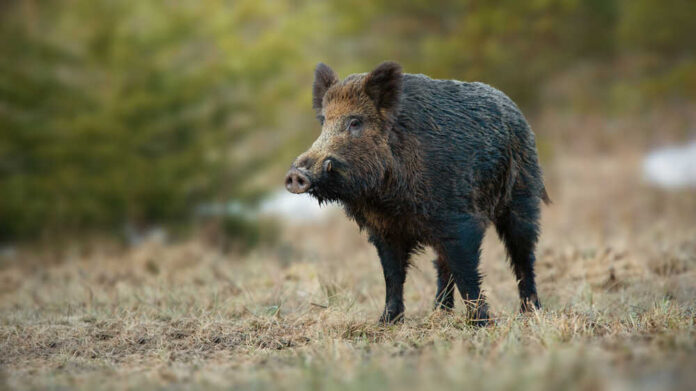
California’s agricultural mismanagement has turned wild pigs into toxic neon blue hazards, exposing hunters to dangerous rodenticide contamination.
Story Overview
- Wildlife trapper discovered wild pigs with neon blue flesh from rodenticide poisoning in Monterey County
- California’s 2024 restrictions on diphacinone failed to prevent widespread wildlife contamination
- Hunters and trappers face new risks from consuming contaminated wild game meat
- Agricultural operations removed bait stations voluntarily after contamination discovery
Contamination Discovery Exposes Regulatory Failures
Wildlife control professional Dan Burton made a shocking discovery in March 2025 when he found multiple wild pigs with dramatically blue-tinted flesh and fat tissue in Monterey County’s Salinas region. Burton described the coloration as “neon blue, blueberry blue,” indicating severe rodenticide poisoning from diphacinone, an anticoagulant designed to kill rodents by preventing blood clotting. The California Department of Fish and Wildlife confirmed the contamination through laboratory testing, revealing how poorly managed agricultural pest control threatens wildlife and hunters alike.
The discovery came despite California’s implementation of strict regulatory controls on diphacinone use beginning in 2024, which restricted applications to licensed personnel and approved operations. This regulatory failure demonstrates how government restrictions often miss the mark, creating bureaucratic burdens while failing to address real-world problems. The contaminated pigs actively sought out the brightly colored baits, showing how well-intentioned safety measures can backfire spectacularly.
Watch; https://www.youtube.com/watch?v=UFsHkuCsdDk
Hunters Face New Threats to Traditional Food Sources
The CDFW issued warnings that hunters should assume wild game meat might be contaminated, even without visible blue coloration. This threatens a fundamental aspect of American hunting tradition and self-reliance, forcing hunters to question the safety of meat they harvest from public lands. The agency’s admission that 8.3% of wild pigs tested in a 2018 study carried anticoagulant residues suggests this problem has been festering for years under previous state leadership.
Agricultural operations in the affected area voluntarily removed bait stations after the discovery, showing that private industry often responds more effectively than government mandates. However, the damage was already done, with contaminated animals potentially entering the food chain and threatening families who depend on hunting for sustenance. This situation exemplifies how environmental policies create cascading problems that hurt working Americans who rely on traditional food sources.
Broader Implications for Wildlife and Public Health
The contamination extends beyond wild pigs to endangered species including northern spotted owls and San Joaquin kit foxes, demonstrating how chemical interventions create unintended ecological consequences. Secondary poisoning occurs when predators consume contaminated prey, spreading toxins throughout the food chain. This reveals the fundamental flaw in top-down environmental management that ignores natural systems and common-sense approaches to pest control.
Is Rat Poison harming hunters and their families?https://t.co/BfTaXLeRcf@deerhuntingmag @FieldandStream @SPORTSMANchnl @WildGameJerky @waDNR_fire @MarylandDNR @mndnr @MSPBJnews @dallasnews @wcti12 @wnct9 @CityofBayonne
— Alfred Brock (@Alfred_Brock) December 1, 2025
Research has linked various pesticides to declining sperm rates, diabetes, cancers, and neurological problems in humans, raising serious questions about long-term safety studies. The CDFW established a Wildlife Health Lab reporting system for ongoing monitoring, but this reactive approach comes after the contamination has already spread. True conservation requires practical solutions that protect both wildlife and human interests, not bureaucratic band-aids that fail to address root causes while restricting law-abiding Americans’ activities.
Sources:
Wild Pigs Turned ‘Neon Blue’ in California, Triggering Warnings – Science Alert
Neon blue wild pigs highlight dangers of toxic rodent baits in California – Moneycontrol
Wild pigs are turning electric blue in California but why? – Times of India