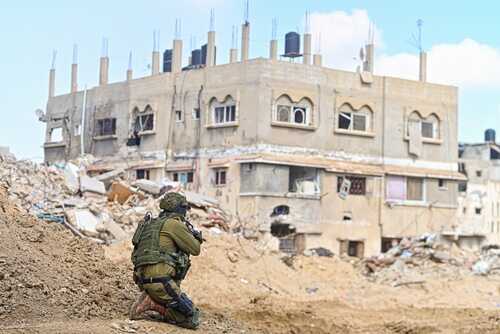
The tragic loss of five Israeli soldiers in Gaza challenges military strategies and demands a rethink on peace efforts in this volatile region.
At a Glance
- Five Israeli soldiers killed in Beit Hanoun, Gaza.
- Israeli strikes have resulted in 51 Palestinian deaths.
- Netanyahu is in the U.S. for ceasefire talks with Trump.
- A ceasefire agreement is reportedly 80-90% complete.
Fatal Blow to Military Strategy
In an attack that resonated through the region, five Israeli soldiers died in Beit Hanoun, Gaza.
Death of 5 Israeli Soldiers Fuels Debate Over Ending Gaza War
– Some in Israel say mounting deaths are another reason to end the war
– Others argue it's a reason for Israel to change to a siege strategy they believe will bring a quicker victoryhttps://t.co/DsM0dhu3Mz— Dov Lieber (@DovLieber) July 8, 2025
Their deaths spark debate over the efficacy and morality of continued military endeavors. The broader context reveals glaring contradictions in the current approach, as 51 Palestinians also lost their lives due to Israeli airstrikes in Gaza. The delicate balance between maintaining security through force and the resulting human cost raises difficult questions for policymakers and the public alike.
These tragedies have not only boosted calls for dialogue but have raised the stakes for a sustainable peace that acknowledges the rights and security of both Israelis and Palestinians. The fatalities underscore the immense sacrifices borne by soldiers and civilians amidst calls for renewed strategies that prioritize peace. As the war drums continue, the tension between military objectives and humanitarian outcomes grows more palpable.
Watch a report: 5 Israeli soldiers killed in Gaza, 14 others injured
Pressure on Leadership for Ceasefire
Prime Minister Netanyahu is currently in the U.S., discussing ceasefire possibilities with President Trump. Reports suggest that an agreement is 80-90% finalized and could be realized in the coming days. Despite the compelling urge to retaliate, the number of both soldier and civilian fatalities emphasizes the importance of diplomatic resolutions. Netanyahu is facing pressure from international allies and domestic opposition to reconsider the overarching strategy.
“We are in a campaign to defeat Hamas and to free all of our hostages.” – Netanyahu PBS.ORG
The possibility of a 60-day ceasefire, which sees provisions for humanitarian aid and the release of hostages, is a critical juncture that could redirect the course of current hostilities. While embracing peace appears challenging against the backdrop of grief and anger, these efforts could ultimately result in fewer casualties and a more secure future.
Palestine Info Center on X: Last night, Thursday, July 3, 2025, Egyptian journalist Emad El-Din Adib hosted Israeli opposition leader and former Prime Minister Yair Lapid in a special interview on Sky News Arabia
📌 Last night, Thursday, July 3, 2025, Egyptian journalist Emad El-Din Adib hosted Israeli opposition leader and former Prime Minister Yair Lapid in a special interview on Sky News Arabia, which broadcasts from the UAE. Sky News Arabia
◾ During the interview, Lapid repeated… pic.twitter.com/eOnomfO2de
— Palestine Info Center (@palinfoen) July 5, 2025
Impacts on Public Opinion and Troop Morale
The increasing toll on both sides of this ongoing conflict, with deaths since October 2023 reaching troubling numbers, cannot be ignored. Not only does this affect public opinion heavily, but it also impacts the morale of troops on the ground. The deaths of their comrades could potentiate calls within the military ranks for a reassessment of the current operation’s objectives and means.
Furthermore, this military strategy has placed undue pressure on Gaza’s already strained healthcare system, which is teetering on the brink of collapse. The regional instability reverberates through every corner of life in Gaza, making the necessity for effective humanitarian intervention and peace negotiations more apparent than ever.