
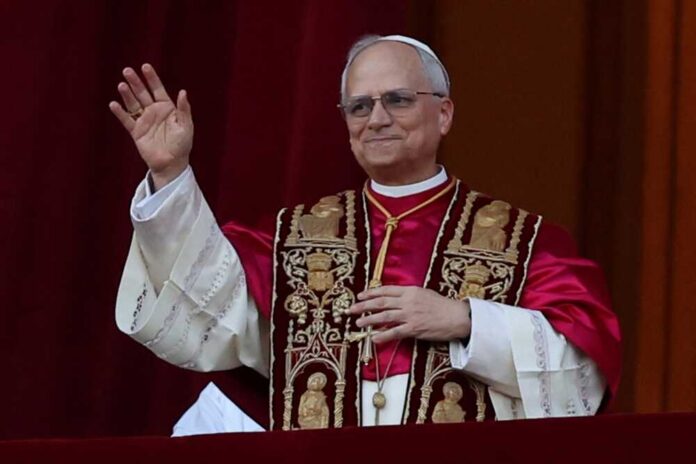
President Trump’s refusal to back down from a public clash with America’s first U.S.-born pope is turning a policy dispute over deportations and war into a high-stakes test of moral authority versus elected power.
Story Snapshot
- President Trump escalated a feud with Pope Leo XIV after a “60 Minutes” segment highlighted Catholic opposition to mass deportations and the U.S. war in Iran.
- Trump told CBS News he would not apologize or call the pope, arguing the pontiff should “stay out of politics.”
- Pope Leo responded during travel to Algeria, saying he had “no fear” of the Trump administration and citing the Gospel call to peacemaking.
- The episode exposed friction inside the American right, with at least one Trump-aligned bishop calling the president’s remarks disrespectful.
How a “60 Minutes” Segment Sparked a Rare Church-State Flashpoint
CBS’s “60 Minutes” aired a segment on April 12 featuring Cardinals Joseph Tobin, Robert McElroy, and Blase Cupich discussing Pope Leo XIV’s leadership and the Church’s opposition to U.S. mass deportations and the war in Iran. The interview, conducted in an undisclosed Washington, D.C., church due to security concerns, amplified an unusually unified message from prominent U.S. prelates. The result was a rapid shift from theological commentary into a direct national political confrontation.
Trump won't back down from Pope Leo feud sparked by "60 Minutes" report, tells CBS News pontiff should stay out of politics https://t.co/QyetfN3PfK
— Tracy Solomon (@tracysolomon) April 13, 2026
President Trump responded late Sunday on Truth Social, criticizing Pope Leo as “WEAK on Crime” and “terrible for Foreign Policy.” In a CBS News interview the next day, Trump confirmed he watched the segment before posting and said he had no plans to apologize or call the pope. He framed the pope’s remarks as political interference and defended his administration’s positions—an approach that underscores how quickly cultural and institutional disputes can harden into personal, public combat.
Trump Doubles Down, While an AI Image Controversy Adds Fuel
During the same news cycle, Trump faced backlash for an AI-generated image he posted and later deleted—widely interpreted as depicting him in a Jesus-like pose. Trump insisted it was meant to show him as a doctor, not as a religious figure, and said critics were reading into it. The deletion suggested sensitivity to blowback, even as Trump’s interview posture signaled no retreat on the underlying dispute with the pope over immigration and foreign policy.
The controversy matters because it blends two volatile ingredients: faith and state power. Conservatives often argue that unelected institutions—from media giants to international bodies—lecture ordinary Americans while remaining insulated from democratic accountability. Yet many conservatives also value reverence and restraint when religious imagery is involved. With Trump publicly dismissing criticism from within his own coalition and refusing outreach to the Vatican, the fight risks becoming less about policy outcomes and more about identity, loyalty, and public respect.
Pope Leo’s Response: “No Fear,” and a Direct Appeal to Peacemaking
Pope Leo answered Trump’s criticism while traveling to Algeria, stating he had “no fear” of the Trump administration and emphasizing the Christian call to peace, including the line “Blessed are the peacemakers.” That language aligns with his earlier posture: in January he warned diplomats about a global drift toward force and war, and during Palm Sunday he cautioned against the prayers of “warmongers.” The pope’s comments stayed rooted in moral framing rather than partisan labeling.
Why This Dispute Resonates Beyond Personalities
The argument is not simply about whether a pope should comment on policy. It highlights a deeper American tension: voters expect elected leaders to secure borders and act decisively abroad, while religious leaders feel obligated to defend human dignity and restrain war. The cardinals on “60 Minutes” portrayed the Church’s stance as a moral duty, and their rare alignment suggests the Vatican expects U.S. Catholic leaders to speak more plainly in this moment.
Trump won't back down from Pope Leo feud sparked by "60 Minutes" report, tells CBS News pontiff should stay out of politicshttps://t.co/jXcDdbwiW0
— bob kovach (@bkovoDC) April 13, 2026
Politically, the standoff could stress-test coalitions that helped Republicans consolidate power in Washington. Trump emphasized his pro-Catholic record, including claims about COVID-era aid connected to Catholic education, while critics argued his tone toward the pope was inappropriate. With no dialogue signaled and the pope planning a July 4 visit to Lampedusa—an island strongly associated with migration—the symbolism is likely to intensify. For many Americans, the broader takeaway remains familiar: major institutions keep colliding, and regular citizens are left skeptical that anyone is listening.
Sources:
Trump won’t back down from Pope Leo feud sparked by “60 Minutes” report
Pope Leo Iran war, mass deportation statements inspire American cardinals: 60 Minutes transcript