

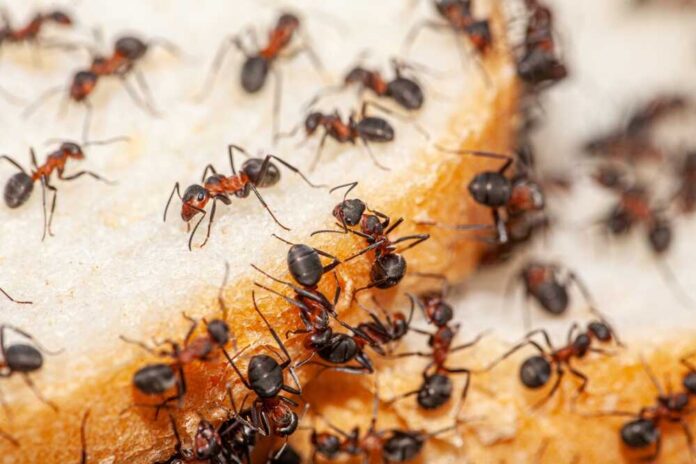
A new study reveals that chaotic ecological warfare between insects on coffee farms could undermine American farmers’ ability to reduce reliance on costly chemical pesticides.
Story Highlights
- University of Michigan researchers discovered unpredictable “ant wars” triggered by predator flies on Puerto Rican coffee farms
- The chaos makes biological pest control unreliable, potentially forcing farmers back to expensive chemical solutions
- Three decades of research culminated in August 2025 findings published in a leading scientific journal
- Coffee farmers face increased uncertainty in crop protection, threatening yields and economic stability
Ecological Chaos Disrupts Natural Pest Control
University of Michigan researchers John Vandermeer and Ivette Perfecto published groundbreaking findings in August 2025 showing how a recently introduced predator fly created unpredictable dominance battles between three ant species on Puerto Rican coffee farms. The study, appearing in the Proceedings of the National Academy of Sciences, demonstrates that these chaotic interactions make it nearly impossible to predict when beneficial ants will protect crops from harmful pests.
The research challenges fundamental assumptions about sustainable agriculture. Vandermeer explained the frustration facing farmers: “We would like, or a farmer would like, to be able to predict when the ants are going to be there, and when they’re not going to be there. And it turns out that that kind of prediction is going to be pretty difficult.” This unpredictability undermines farmers’ ability to plan effective pest management strategies without relying on chemical alternatives.
Watch: https://youtube.com/shorts/0AI3Vo3zUqY?si=7cok6-tK3vuse5hN
Three Decades of Research Reveals Complex Dynamics
The study builds on thirty years of field research conducted since the 1990s on working Puerto Rican coffee farms. The researchers documented how the introduction of non-native predator flies disrupted established ecological relationships between ant species that previously provided some level of natural pest control. These findings represent real-world agricultural challenges rather than theoretical laboratory observations.
The timing of this research coincides with growing pressure on American farmers to adopt sustainable practices while maintaining profitability. The National Science Foundation funded this work, recognizing its potential impact on agricultural policy and farming practices. However, the results suggest that replacing chemical pest control with biological alternatives may be more complicated and risky than environmentalists claimed.
Economic Implications for Agricultural Independence
The study’s findings threaten farmers’ economic stability by creating uncertainty in crop protection strategies. When biological pest control fails unpredictably, farmers face potential yield losses or must resort to expensive chemical treatments as backup solutions. This double burden of unreliable natural controls and costly chemical alternatives puts additional financial pressure on agricultural operations already struggling with inflation and regulatory compliance costs.
The research has broader implications beyond Puerto Rico, as similar ecological complexities likely exist in coffee-growing regions worldwide. American farmers considering biological pest control for various crops should recognize these findings as a warning against over-reliance on untested sustainable alternatives. The study emphasizes the need for thorough, long-term research before abandoning proven pest management methods that protect both crops and farm income.
Sources:
Chaos in coffee: Study untangles ecological dynamics affecting pest control
Role of Ants in Protecting Coffee Farms
Chaos in coffee: Study untangles ecological dynamics affecting pest control
New Study Reveals the Chaos Between Critters on Coffee Farms