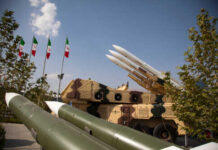
South Korea’s deployment of the “monster missile” Hyunmoo-5 marks a strategic shift away from decades of American military dependence toward indigenous defense capabilities.
Story Snapshot
- South Korea unveils Hyunmoo-5 “monster missile” – their largest ballistic weapon ever built
- Bunker-buster missile designed to strike deep underground targets with precision
- Represents Seoul’s strategic pivot from US protection dependence to self-reliance
- Direct response to North Korea’s escalating missile testing under Kim Jong-un
South Korea’s Strategic Defense Pivot
South Korea has unveiled the Hyunmoo-5 ballistic missile, locally dubbed the “monster missile,” representing the nation’s largest and most powerful indigenous weapon system to date. This bunker-busting missile demonstrates Seoul’s determination to reduce its traditional reliance on American military protection and develop homegrown defensive capabilities. The weapon system signals a fundamental shift in South Korean defense strategy after decades of depending primarily on US forces for regional security.
Watch: South Korea Unveils ‘Monster Missile’ to Deter North Korea | Vantage With Palki Sharma
Advanced Bunker-Busting Capabilities
The Hyunmoo-5 functions as a precision bunker-buster weapon designed to penetrate and destroy heavily fortified underground targets. Military experts characterize this missile as South Korea’s most advanced ballistic weapon, capable of striking deep subterranean facilities with pinpoint accuracy. This capability directly addresses North Korea’s extensive network of underground military installations, including command bunkers and missile production facilities that have long posed challenges for conventional weapons systems.
Response to North Korean Missile Escalation
Seoul’s missile development responds directly to Kim Jong-un’s unprecedented rocket testing campaign, which has accelerated significantly in recent years. North Korea’s missile buildup has prompted South Korean officials to pursue military parity through indigenous weapons development rather than relying solely on American deterrence. This approach reflects growing concerns about regional security dynamics and the need for immediate response capabilities against potential North Korean aggression.
Regional Power Balance Implications
The Hyunmoo-5 deployment represents more than military hardware advancement—it constitutes a clear message about shifting regional power dynamics. South Korea’s move toward defense self-sufficiency potentially reduces American military obligations in the region while demonstrating Seoul’s commitment to deterring North Korean threats independently. This strategic evolution reflects broader trends of allied nations developing indigenous capabilities to supplement traditional security partnerships with the United States.
Sources: