Iran’s squeeze on global energy routes is now testing how quickly Britain’s Labour government can protect family budgets from a foreign crisis it can’t control.
Story Snapshot
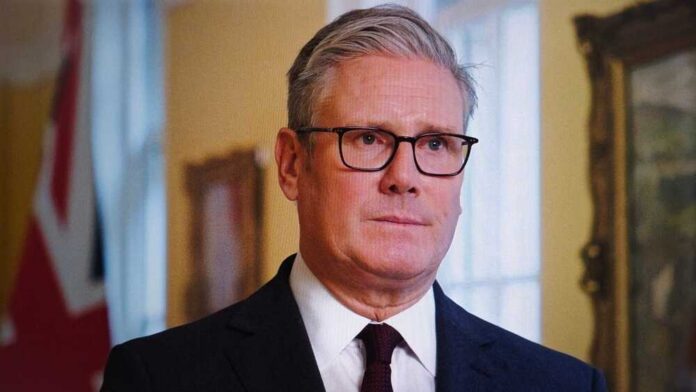
- UK Prime Minister Keir Starmer is set to chair an emergency Cobra meeting Monday, March 23, 2026, with Bank of England Governor Andrew Bailey attending.
- The meeting is focused on the cost-of-living hit from the Iran war, including higher household energy bills tied to disruption in the Strait of Hormuz.
- Officials say there is no fuel shortage and no plan for rationing, but they are preparing contingency plans to prevent panic buying.
- Energy forecasts cited in reporting point to a sharp jump in the UK price cap, with estimates ranging from about £1,900 to roughly £1,973 by July.
Cobra Shifts From Security Briefings to Bread-and-Butter Economics
UK officials confirmed that Starmer will chair his third Cobra meeting this month, but the emphasis is no longer limited to immediate security threats. The agenda now centers on household budgets as the Iran war drives up energy costs. Reporting indicates Governor Andrew Bailey will attend, highlighting concern that price spikes could feed inflation and complicate interest-rate decisions. Starmer has argued that ending the war quickly is the clearest route to easing living costs.
The latest crisis meeting follows earlier Cobras held after US-Israeli strikes in late February and another session held last week as Iranian strikes hit Gulf energy infrastructure. Iran has also threatened the UK over Britain allowing US use of British bases, a dispute that increases pressure on London to balance alliance commitments with domestic economic stability. The government’s public messaging has emphasized cost impacts alongside security risk, with ministers trying to keep the public calm.
Why the Strait of Hormuz Matters to Your Heating Bill
Energy markets react fast when a key chokepoint is disrupted, and the Strait of Hormuz is one of the most important on earth. Reporting cited in the research says roughly one-fifth of global oil and liquefied natural gas transits through that corridor. With disruptions tied to the conflict, UK households are already being warned about higher bills. Published projections put the price cap at about £1,900, while another forecast sees around £1,973 by July.
The numbers are not just abstract. Research summarizing the coverage indicates households could face increases on the order of a few hundred pounds, with inflation potentially rising again after earlier progress. The same reporting points to higher gas prices and market declines, underscoring how quickly a foreign conflict can translate into weaker consumer confidence and more expensive essentials. For voters already weary of years of inflation, the political sensitivity is obvious even in the UK.
Ministers Reject Rationing Talk, but Prepare for Public Panic
Housing Secretary Steve Reed has publicly dismissed claims that the UK faces an imminent fuel shortage and said there is no plan to ration fuel. That reassurance aligns with commentary in the research noting that past UK fuel crises were often driven by perception and panic rather than true lack of supply. Even so, the government is reviewing contingency planning, because once drivers rush stations, the optics and disruption can quickly spiral into real-world shortages.
Reed also pointed to targeted relief, including a heating-oil intervention package reported at £53 million, designed to help around 1.5 million households that rely on heating oil and can face uncapped price shocks. For working families, that detail matters because it shows the government is attempting to blunt the sharpest edge of the crisis. What remains unclear from the available reporting is how long such support could be sustained if the conflict drags on and prices stay elevated.
Alliance Politics, Iran’s Threats, and the Limits of “Global” Energy Dependence
Iran’s warnings to the UK were tied in reporting to Britain’s cooperation with the United States, including access to British bases. Research also notes a strike involving missiles aimed at Diego Garcia, a UK-US base, adding tension to an already volatile situation. Ministers have downplayed the direct threat to the UK, while other statements cited in coverage highlight Iran’s missile reach. That split illustrates the challenge: reassure the public without dismissing credible risk.
From a conservative perspective, this episode is a reminder that energy dependence is not a theoretical debate—it is a family-finances issue that can be triggered overnight by adversaries and instability abroad. UK opposition figures have used the moment to demand more transparency and argue for domestic supply measures. The available research does not provide full details on what London will decide after Cobra, but it does show a government trying to manage economic fallout while staying aligned with allies.
For Americans watching in 2026 under President Trump, the UK’s scramble is a familiar warning about what happens when global chokepoints and hostile regimes can effectively “tax” ordinary people through higher fuel and utility costs. The strongest confirmed facts here are the meeting itself, the presence of the Bank of England governor, and the bill forecasts tied to disruptions around Hormuz. What cannot be concluded from the current source set is whether any single UK policy choice can materially reduce prices quickly if the regional conflict continues.
Sources:
Starmer to chair Cobra meeting over Iran war’s impact on the economy, Sky News understands
PM to chair Cobra meeting as Iran war threatens cost of living crisis
British premier to chair emergency cabinet meeting amid tension in Mideast
PM remarks on the situation in the Middle East: 5 March 2026