Democrat attorneys general are downplaying a record fraud crackdown while Hoosiers see proof that Medicaid scammers and benefit cheats can be caught and forced to pay up.
Story Snapshot
- Indiana Attorney General Todd Rokita cites concrete Medicaid fraud recoveries to defend a federal-state anti-fraud push [10].
- Vice President J.D. Vance reports the task force’s nationwide recoveries in the hundreds of billions, spotlighting taxpayer wins [3].
- Some Democratic attorneys general balked at the White House meeting process, escalating partisan friction over enforcement [6][7].
- The presidential order directs investigators to dismantle fraud networks across public and private sectors, signaling broad authority [9].
Rokita’s Case: Fraud Enforcement Protects Taxpayers and Patients
Indiana Attorney General Todd Rokita argues that fighting benefit abuse is not politics—it is basic stewardship. His office recently secured a $2.9 million recovery in a Medicaid overbilling case involving a hospital network, showing how targeted investigations return funds to taxpayers and deter misconduct [10]. Rokita ties this work to a national anti-fraud effort that focuses on provider schemes like overbilling and false documentation, which states already classify and pursue through established enforcement units [11].
Rokita’s message resonates with seniors and working families who fund Medicaid and other programs every paycheck. He emphasizes that stronger data sharing between federal and state investigators helps identify patterns—pill diversion, phantom services, and kickbacks—faster and more accurately. He maintains that critics who frame enforcement as scapegoating ignore the real-world harm when fraud drains resources from legitimate patients and raises costs that ripple through premiums and state budgets [11].
National Effort Under Trump-Vance: Scope and Early Results
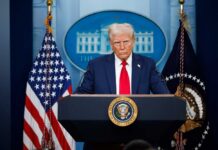
Vice President J.D. Vance has positioned the White House task force as a force multiplier for ongoing criminal and civil enforcement, highlighting massive recovered sums as proof of concept for a coordinated crackdown on fraud rings exploiting federal benefits [3]. The Justice Department historically prosecutes fraud, but the current initiative centralizes strategy and data to close loopholes and accelerate multi-state cases targeting complex networks rather than isolated bad actors [5].
The presidential order establishing the task force directs agencies to disrupt and dismantle fraud networks and facilitators, including mechanisms involving private contractors and, when warranted, officials at various levels of government [9]. That breadth is designed to follow evidence wherever it leads, protecting honest providers and beneficiaries while ensuring no insider or vendor sits beyond scrutiny. Supporters argue this approach aligns with limited-government principles by insisting every tax dollar be lawfully spent [9].
Democratic Pushback: Process Complaints and Political Theater
Several Democratic attorneys general and staff criticized the White House meeting process, claiming their experts were excluded from parts of the discussion and objecting to how invitations and access were handled [7]. Reports also described some Democrats skipping or resisting the convening, drawing contrast with Republican attorneys general who attended to help craft joint strategies against fraud [6]. These disputes fueled partisan narratives about motive rather than substance, overshadowing shared interests in clean programs [6][7].
If the Trump-Vance task force is actively uncovering billions in government waste, why are Democrat Attorneys General boycotting hearings instead of protecting their own citizens' tax dollars?
Tonight, on Real America w/ @DanNewsManBall – Indiana Attorney General Todd Rokita… pic.twitter.com/hmLMry8FXh
— One America News (@OANN) May 28, 2026
Rokita’s response reframes the clash around results: taxpayers want recoveries, deterrence, and cleaner books, not process drama. He points to documented Medicaid recoveries in Indiana as evidence that genuine cases exist and should be pursued without fear or favor [10]. Supporters argue Democrats risk appearing soft on fraud by prioritizing optics or identity framing over measured enforcement that targets provable schemes—especially when states already maintain clear definitions and reporting channels for Medicaid fraud [11].
Why This Matters for Constitutional and Conservative Priorities
Fraud drains trust in the rule of law, undermines equal treatment, and fuels bigger, costlier bureaucracy to patch program losses. Conservative governance aims to shrink waste so families keep more of what they earn, energy and groceries stop inflating from government mismanagement, and safety nets serve the truly eligible. By building a tighter federal-state partnership, the task force can recover funds, deter repeat offenders, and prove that lawfulness—not identity politics—governs public spending [3][9][10].
The path forward requires transparency, due process, and measurable benchmarks. Rokita’s office models this with published recoveries and clear reporting lines for Medicaid fraud referrals [10][11]. The administration’s order lays out cross-agency roles that can be judged by audits, case outcomes, and dollars returned. Voters should watch the metrics: recoveries, convictions, and reduced improper payments. Those numbers—not partisan noise—will show whether this crackdown honors taxpayers and restores accountability [3][9][10].
Sources:
[3] Web – Attorney General: Newsroom / Press Releases
[5] YouTube – Democrat AGs snub Vance’s fraud task force meeting …
[6] Web – Vance holds first meeting of a new anti-fraud task force targeting …
[7] Web – Vance to host state AGs at White House for fraud task force meeting
[9] Web – Attorney General Brenna Bird Joines Vice President Vance at Fraud …
[10] Web – Establishing the Task Force to Eliminate Fraud – The White House
[11] Web – Attorney General Todd Rokita And Team Achieve $2.9 Million …