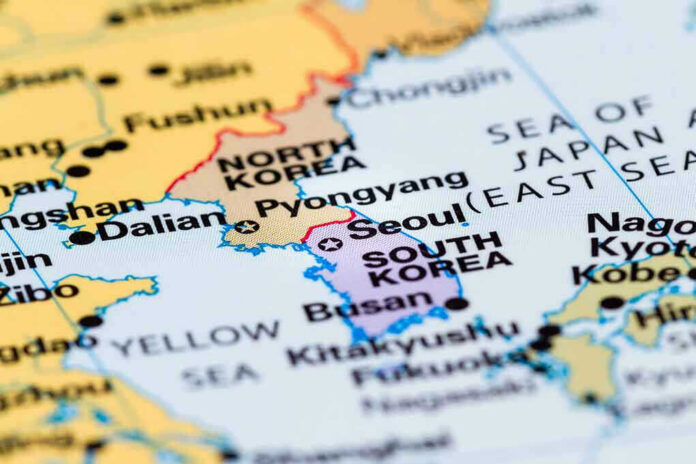
South Korea’s push to build its own nuclear-powered submarines by the mid-2030s could either strengthen America’s Indo-Pacific shield or open a new front of risk and confusion in a dangerous neighborhood.
Story Snapshot
- South Korea says it will launch its first domestically built nuclear-powered submarine by the mid-2030s as part of a new long-term naval buildup.[2][6]
- Washington has signaled approval in principle and is working with Seoul on nuclear fuel arrangements, but legal and political hurdles remain.[4]
- Conflicting public messages about whether the first boat is built in Korea or at a U.S. shipyard highlight unresolved details.[1][3]
- The project is aimed at deterring North Korea and countering China at sea, directly tying into American security and taxpayer-backed commitments.[2][4]
Seoul’s Nuclear Submarine Plan and What It Really Means
South Korea’s defense ministry now says the country should be able to launch its first nuclear-powered submarine using its own technology in the mid-to-late 2030s, assuming it locks in nuclear fuel supplies from the United States.[1][6] Officials describe a plan to begin construction in the late 2020s, then field an operational boat around the mid-2030s as part of a broader “blue-water navy” vision extending to 2045.[1][3] That timeline would put South Korea among a very small club with nuclear-powered undersea capability, directly beneath America’s security umbrella.
Seoul’s stated goal is to build the new submarines at home, strengthening its own shipyards and defense industry rather than outsourcing the core work.[2] The Korean Attack Submarine program has already produced advanced, non-nuclear attack submarines domestically, giving South Korean yards relevant experience in large, complex undersea platforms. A nuclear-propelled design would extend that know-how into the propulsion and fuel-management realm, which is where cooperation, and friction, with Washington becomes unavoidable.[4][6]
U.S. Cooperation, Legal Constraints, and Confusing Messaging
A fact sheet prepared after a recent summit stated that the United States has given approval for South Korea to build nuclear-powered attack submarines and would work closely with Seoul on requirements and ways to source fuel.[4] That language signaled a major political green light, especially compared with earlier decades when a secret South Korean nuclear-submarine initiative, the so-called “362 Project,” was canceled under U.S. pressure and domestic political concerns. Today’s cooperation marks a sharp contrast with those earlier efforts and shows how much the regional threat picture has changed since then.
Despite that high-level approval, key legal questions remain under the United States Atomic Energy Act, which governs how Washington can share naval-reactor technology and fuel with partners. Legal analysis notes that any real fuel-sharing deal would require detailed agreements and likely congressional involvement, not just a presidential announcement or summit fact sheet. That means what some in Seoul hear as a done deal is, in Washington, the start of a lengthy process that will test political will, alliance trust, and America’s appetite to expand nuclear cooperation at a time of budget strain and global commitments.
Deterrence Goals and Risks for the U.S.–Led Order
Supporters inside South Korea argue that nuclear-powered submarines are needed to track and deter North Korea’s growing missile and submarine fleet, while also pushing back against China’s rapid naval expansion.[2][4] These boats could stay submerged longer, move faster, and patrol farther than South Korea’s current diesel-electric fleet, reinforcing allied deterrence around the Korean Peninsula and into the wider Indo-Pacific.[2][4] Former naval officers and strategists say such capabilities would let Seoul shoulder more responsibility for sea control, relieving some pressure on overstretched American forces.[3][4]
South Korea plans to launch its first domestically built nuclear-powered submarine by the mid-2030s and deploy it by the late 2030s under the Jangbogo N Project. #SouthKorea #NuclearSubmarine #NavalDefense #MaritimeSecurity #Submarine https://t.co/0QcGgnwWMI
— HMT News (@news_hmt70104) May 26, 2026
Analysts also warn that nuclear-powered submarines only strengthen deterrence if they remain tightly bound by alliance discipline and nonproliferation rules, rather than becoming a prestige symbol or political football.[4][6] Mixed public messaging is already a concern: one account describes President Trump talking about building a submarine at a Philadelphia shipyard owned by a South Korean firm, while Seoul publicly emphasizes domestic construction using American fuel.[1][3] That gap feeds skepticism about whether officials on both sides have truly aligned on where the first hull is built, how fuel is provided, and who answers to whom when the program runs into inevitable delays or cost overruns.
Sources:
[1] YouTube – South Korea’s Nuclear Submarine Strategy
[2] Web – South Korea Wants Nuclear Submarines Just Like the U.S. Navy …
[3] Web – The mystery of South Korea’s nuclear-powered submarines
[4] Web – South Korea’s Nuclear Submarine Strategy – The Korea Society
[6] Web – South Korea Submarine Capabilities