Trump says Israel and Hezbollah agreed to stop firing for three weeks, a pause that could cool a dangerous front if both sides hold their fire [1][2].
Story Snapshot
- Trump announced a three-week extension of a ceasefire between Israel and forces in Lebanon, describing “no more firing” during the pause [1][2].
- Reports indicate the pause aims to create space for a longer-term deal, while some on-the-ground skirmishes underscore the fragility of the truce [1][3][4].
- Analysts frame this as announcement-driven de-escalation: meaningful if enforced, risky if publicly overstated [5][7].
- For U.S. conservatives, reduced rocket fire means fewer American allies under threat while Washington pushes deterrence against Iran’s proxies [6][7].
Trump’s Stated Three-Week Pause Between Israel and Lebanon
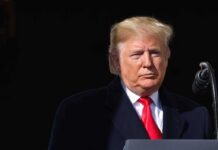
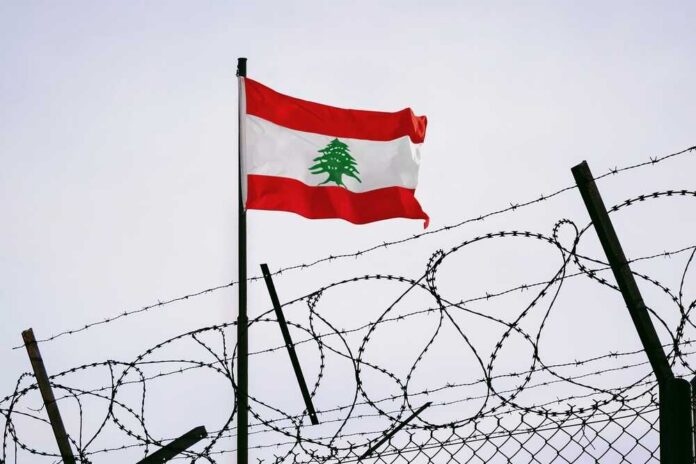
White House remarks captured President Donald Trump declaring that Israel and Lebanon agreed to extend an existing ceasefire for three weeks, with “no more firing” during that period [1][2]. Trump characterized the development as an extension, not merely an aspiration, and linked the pause to space for longer-term negotiations [1]. Reporting described calls with Israeli leadership that preceded the announcement, with the goal of dialing back hostilities along the Lebanon front where Hezbollah operates [3]. The immediate test is execution: whether rockets and cross-border fire actually halt.
Follow-up coverage stressed that the administration framed the pause as a practical de-escalation window, not a final settlement [1][3]. The president’s language pointed to a conditional, time-bound halt, reflecting the realities of coordinating between a sovereign state and an Iran-backed militia with political ties in Lebanon [3]. The ceasefire’s value lies in freezing violence long enough to pursue security guarantees and border calm. Success would mark a real, on-the-ground reduction in risk for Israeli civilians near the northern border.
Fragility on the Ground and Conflicting Signals
Regional outlets and video reports highlighted that skirmishes and flare-ups around southern Lebanon have persisted around prior pauses, illustrating how fragile such arrangements can be [4]. Analysts cautioned that public announcements often run ahead of field compliance, particularly when one party is a nonstate actor that hedges public commitments [3]. That dynamic makes verification essential. If rockets stop and counterstrikes pause, the ceasefire gains credibility; if shells fall, the deal risks unraveling quickly under pressure.
Observers describe a familiar pattern: leaders announce de-escalation to signal control and momentum while terms, enforcement mechanisms, and mutual assent emerge more slowly [5]. For Israel, pauses can enable repositioning, civilian protection, and international legitimacy if restraint is verifiable. For Hezbollah and its political interlocutors, ambiguity preserves leverage and deniability, complicating clear confirmation. This asymmetry raises the stakes for third-party monitoring and rapid response if violations occur, a point U.S. officials have emphasized in similar ceasefire windows [5].
Strategic Stakes for U.S. Interests and Conservative Priorities
U.S. messaging linked the de-escalation to a broader effort to prevent a wider regional war, especially one fueled by Tehran’s proxy network [6][7]. When cross-border fire drops, Israeli towns face fewer sirens, and the United States reduces the likelihood of spiraling commitments that burden taxpayers and stretch forces abroad. Conservatives should view verifiable calm as a victory for deterrence and common sense: stop the rockets, hold the line, and keep American resources focused on core national interests and constitutional priorities.
JUST IN: President Trump had a call with the Israeli PM, and no more troops will be going to Israel.
Hezbollah and Israel have exchanged cross-border attacks for months. A sustained halt to hostilities from all sides could help reduce tensions and create an opportunity for a… pic.twitter.com/l3FpCrvaQF
— Donald J Trump Posts TruthSocial (@TruthTrumpPost) June 1, 2026
The prudential standard remains simple: trust, but verify. The administration’s claim of “no more firing” for three weeks sets a measurable bar that can be judged in real time [1][2]. If the guns stay quiet, credit the leverage of American pressure and Israeli readiness; if violations mount, adjust swiftly with consequences that raise the cost for any party breaking the deal. Either outcome informs the next step, but transparency and enforcement—not wishful headlines—must guide policy and public expectations.
Sources:
[1] Web – Trump Says Israel and Hezbollah Have Agreed to Dial Back Fighting
[2] YouTube – Trump Says Israel-Lebanon Ceasefire Extended Three Weeks
[3] YouTube – Trump says Lebanon and Israel agree to extend Israel-Hezbollah …
[4] Web – Trump says Hezbollah, Israel agree to stop fighting after call with …
[5] YouTube – Trump Convening Cabinet as Skirmishes Persist in Southern …
[6] YouTube – Trump says Israel and Hezbollah have agreed to dial back fighting
[7] Web – Trump says no Israeli troops will go to Beirut in call with Netanyahu …