

Ukraine’s largest drone strike on Moscow of the full-scale war lit a refinery near the Kremlin and exposed cracks in Russia’s defenses, jolting Putin’s backyard and the global energy map.
Story Snapshot
- Ukraine hit Moscow’s Kapotnya oil refinery in its biggest capital-area drone raid of the war [3][4].
- Fires, smoke, and damage were reported; flights were suspended and civilians were injured [1][3][4].
- Russia said it intercepted many drones, but some still penetrated dense defenses [3][4].
- Strikes tied to fuel shortages push Russia to import gasoline by sea, raising costs [4].
What We Know About The Moscow Refinery Strike
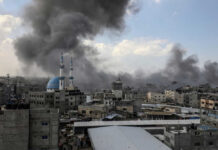
Reuters and CNN reported that Ukraine launched its largest drone offensive on Moscow since the full-scale war began, striking the Kapotnya oil refinery inside the capital area [3][4]. Moscow’s mayor said air defenses downed many drones, but at least one reached the refinery, starting fires and forcing attention from emergency crews [4]. NBC News described thick black smoke around the city and video of a drone crashing into refinery infrastructure with a fiery blast, signaling a real hit, not just overflight [1]. Damage details remain incomplete.
Reporters placed the refinery within about 10 miles or 15 kilometers of the Kremlin, marking a symbolic breach into the Russian state’s core geography [1][4]. Officials also recorded fallout beyond the fire itself. Airports around Moscow paused operations during the raid. A high-rise building, an industrial site, and private homes took damage. Injury counts vary by outlet, but multiple reports list more than a dozen wounded, underlining civilian disruption in the capital region [1][3][4]. The fog of war still clouds exact figures.
Why The Kapotnya Hit Matters For Energy And War Costs
Reuters reported the refinery was struck for the second time that week and forced to halt operations, with follow-on reporting noting repeated effects across days [4]. Even with heavy air defenses, repeat hits suggest pressure on Russia’s energy system. Reuters also reported Russia was moving to import fuel by sea to cover gasoline shortages linked to strikes on refineries, putting a price tag on the damage and showing that these attacks can ripple beyond one city or plant [4]. The effect is financial, logistical, and political.
Ukraine has said these deep strikes aim to make Russians feel the consequences of war at home and to choke war logistics, including fuel flow to units and occupied areas [3][4]. NBC News and other accounts tie the refinery campaign to fuel stress in occupied Crimea, adding another layer of pressure on Russia’s rear [1]. Still, outside analysts caution against big claims without data. Public sources do not yet quantify long-term output loss or direct military readiness effects from this single site, a real gap that reduces certainty.
Air Defense Limits, Civilian Risks, And Competing Claims
Russian leaders stressed interceptions in official statements, with local authorities and Moscow’s mayor describing large numbers of drones shot down before they reached targets [3][4]. That narrative shows a defense that works often, but not always. The refinery fire proves some drones penetrated multiple rings of protection. Casualty reporting is inconsistent, ranging from none to at least 16 or 17 injuries across different outlets, which makes precise harm hard to pin down in public records [1][3][4]. Social videos show blasts and smoke but lack forensic depth.
This clash of stories fits the war’s pattern. Both sides use drones to hit deep targets and shape public opinion. Ukraine’s message frames the strikes as a just response to years of Russian attacks on its cities. Russia’s message plays down strategic effects and points to interceptions to calm fear in the capital. The truth holds both parts: many drones were intercepted, and some still struck a vital fuel site close to the seat of Russian power. The energy import move points to real economic strain beyond a viral clip [4].
What This Means For America, Allies, And Risk Management
This strike shows how modern drone warfare erases distance. Critical fuel assets inside a major capital were not safe behind layers of missiles and guns. That lesson matters for the United States and NATO. Refineries, terminals, and power hubs are tempting targets for cheap long-range drones. Hardening these sites, dispersing storage, and improving detection are common-sense steps. Private owners and public officials should treat layered defense as a must, not a luxury, given how small systems can cause outsized harm.
#Ukraine appears to be taking the fight deep into #Russian territory…A massive drone attack forced the temporary shutdown of all four #Moscow airports. @kartikeya_1975 @SwaranSinghJNU #OnPoint
https://t.co/AlOdU9Hzkf— News9 (@News9Tweets) June 22, 2026
For conservatives, the takeaways are clear. Deterrence works when enemies know we can absorb hits, keep energy running, and strike back fast. Overspending on pet projects while skimping on real security invites trouble. Border security, resilient grids, strong domestic energy, and clear policy beat empty slogans. The Ukraine strike near the Kremlin proves even thick defenses can fail. America should not wait for a wake-up call at home to fix obvious gaps and defend our families, our economy, and our way of life.
Sources:
[1] Web – Target Moscow: The Ukraine War Has Come Right to Putin’s Doorstep
[3] Web – Ukrainian forces struck the Moscow Oil Refinery in the Russian …
[4] Web – Ukraine launches largest attack on Moscow since start of full-scale …