Gunfire aimed at the highly fortified U.S. consulate in downtown Toronto has been officially labeled a national security incident, raising fresh questions about how far foreign-directed “criminals for hire” are willing to go to test American security on friendly soil.
Story Snapshot
- Two suspects fired multiple shots at the U.S. consulate in Toronto before fleeing in a stolen vehicle, leaving damage but no injuries.
- Canadian authorities, backed by U.S. partners, quickly labeled the attack a national security incident and boosted security at diplomatic sites.
- Later arrests and charges show the shooting was part of a wider pattern of paid attacks on U.S. interests, allegedly directed by a foreign organizer.
- A Toronto officer was killed in a raid tied to the case, underscoring the real danger law enforcement faces when guarding American targets abroad.
Gunfire at a U.S. consulate on friendly soil
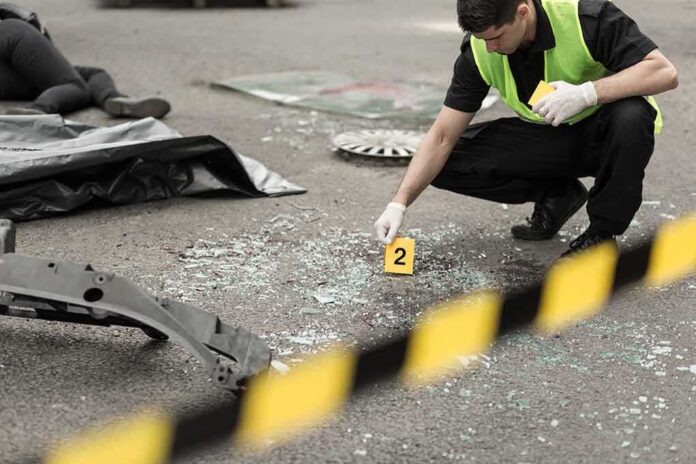
Early on a March morning, Toronto officers near the U.S. consulate heard gunshots ring out and found clear evidence that the building had been targeted. Police say a white Honda sport utility vehicle pulled up, two men got out, and fired several rounds from a handgun toward the front of the consulate before speeding away. Investigators later confirmed multiple shell casings and damage to the building’s exterior, leaving no doubt that this was a real attack, not a false alarm.
Officials reported that people were inside the consulate when the shots were fired, but the reinforced walls and glass prevented any injuries. Toronto police and the Royal Canadian Mounted Police stressed there was no sign of an immediate wider threat to the public, yet they treated the scene as very serious. The consulate itself is described as “highly fortified,” which likely kept U.S. staff safe this time, but the fact that gunmen felt bold enough to shoot at an American diplomatic site in a major ally’s city is a worrying sign.
From crime scene to national security incident
Canadian authorities did not treat this like a simple drive-by shooting. The Royal Canadian Mounted Police’s Chief Superintendent publicly called it a “national security incident,” stressing that the U.S. consulate had been struck by gunfire and that investigators would explore whether it was a terrorist act or another kind of directed attack. Police quickly increased security around embassies and consulates in Toronto and in the Ottawa region, bracing for the possibility of copycat incidents or related threats. The U.S. State Department said it was closely monitoring the situation and coordinating with local law enforcement, underscoring that Washington views any attack on its missions as a direct challenge to American security.
Reports note that multi-agency teams responded, including Toronto police, the Royal Canadian Mounted Police, and intelligence services, with coordination from United States partners such as the Federal Bureau of Investigation. This kind of cross-border cooperation is common when a diplomatic site is attacked, because consulates are legally protected and assaults on them can trigger serious international consequences. Yet, at the same time, officials held back many investigative details, which often happens once an incident falls under the national security label, leaving the public with briefing-level information instead of full reports.
Criminals for hire and foreign direction
As months passed, Canadian authorities began to connect the Toronto consulate shooting to a wider pattern of paid attacks on U.S. interests and other targets. Police allege that two suspects, Sheldon Tracey-Stewart and Zara Jabbi, fired multiple rounds at the consulate and then fled in a stolen vehicle, and that a nearby business was shot up about a day later in another related incident. No injuries were reported in either case, but the pattern of young shooters hired to commit and film attacks raised deeper concerns about organized criminal networks being used as tools.
#NationalSecurity: Toronto Police Investigate After Shots Fired Outside U.S. Consulate In📍Toronto. Suspect(s) Fled In A White Sedan Was Seen Fleeing.🇨🇦🇺🇸
Previous Shooting At The Consulate Was A Terrorist Attack Alleged To Be Directed By Kata’ib Hezbollah Commander Mohammad… https://t.co/5djUJYQIRi pic.twitter.com/1Z8HkxcbEY
— 401_da_sarpanch (@401_da_sarpanch) July 27, 2026
Later reporting from the United Kingdom’s national broadcaster highlighted claims in Canada’s House of Commons that the gunmen were “compensated and contracted by a foreign organization,” suggesting direct foreign involvement rather than random street crime. One suspect, Jabbi, was arrested and appeared in court on charges including theft, possession of a restricted firearm, and assaulting an internationally protected location, a serious charge that recognizes the special status of U.S. diplomatic property. U.S. authorities also arrested Iraqi national Baq Saadood Alaadi, accused of organizing more than a dozen attacks across North America and Europe against U.S. interests, including the Toronto consulate shooting.
A fallen officer and lessons for American security
The danger tied to this case became painfully clear when a Toronto police officer was killed during a raid linked to the consulate shooting investigation. The officer died after an exchange of gunfire in a high-rise building, and a suspect was seriously wounded and faces murder charges for the officer’s death. That loss shows that even when no one inside a fortified U.S. building is hurt, the cost of defending American sites and chasing down those who target them can be high for law enforcement officers on the ground.
For American readers, especially those who value a strong national defense and clear borders, this story is a warning about how foreign-directed networks may test U.S. resolve even in allied countries. The Trump administration must rely on partners like Canada to keep consulates safe, but it also needs full transparency when attacks are labeled “national security incidents” so the public can see exactly who is behind them and how they are punished. Strong walls and brave officers prevented tragedy this time, yet the pattern of paid shooters and foreign planners shows that U.S. interests remain in the crosshairs well beyond America’s borders.
Sources:
insiderpaper.com, bbc.com, nytimes.com, abcnews.com, washingtonpost.com, youtube.com, cbc.ca, bloomberg.com, politico.com