A powerful shallow earthquake under Italy’s Campi Flegrei supervolcano sent a cliff face crashing down toward parked cars as stunned residents caught the rockfall on camera.
Story Snapshot
- A magnitude 4.7 quake hit the Campi Flegrei volcanic zone west of Naples, injuring dozens and damaging buildings.
- The shallow quake triggered dramatic rockfalls and boulders that crushed cars, some of it filmed by local residents.
- Scientists say Campi Flegrei has been in a long unrest phase with frequent quakes and rising ground.
- Experts warn that millions live on and around this unstable supervolcano, raising questions about global preparedness.
Quake Rocks Campi Flegrei And Triggers Dramatic Rockfall
On July 31, a magnitude 4.7 earthquake struck the Campi Flegrei volcanic region just west of Naples, Italy, at about 7:46 in the evening local time. The national geophysics institute reported the quake at a shallow depth of around three kilometers, which helped make the shaking intense even though the magnitude was moderate. Video shared by local and international outlets shows rockfaces breaking apart, with chunks of cliff tumbling down and slamming into a line of parked vehicles.
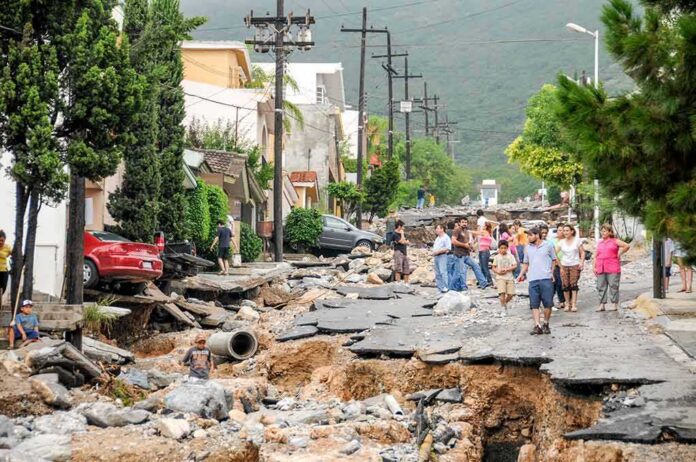
Italian and foreign news reports describe boulders crashing onto parked cars after the quake, crushing vehicles and scattering debris across streets near the coast. One clip, shared widely on social media, shows a resident filming as dust rises and a curtain of rock rips free from a cliff, sending onlookers fleeing. Authorities reported power outages, minor structural damage, and interruptions to rail and metro service, but no immediate mass-casualty disaster. Still, the images of smashed cars under tons of rock drove home how fragile daily life is in this region.
A Supervolcano In Long-Term Unrest Beneath A Major City
Campi Flegrei is not just another hillside; it is a twelve to fifteen kilometer wide volcanic caldera under and around Naples, counted among the most dangerous volcanoes in Europe because millions of people live on top of it. Italy’s National Institute of Geophysics and Volcanology reports that since 2005 the area has been in a renewed phase of “bradyseism,” where the ground slowly rises as pressure builds underground. By April 2025, uplift had reached roughly one hundred forty-four centimeters, while swarms of shallow earthquakes rattled homes and worried residents.
The Global Volcanism Program notes that recent swarms have included quakes in the low magnitude four range at depths of only a few kilometers, marking the strongest events since the current cycle of unrest began. A 2024 study in a major science journal examined a magnitude 4.4 quake there and linked it to fluids and gases moving through the crust, not yet to a full eruption, but clearly showing a restless system. Scientists at Stanford have also highlighted repeating patterns of land deformation and quake swarms tied to rising pressure in a deep geothermal reservoir beneath the caldera.
From Data To Daily Danger: Rockfalls And Cracked Streets
For years, this might have sounded like a distant research story, but the latest quake turned charts and graphs into chunks of falling rock. Reports from broadcasters and local outlets describe landslides, surface cracks, and rockfalls after the magnitude 4.7 event, including one slide near Pozzuoli. An international television report showed boulders and debris on top of crushed cars, in scenes that match the rockfall footage now circulating online. For residents, each new tremor is no longer just a number; it is a direct threat to their homes, streets, and vehicles.
🌋 Italian authorities continue emergency response after magnitude 4.7 earthquake strikes Campi Flegrei volcanic area near Naples
Officials inspect damaged buildings as 21 people remain injured and hundreds displaced following the area's 'strongest' quake in 40 years… pic.twitter.com/VciQLjSRuZ
— Anadolu English (@anadoluagency) August 1, 2026
At the same time, verification experts warn that in fast-moving disasters, dramatic clips can be re-used or miscaptioned. In this case, there is strong, on-the-record evidence that a shallow 4.7 quake struck Campi Flegrei and that it did cause rockfalls and vehicle damage in the area, but the specific resident-shot video referenced here has not been individually traced through official logs or a named witness statement. That means the footage is consistent with confirmed damage, even if investigators still have work to do to nail down every frame’s exact origin.
What This Means For Americans Watching From Afar
For many American readers, this may feel like a distant European problem, but the lessons cut close to home. Naples sits on top of a vast volcanic system where scientists are still debating how different magma bodies, faults, and even nearby Mount Vesuvius may interact at depth. A recent review in a leading journal stressed that tens of thousands of quakes have shaken Campi Flegrei since 2023, and yet officials still say a major eruption is not imminent. That tension between visible unrest and official calm will sound familiar to anyone who watched slow-moving crises at home.
On the policy side, Italy’s struggle shows why clear risk communication and real infrastructure investment matter more than flashy climate speeches or global talking points. Peer-reviewed work on Campi Flegrei’s seismic risk stresses the need for robust local plans, honest hazard maps, and practical steps to protect people long before the worst-case scenario arrives. For conservatives in the United States, it is a reminder that governments should focus on core duties like public safety, resilient energy and transport networks, and civil defense, not on bloated pet projects that do little when real disaster strikes.
Sources:
youtube.com, euroweeklynews.com, ingv.it, x.com, gfz.de, volcanodiscovery.com, news.cgtn.com, facebook.com, nature.com, newsflare.com