Five years after America’s chaotic exit, United Nations officials say Afghanistan is “more secure” under the Taliban even as millions of women and girls are locked out of schools and jobs.
Story Highlights
- United Nations reporting says open conflict dropped and Taliban control the country.
- Girls are still banned from secondary school, affecting an estimated 2.4 million students.
- Human rights groups describe a deepening crisis for women and basic freedoms.
- Security Council kept terrorism sanctions tools in place for another year.
Taliban Control And Lower Battlefield Violence, According To United Nations
United Nations officials reported that Afghanistan has seen improved security and fewer armed clashes since the Taliban took power in 2021. The United Nations Assistance Mission in Afghanistan said many Afghans gained from the reduction in conflict, though it pressed for real reforms. A separate United Nations Security Council filing stated the Taliban maintained control across national territory and continued centralized rule based on their interpretation of Islam. These official assessments confirm tighter control but not broader freedom or growth.
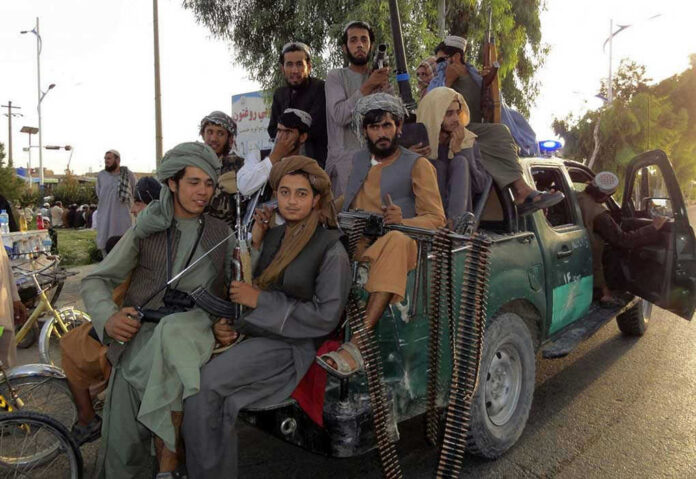
Images out of Kabul showed armored vehicles, flags, and parades marking five years since the takeover. Local and international coverage noted the regime’s message of “victory,” while aid groups warned of mounting needs. For many Afghans, gunfire and roadside bombs are rarer today than during the U.S.-backed era. Yet daily life is not free. Security without liberty is the trade the Taliban offered. United Nations voices have been clear: safety gains do not replace rights or accountability.
Women And Girls Pay The Highest Price Under Taliban Decrees
Human Rights Watch reported sweeping restrictions on women’s ability to work, move, and take part in public life. The group says Afghanistan remains the only country where girls are blocked from education past the sixth grade. These measures, issued by decree, have pushed women out of schools, offices, parks, and most professions. The scale and intent led Human Rights Watch to frame the campaign as gender persecution under international law. This is the hardest evidence of repression since 2021.
United Nations Educational, Scientific and Cultural Organization-linked reporting cited by Reuters estimated 2.4 million Afghan girls are barred from secondary education. That number maps the human cost behind each decree and closed school gate. Families lose income, daughters lose skills, and the whole country loses the next generation of nurses, teachers, and entrepreneurs. The ban also hurts relief efforts, since many services rely on female staff to reach women and children safely and legally in Afghan communities.
Security Tools Stay In Place As Terror Concerns And Isolation Persist
The United Nations Security Council unanimously renewed its monitoring team for Taliban-related sanctions for another year. That vote kept pressure on networks tied to terrorism financing, travel, and arms. The Council’s step shows the world still doubts the Taliban’s counterterrorism performance and rights record. Global recognition remains limited, donor flows are down, and private investors stay wary. The result is a controlled state that struggles to grow jobs or invite honest trade at scale.
I still cannot understand why, after five years in power, Mullah Haibatullah Akhundzada continues to hide from his own people.
On the fifth anniversary of the Taliban’s return to power, Haibatullah Akhundzada appeared in Kandahar for the victory celebrations but from inside a… pic.twitter.com/zSZFD6psuN
— Sajjad Tarakzai (@SajjadTarakzai) August 16, 2026
For Americans, this five-year mark revives the lesson of 2021: rushed exits and mission creep cost lives, waste money, and empower the wrong people. Under President Trump, the focus has returned to strong borders, targeted counterterror pressure, and energy strength at home. Those policies aim to avoid endless wars and prevent another nation-building disaster. The Afghan story shows why clarity of mission, accountability, and respect for basic rights must guide any U.S. engagement abroad.
What Matters Now For U.S. Interests And Values
Policy makers must track two truths at once. First, Taliban control reduced open warfare in many areas, which eases some suffering. Second, the same rulers deny women education and work, silence dissent, and keep courts and policing behind closed doors. America should not reward that model. Smart aid can bypass regime cronies and support local health and food programs. Sanctions should stay tied to terror risks and rights benchmarks, with clear, verifiable steps for any relief.
Conservatives should press Congress and the administration to keep faith with Afghan women and U.S. veterans who served there. That means strict oversight of every dollar, zero recognition without reforms, and a firm stance against any safe haven for terrorists. It also means learning the right lesson: protect American strength, secure our border, and end the globalist habit of writing blank checks for elites overseas. Stability built on fear is not freedom. America must stand for both security and liberty.
Sources:
washingtonpost.com, hrw.org, unama.unmissions.org, nytimes.com