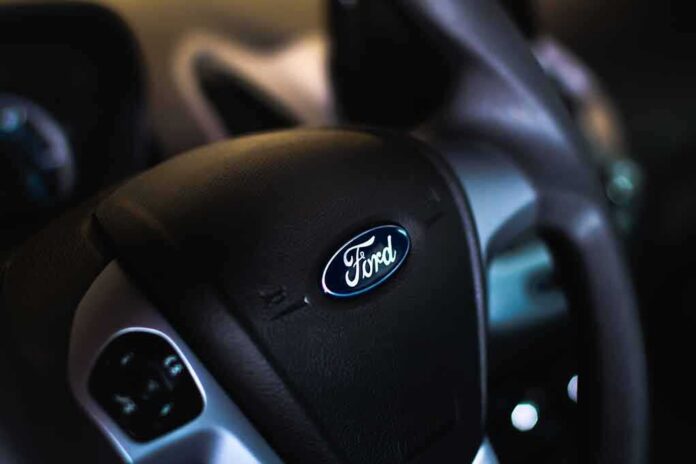
Ford’s newest trucks now watch your eyes while you drive, and federal safety regulators have already told the company its monitoring system needs work.
Quick Take
- Ford’s BlueCruise system uses a driver-facing camera to track eye gaze and head position at all times.
- The National Transportation Safety Board (NTSB) formally told Ford to revise its driver monitoring systems.
- Chevy and Ford both sell trucks that can brake, steer, or flag you for “irregular” driving on their own.
- Industry experts warn monitoring tech is getting baked so deep into vehicles that opting out may soon be impossible.
- Automakers say drivers stay in charge, but the technology already overrides drivers in some situations.
Cameras Now Ride Shotgun In America’s Trucks
A growing number of new trucks come with cameras pointed straight at the driver’s face. Ford’s BlueCruise system uses a camera built into the instrument cluster to watch where your eyes and head are pointed before it lets the truck take partial control on the highway. Ford calls this “designed for trust.” Many truck owners call it something else: a camera in the cab watching your every move.
Ford’s Driver Alert System goes further. It tracks your driving behavior and decides, on its own, whether your pattern looks “irregular.” If it decides you’re slipping, it flashes warnings on your dashboard whether you asked for the help or not. Chevy runs a similar setup called Chevy Safety Assist, which bundles six features together and watches the road and the driver at the same time using cameras and sensors built into the vehicle.
Automakers Say You’re Still The Boss
Ford and Chevy both insist the driver never loses control. Chevrolet’s own support pages state that drivers can adjust, modify, or even shut off many of these driver-assistance and safety features according to their own preferences. The National Highway Traffic Safety Administration (NHTSA) backs that framing up, stating plainly that even the most advanced systems sold today still require full driver attention and are only meant to help, not replace, the person behind the wheel.
The Insurance Institute for Highway Safety (IIHS) describes it the same way. These systems monitor driver input and the road, then warn or even brake automatically if the driver doesn’t react in time. That sounds reasonable on paper. But Ford’s own 2021 Raptor owner’s manual admits the system can flag a blocked camera or sensor and change how certain truck functions, like the electronic locking differential, behave. When a sensor gets covered in mud on a job site, the truck itself decides something needs to change.
Federal Regulators Already Flagged A Problem
The NTSB didn’t just watch from the sidelines. The board issued a formal safety recommendation, labeled H-26-5, directly telling Ford to revise the driver monitoring systems in its new vehicles. That’s not a rumor or a conspiracy theory. That’s the nation’s top transportation safety investigator putting it in writing that Ford’s system needs fixing.
Federal regulators also remind drivers constantly that they must supervise these systems every second and be ready to grab the wheel at any moment. In other words, the truck watches you, but you still have to watch the truck. For a generation of drivers who bought a pickup precisely because it felt simple, rugged, and under their control, that trade-off doesn’t sit well.
Why The Opt-Out Question Matters
Industry analysts warn the bigger fight is still coming. Semiconductor engineering trade publications note that driver monitoring is becoming so deeply wired into a vehicle’s core systems that soon the truck may simply refuse to start or operate unless a driver is detected and tracked. That would erase the opt-out choice Chevy currently advertises.
None of this means these features can’t help someone who’s genuinely dozing off at the wheel. Nobody disputes that a warning chime beats a crash. But there’s a real difference between a tool a driver chooses to use and a camera bolted into the dash that never blinks, reports your habits, and someday may not let you say no. That’s the line more truck owners are starting to notice, and it’s worth watching closely as automakers roll these systems into every new model year.
Sources:
youtube.com, ntsb.gov, nhtsa.gov, puretechsystems.com, arxiv.org, ford.pe