
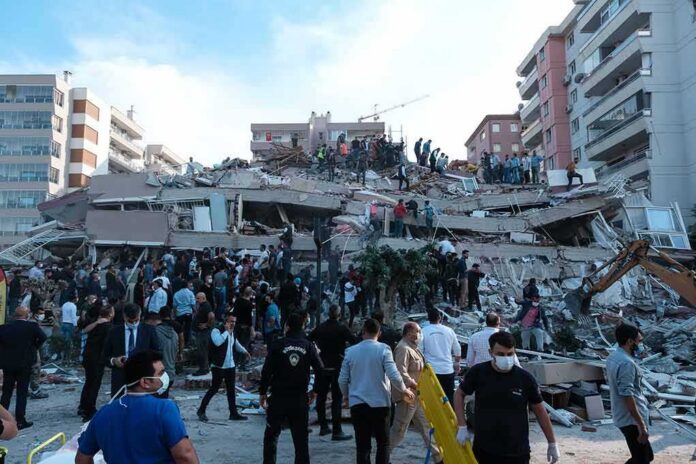
Twin mega-quakes have shattered Venezuela, and now a fight over the truth is burying victims twice.
Story Snapshot
- Official death toll has climbed above 3,500, yet tens of thousands remain missing with no clear count.
- Crowdsourced and opposition tracking sites report more than 30,000 missing, while the United Nations warns the real number may exceed 50,000.
- Satellite data shows far more damaged buildings than Caracas admits, raising hard questions about building safety, corruption, and honest reporting.
- Conflicting numbers and access limits in La Guaira echo a familiar pattern of opaque disaster management in authoritarian regimes.
Quakes That Reshaped a Nation
On June 24, powerful back-to-back earthquakes measuring 7.2 and 7.5 struck northern Venezuela, hitting the capital Caracas and the coastal state of La Guaira within seconds. These twin quakes flattened whole neighborhoods, turned apartment blocks into dust, and snapped key roads and bridges that tied coastal towns to the capital. Venezuelan officials now say at least 3,535 people are dead and 16,740 injured, with nearly 18,000 left homeless in the space of minutes. This is Venezuela’s worst earthquake disaster in more than a century.
Reports from La Guaira show mass burials at cemeteries where many victims still lack names on their graves. By July 6, more than 2,200 bodies had been claimed and buried, while hundreds more remained unclaimed and were laid to rest with simple crosses and basic forensic records. Families scour lists and grave markers, searching for loved ones they may never see again, as rescue teams admit that hundreds, and possibly thousands, are still under collapsed buildings. The human cost is still climbing.
Conflicting Death Tolls and Missing People
The official numbers tell only part of the story. Venezuela’s National Assembly president Jorge Rodríguez announced the 3,535 dead and 17,854 homeless, calling the figures provisional and subject to change as rescue work continues. Yet the government has refused to give a clear, updated figure for missing people, keeping an old number of 157 and leaving a huge gap in the record. In contrast, the United Nations’ humanitarian chief warned that more than 50,000 people may still be unaccounted for, based on reports from the ground.
Citizen-led tracking efforts paint an even more troubling picture. The crowdsourced database “Venezuela Reporta” and opposition platforms such as “Desaparecidos Terremoto Venezuela” and “Venezuela Looks for You” list missing-person reports in the tens of thousands, with one site logging over 31,000 missing by July 5 and another reporting 18,100 by July 7. These figures likely contain duplicates and unverified entries, but they still highlight a huge gap between what families see and what the state admits. For conservatives who value transparency, this looks like another case of a regime hiding the full truth from its people.
Satellite Images vs. Official Damage Claims
Official statements from Caracas report hundreds of collapsed or destroyed buildings, but outside analysts say the real damage is far greater. Venezuelan authorities have spoken of around 800 collapsed buildings in some accounts and 190 totally collapsed in others, numbers that already show internal inconsistency. Satellite-based studies cited by international and local reports estimate that tens of thousands of structures were damaged or destroyed, with some analysis pointing to nearly 59,000 affected buildings across the country. That includes homes, hospitals, and schools, raising deep concerns about construction quality and enforcement.
These wide gaps matter for more than just statistics. When governments undercount damage, they can also undercount deaths, cut corners on aid, and dodge blame for unsafe building practices and corruption in permits. Past disasters in Venezuela, such as the 1999 floods and debris flows, already showed how poor zoning and weak enforcement turned natural hazards into man-made catastrophes. The earthquakes appear to follow the same pattern, where bad governance multiplies the toll, then tries to minimize it on paper.
Information Control and the Battle Over Narrative
Independent groups and global outlets note that access to the hardest-hit zones has been limited since the quakes, especially in parts of La Guaira. Restrictions on movement and media make it hard for outsiders to verify casualty numbers and building damage. At the same time, international bodies such as the United Nations and major media organizations have taken the lead in shaping the global picture of the disaster. Official Venezuelan figures now compete with UN estimates, citizen databases, and foreign news coverage for trust and attention.
🚨 VENEZUELA EARTHQUAKE DEATH TOLL RISES AGAIN
The numbers from Venezuela are getting worse, and the disaster is now shifting from rescue operations into a full-blown humanitarian and public-health crisis.
📊 LATEST CONFIRMED NUMBERS AS OF JULY 9:
⚫ 3,889 people confirmed… pic.twitter.com/zc1Ns2xPeV
— Gunnys Adventures (@DerrickSalas9) July 10, 2026
This clash over facts should concern Americans who care about honest government and disaster readiness. We have seen, from Haiti to Turkey, that casualty figures in major disasters often rise over time as rubble is cleared and data improves. But in Venezuela, the combination of authoritarian politics, possible corruption in construction, and tight control of information makes it harder to know how many lives were really lost. As our own country debates emergency powers, border crises, and the role of international agencies, this tragedy is a stark reminder: when governments dodge transparency, ordinary families pay the price.
Sources:
science.nasa.gov, globalnation.inquirer.net, facebook.com, france24.com, reuters.com, cnn.com, youtube.com, reddit.com, miyamotointernational.com, instagram.com