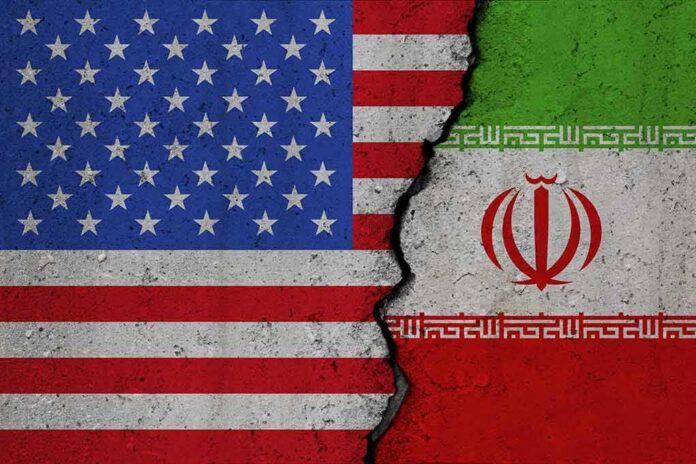
President Trump has been presented a plan to “go big” with military pressure on Iran if a short deadline for a tougher nuclear deal is not met, signaling real consequences are on the table.
Story Snapshot
- Advisers outlined military options to back Trump’s 10–15 day Iran deadline.
- Tehran threatened to hit United States bases if strikes occur, raising regional risk.
- Talks have dragged without a final deal; a 60-day roadmap still leaves core issues open.
- The 2015 nuclear deal has unraveled; Iran says it is no longer bound by its terms.
Ultimatum Backed by Force Planning
White House and Pentagon officials have prepared options to escalate pressure on Iran, including potential precision strikes and actions related to the Strait of Hormuz, to enforce President Trump’s short ultimatum for a stronger nuclear agreement. Trump first set a 10 to 15 day window and said the world would soon know Iran’s choice. The goal, according to his team, is not endless war but to block Iran’s path to a bomb and restore deterrence after years of failed appeasement.
Tehran fired back with threats to hit United States bases and regional assets if attacked, underscoring how fast a misstep could spread across the Middle East. Analysts tracking oil and shipping warned the timeline points to early March as a decision point, with energy markets watching the Strait of Hormuz for signs of disruption. The message from Washington is clear: negotiate strict limits and real checks, or face consequences designed to change Iran’s cost calculus.
Talks, Roadmaps, and a Narrow Window
United States and Iranian envoys met several times this year, even agreeing to a 60 day roadmap to keep talking and prevent incidents at sea, but negotiators left key nuclear points unresolved. Vice President JD Vance confirmed at least one round ended without a deal after marathon talks, highlighting gaps on enrichment, inspections, and shipping lanes. A subsequent round focused on technical issues but showed little headway, pushing the hard choices back onto leaders in Washington and Tehran.
The administration insists a credible threat is needed because past deals let Iran stall and then sprint. The Joint Comprehensive Plan of Action, the 2015 pact, has eroded, and Iran says it is no longer bound by its limits after 2025, removing guardrails that once slowed its program. Background briefings describe proposals that would cap enrichment at very low levels and restore tough inspections to verify compliance before any sanctions relief.
What “Go Big” Could Mean and Why It Matters
Military planners can pair cyber actions, targeted strikes on select facilities, and maritime controls to hit the regime’s power without a long war, if ordered. Such options aim to protect United States troops, defend shipping, and force Tehran back to verifiable limits. Any action would seek to minimize civilian harm and avoid a regional spiral while making clear that nuclear blackmail will not stand. Tehran’s threats show the risk, but a weak response could invite more attacks, not fewer.
Past 2 hours: tracked 285 news items, distilled 5 core signals. Trump's strike ultimatum to Tehran has triggered a 6.7% oil spike, while a 7.1 magnitude Kumamoto earthquake forces a critical pause on TSMC's newest global capacity.
1. Middle East kinetic escalation hits the tape.… pic.twitter.com/M6PiU62kWJ
— The Second Derivative🎰 (@SecDerivative) July 29, 2026
For American readers worried about energy costs, border chaos, and global bullies, this showdown ties directly to daily life. Iran’s moves can shake gas prices and embolden militants. Strong borders and strong deterrence go together. The administration’s line is straightforward: peace through strength, inspections that work, and zero tolerance for secret enrichment. If Iran takes the deal, shipping stays open and pressure eases. If not, Trump’s team signals the United States will act with speed and purpose.
Sources:
cnn.com, france24.com, youtube.com, bbc.com, apnews.com, cnbc.com, bakerinstitute.org, aljazeera.com, npr.org, armscontrol.org