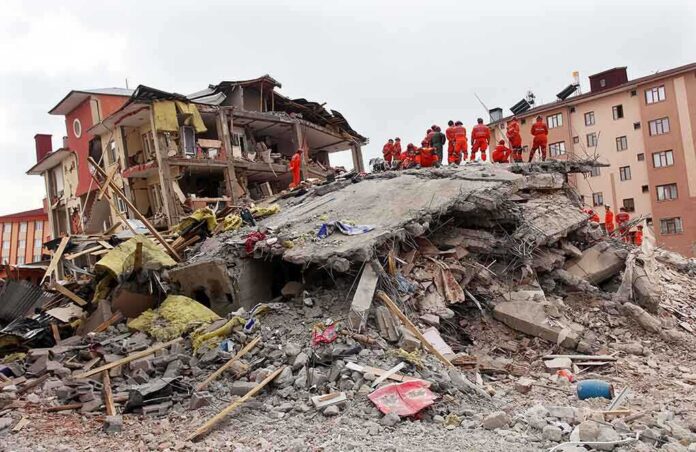
Rescuers and neighbors in Colombia are digging through collapsed buildings right now to pull survivors to safety.
Story Highlights
- Reports show active searches in Cali and other cities, with people working by hand to reach the trapped.
- Specialized rescue teams were deployed nationwide to locate survivors in unstable structures.
- Photo and video evidence confirm responders and civilians clearing rubble after the quake.
- Officials say the top priority is rescuing people buried under debris as operations continue.
Active Searches Underway In Cali And Beyond
Reporters on the ground say residents and rescue workers in Cali are moving concrete, rebar, and bricks to find survivors. Ambulances crowded streets near collapsed sites as teams cleared paths for stretchers and gear. Reuters video shows search crews wading through dust and debris, while neighbors pass buckets and tools in human chains to speed the work. These are not drills or staging scenes. This is live rescue, with people risking their lives to reach voices below the rubble.
Across western Colombia, volunteers and first responders are sifting through wreckage with bare hands, buckets, and saws. Live updates describe dozens of cities and towns where search-and-rescue is ongoing late into the night. The work is slow and dangerous. Crews must brace cracked walls and floors to avoid new collapses. Still, they press on because time matters. Rescue leaders say the first 24 to 72 hours can decide whether people trapped below survive.
Specialized Teams And Soldiers Join The Effort
National emergency officials activated four specialized Urban Search and Rescue teams from Bogotá, Envigado, Yopal, and Medellín, according to contemporaneous reporting. These teams bring listening devices, shoring tools, and trained dogs to locate people under debris. Colombia’s National Army deployed rescue platoons trained for collapsed structures, adding manpower and heavy equipment where it is safe to use them. Their mission is clear: stabilize hazards, find survivors, and move them to care.
This combined force is working structure by structure, triaging scenes based on reported cries, phone pings, and signs of life. Command posts assign tasks and track which buildings have been cleared. Medics set up treatment corridors to handle crush injuries, dehydration, and trauma. While final casualty numbers vary across outlets, the shared priority is beyond dispute: rescue people still buried and prevent further loss as aftershocks and unstable debris threaten workers and survivors alike.
Images And Eyewitness Video Confirm The Scene
An Associated Press photo gallery documents residents and rescue workers in the rubble of Cali, helmets on, faces covered in dust, as they search for survivors. Reuters footage captures similar scenes of rescue crews digging through broken concrete and twisted steel. These visuals align with city reports of trapped people and the steady stream of ambulances near collapsed buildings. They also match witness accounts of bucket brigades and nighttime searches under floodlights.
"Colombian Rescuers Pull Woman Alive From Earthquake Rubble in Pereira After More Than 30 Hours Trapped"
➡️ Emergency search & rescue teams in Pereira, Colombia, successfully pulled 32-year-old Daniela Largo alive from the rubble of a collapsed structure after she survived more… pic.twitter.com/SohYvuBNGq
— BreakinNewz (@BreakinNewz01) August 12, 2026
Some outlets disagree on exact death tolls and timelines. That happens in fast-moving disasters. But the core facts remain solid and well supported: buildings collapsed, people were trapped, and rescue operations continued through the day and into the night in Cali and other western cities. For readers at home, this is a reminder that real help comes from neighbors, trained teams, and firm leadership focused on saving lives, not on press conferences or politics.
Why It Matters To Americans
American readers care about clear priorities in a crisis. In Colombia, you see citizens and pros working side by side. That is what resilience looks like. It is also a lesson. Strong families, trained responders, and trusted local networks save lives when minutes count. Governments should cut red tape, move gear fast, and let experts lead. That approach reflects core conservative values: empower communities, act quickly, and protect life without waste or showmanship.
What To Watch In The Next 48 Hours
Rescue leaders will push deeper into the worst-hit structures as engineers assess risk. Officials may update casualty and survivor counts as searches continue and communications improve. Hospitals will report on treated injuries and needs. If weather or aftershocks complicate work, teams will adapt and rotate to prevent exhaustion. For now, the mission holds steady and urgent: find the living, clear the paths, and keep communities safe through the long nights ahead.
Sources:
youtube.com, today.com, lemonde.fr