

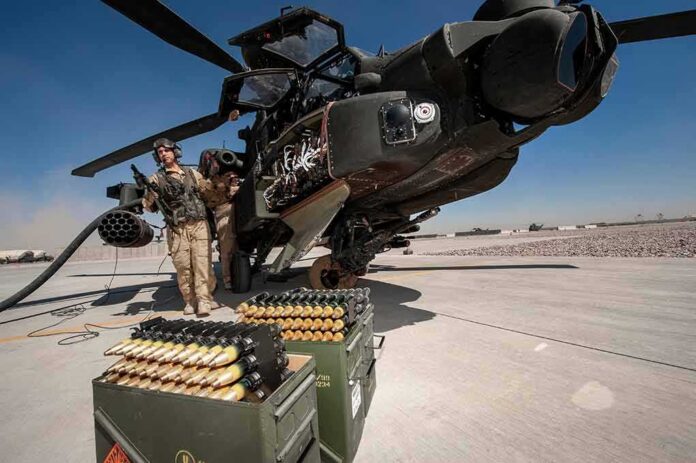
U.S. stockpiles for key munitions are stretched thin as Ukraine aid meets slow factory output, raising real questions about readiness in other hotspots.
Story Snapshot
- Transfers to Ukraine revealed shortfalls in U.S. stockpiles and industrial capacity, especially interceptors and precision weapons.
- Ukraine now relies on Western artillery, air defense, and strike systems, making U.S. supply gaps operationally serious.
- Artillery production rose but still trails wartime targets, confirming replenishment takes time.
- The Pentagon invested billions to expand production, yet near-term bottlenecks remain.
What the Record Shows on Stockpiles and Capacity
Center for a New American Security researchers found that transfers to Ukraine exposed “significant shortfalls” in U.S. stockpiles and industrial capacity. They flagged precision-guided munitions and air-defense interceptors as tight areas, and warned inventories were too small for a long fight with a major power. They also noted only moderate progress rebuilding precision stocks. These findings match what many service leaders have hinted at for two years: peacetime buying was not built for sustained, high burn rates.
Congressional researchers said Ukraine has largely burned through older Soviet systems. They report Ukraine depends on Western artillery, rockets, air defense, and medium-range strike systems. That means any pause or pinch in U.S. or allied supply can hit the front within weeks. This is not theory. It is logistics. When interceptors or shells dip, commanders must choose between saving rounds for defense or shooting to gain ground. Those are hard tradeoffs in any war.
Artillery Output: Gains, But Not at Wartime Speed Yet
The Army targeted 100,000 155-millimeter shells per month by the end of 2025. The Department of Defense reported about 40,000 per month by September 2024. That is real progress from early-war lows, but it still falls short of stated wartime goals. The gap underlines a plain fact: standing up lines, hiring skilled workers, and qualifying suppliers take time. Money alone cannot shave months off tooling, testing, and delivery cycles for critical munitions.
The Government Accountability Office reported that the Pentagon used $25.9 billion in funding to expand the industrial base and had committed or obligated more than $2.8 billion since February 2022 to increase weapons output. Almost $2 billion aimed to boost 155-millimeter shell production sevenfold. That investment shows the scale of the problem and the response. It also shows why near-term shortages can persist while plants are still ramping up to promised rates.
Interceptors and Precision Weapons: The Tightest Bottlenecks
Air-defense interceptors and precision-guided munitions remain the most sensitive pinch points. U.S. support has included Patriot and other air-defense systems, but interceptors are complex and slow to build. Analysts have warned that sustaining Ukraine’s air shield while keeping reserves for other theaters forces tough choices. Precision missiles face similar issues. They require specialized parts and trained labor, and they must meet strict quality standards. That is why backlogs can drag even after new contracts start.
“In late December,2 months before the U S war with Iran began, Army Chief of Staff Gen. Randy George warned that his service was critically short on missile defense munitions and the shortage would last another 5 years”
Pete Hegseth ousted George in Aprilhttps://t.co/LwY8aTDJ5s— Mz Rosenberg (@Whore_Pit_Viper) October 16, 2026
Earlier transfers showed how quickly drawdowns can bite. A Center for Strategic and International Studies review noted Javelin deliveries through August 2022 equaled about seven years of output at fiscal year 2022 rates. That figure captured the core challenge: peacetime production could not match wartime use. Since then, factories have added capacity, but the lesson stands. When output trails consumption for months, rebuilding reserves takes years, not weeks.
What Is Improving—and What Still Needs Work
Defense leaders say production is rising across several lines, and Congress pushed multiyear buys to give industry stable demand. That strategy helps with steel, explosives, and parts suppliers. It also supports allied backfilling and some Ukrainian domestic output. Still, public reports do not show that every shortfall is solved today. The most credible record says capacity is growing, but select stockpiles remain tight until new deliveries arrive in bulk and on time.
For President Trump’s national security team, the mission is clear. Keep America ready first, while aiding partners with what we can sustain. That means tracking real numbers: pre-war inventories, quantities transferred, current production, delivery schedules, and minimum readiness reserves. It also means prioritizing lines where a delay hurts most—interceptors, artillery shells, and precision missiles—so our troops never face a bare shelf when danger rises in another theater.
Why This Matters for Conservative Priorities
Americans expect a strong defense without endless spending sprees or blank checks. A focused rebuild honors that. It cuts waste, grows capacity at home, and keeps decisions under our control. Transparent goals, firm timelines, and tough audits align with limited-government principles and real deterrence. Ukraine’s needs are urgent, but U.S. readiness is nonnegotiable. Production must catch up, stockpiles must refill, and every dollar should strengthen American security first, with allies supported at sustainable levels.
Sources:
theamericanconservative.com, congress.gov, lordslibrary.parliament.uk, gao.gov