

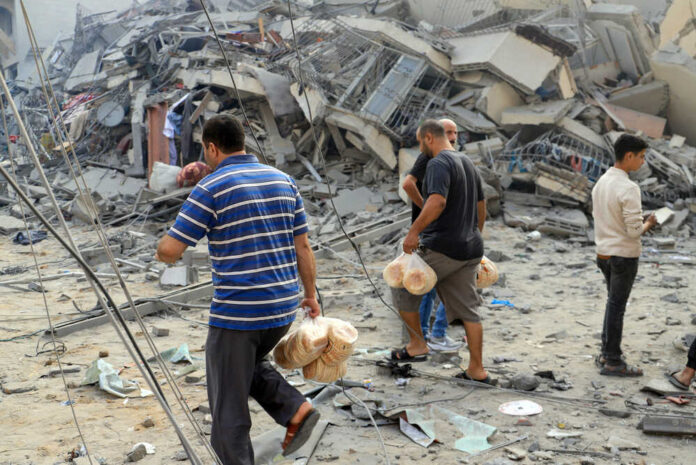
An Israeli air strike in Beirut has killed a senior Hezbollah leader, intensifying regional tensions and igniting international reactions.
Story Highlights
- Israel’s air strike in Beirut targets senior Hezbollah leader Haytham Ali Tabatabai.
- This action marks the first Israeli strike on Beirut since June 2025.
- Lebanese President condemns the strike, calling for international intervention.
- The operation aimed to disrupt Hezbollah’s rearmament efforts.
Israel’s Strategic Military Operation
On November 23, 2025, Israel conducted a precision air strike in Beirut, Lebanon, targeting Haytham Ali Tabatabai, a high-ranking Hezbollah commander. This marked the first Israeli strike on Beirut since June 2025, a strategic move to impede Hezbollah’s efforts to rearm and rebuild after the previous year’s conflict. The operation, publicly confirmed by Israeli authorities, aimed to eliminate Tabatabai, who led the elite Radwan Unit.
Tabatabai’s elimination is significant given his role as a senior commander within Hezbollah, a group backed by Iran and a persistent adversary of Israel. Hezbollah emerged in the 1980s following Israel’s invasion of Lebanon and has remained a central force in Lebanese politics. The Radwan Unit, led by Tabatabai, is known for its specialized cross-border operations, making his death a tactical victory for Israel.
Watch; https://www.youtube.com/watch?v=0DpaWkwat8Y
Lebanon’s Reaction and Potential Escalation
In response to the strike, Lebanese President Joseph Aoun condemned the action, calling for international intervention. The strike, coinciding with the anniversary of the end of the 2024–2025 Israel-Hezbollah war, has heightened regional tensions. Lebanese officials view the strike as a violation of sovereignty, sparking fears of renewed conflict and destabilization in the region. The Lebanese government faces increased pressure to respond amid escalating tensions.
The strategic significance of targeting high-profile leaders like Tabatabai is underscored by the potential disruption to Hezbollah’s command structure. However, security analysts warn of possible retaliatory measures by Hezbollah, increasing the risk of further escalation.
Geopolitical Implications and Future Outlook
Israel’s decisive action underscores its commitment to preventing Hezbollah’s resurgence and maintaining regional security. With Iran as Hezbollah’s patron, the strike also sends a message to Tehran about Israel’s readiness to counter threats. The operation has broader implications for regional stability, potentially affecting diplomatic efforts to prevent further conflict.
As tensions remain high, the international community’s role in mediating the situation is crucial. Ongoing cross-border exchanges and the potential for Hezbollah retaliation highlight the fragile nature of the current ceasefire. Israel’s strategy of targeting key figures aims to deter future attacks, but the risk of unintended escalation remains a concern for all parties involved.
Sources:
https://edition.cnn.com/2025/11/23/middleeast/israel-hezbollah-beirut-strikes-intl