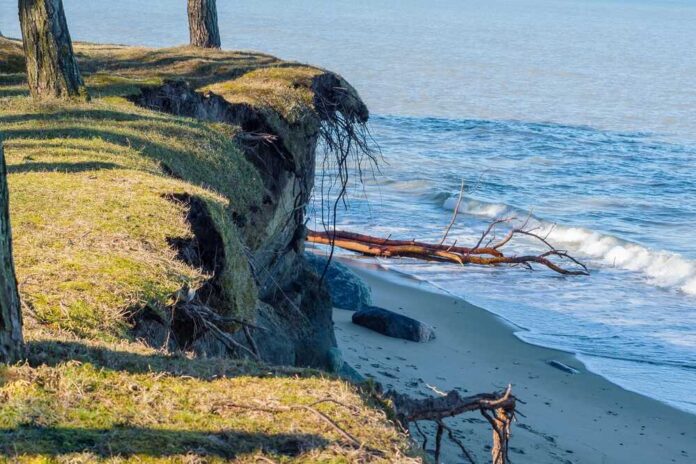
A Cold War-era nuclear bunker faces imminent collapse, symbolizing the unchecked erosion of our cultural heritage.
Story Highlights
- A Cold War nuclear bunker near Tunstall Beach is on the brink of collapse.
- Coastal erosion rapidly advances, threatening historical sites.
- Amateur historians capture the final days of this relic through viral videos.
- Local authorities issue safety warnings but maintain a “no active intervention” stance.
Nuclear Bunker in Peril
On the East Yorkshire coast near Tunstall Beach, a Cold War-era nuclear bunker is perilously close to collapse due to relentless coastal erosion. Built in 1959, this Royal Observer Corps post, originally designed to monitor nuclear detonations, is now exposed and teetering on a cliff edge. Once 100 yards from the sea, it now stands merely 25 feet above the beach, a stark reminder of the aggressive erosion that has claimed significant portions of the UK coastline.
Amateur historians Davey Robinson and Tracy Charlton have documented the bunker’s decline through daily videos, drawing international attention to the site’s impending demise. As waves erode the cliff at an alarming rate, the urgency for preservation contrasts sharply with the official “no active intervention” policy. Despite the clear risk to public safety, local authorities have issued warnings but taken no measures to prevent the collapse or protect the site.
Watch: https://www.youtube.com/watch?v=Tm5JhZzH3zw
Impact of Erosion on Cultural Heritage
The Holderness Coast, stretching from Withernsea to Hornsea, has historically lost approximately three miles of land since Roman times due to soft clay cliffs and rising sea levels. The bunker’s situation underscores the pressing issue of climate change and its impact on cultural heritage. As the erosion continues unchecked, this relic of the Cold War era stands as a poignant symbol of what is at stake when nature is left to reclaim its territory.
While some argue for intervention to preserve such sites, others highlight the impracticality of defending every vulnerable coastline. This debate is emblematic of broader discussions on balancing environmental conservation with heritage preservation, as climate change intensifies the challenges faced by coastal communities worldwide.
Calls for Action and Reflection
Robinson’s statement that the bunker may only have “a few days left” resonates deeply with those who value historical preservation. However, the ongoing erosion serves as a reminder of the broader environmental changes threatening countless heritage sites globally. The silent collapse of this time capsule is not only a loss of a historical artifact but also a call to action for greater efforts in managing our natural and cultural resources.
Nuclear Bunker Faces Final Days As Coastline Rapidly Erodes https://t.co/1lE6OOeMPM
— zerohedge (@zerohedge) January 17, 2026
As this chapter of history crumbles into the sea, it challenges us to consider how we might better protect our past while confronting the realities of an ever-changing landscape. The situation at Tunstall Beach invites reflection on our responsibilities in safeguarding the stories and structures that define our shared heritage.
Sources:
Nuclear bunker ‘days away’ from falling into sea
Nuclear bunker faces final days as coastline rapidly erodes
Nuclear bunker teetering on the edge of a cliff is ‘days away’ from falling into the sea
Nuclear bunker on the brink of collapse due to coastal erosion