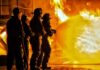


A fast‑moving Southern California wildfire is forcing tens of thousands from their homes while years of failed Democrat policies leave communities more exposed than they should be.
Story Snapshot
- The Sandy Fire near Simi Valley has burned well over 1,300 acres, with containment initially reported at or near zero as evacuations surged.[1][4]
- Tens of thousands of residents have faced evacuation orders or warnings as the blaze threatens homes and key sites like the Ronald Reagan Presidential Library.[1][2]
- County alerts and television coverage show confusion between “warnings” and “orders,” a recurring problem in California’s fragmented emergency systems.[1][2][3]
- Multiple wildfires are burning across Southern California, exposing how decades of mismanagement, red tape, and green mandates have left the West dangerously vulnerable.[4][5]
Sandy Fire Slams Simi Valley With Fast Growth And Zero Initial Containment
Television crews on the ground reported that the Sandy Fire above Simi Valley surged to more than one thousand three hundred acres with zero containment during the first evening of live coverage, turning clear skies into a roaring wall of smoke and flame.[1] Reporters described wind‑driven fire behavior racing through dry brush in minutes, while local fire officials warned that structures were immediately threatened and at least one home had already been destroyed.[1][2] This kind of explosive growth has become grimly familiar for Californians every fire season.[4]
Authorities said the blaze began late Monday morning near a residential area and climbed quickly into the surrounding hills, forcing firefighters to shift from routine attack to full‑scale structure defense.[1][4] Crews deployed helicopters and fixed‑wing air tankers to drop water and retardant as engines lined up along subdivision streets to protect homes.[2][4] National coverage noted that fire behavior was intense enough to scatter wildlife and send thick smoke into the broader Los Angeles basin, degrading air quality across multiple counties.[3]
Evacuation Orders, Warnings, And A Confusing Patchwork Of Alerts
As flames pushed toward neighborhoods, multiple outlets reported that tens of thousands of people in and around Simi Valley came under mandatory evacuation orders, while many more were placed under evacuation warnings and urged to prepare to leave.[1][2] One broadcast described “everything in red” on the incident map as active mandatory evacuation zones, with anchors stressing that deputies were going door‑to‑door to get families out.[1] Other coverage cited more than seventeen thousand residents ordered to evacuate, and separate reports mentioned evacuation impacts to schools and key facilities.
Los Angeles County’s own emergency page, however, used more technical language, listing the Sandy Fire as a live incident near Simi Valley and posting evacuation “warnings – Level 2 – Set” for specific zones such as AGO‑C304, CAL‑C401, and several Los Angeles Fire Department grid codes.[3] The county then directed residents to Ventura County’s emergency site for incident‑level details, effectively bouncing people between jurisdictions.[3] This split illustrates how fragmentation between county systems and live television descriptions can confuse families trying to determine whether they must leave immediately or simply be ready.[1][2][3]
Homes, Schools, And The Reagan Library Put At Risk
News crews on scene confirmed that one home had been destroyed and at least one additional structure damaged, even as firefighters mounted a combined air‑and‑ground “assault” to save the vast majority of threatened properties.[1][2][4] Reporters noted that crews focused heavily on keeping flames away from dense subdivisions, with dozer lines and engines concentrated where brush meets backyard fences.[1][2] While detailed damage assessments will come later, early accounts consistently describe “hundreds” of homes successfully defended from advancing fire fronts.[1][2][4]
Coverage also highlighted how the Sandy Fire disrupted daily life far beyond the immediate burn scar, with evacuations forcing the closure of schools and even affecting the Ronald Reagan Presidential Library.[2] One transcript stated that the fire “shut down the Ronald Reagan Library today,” while others described precautionary actions to protect the hilltop complex as smoke and embers approached.[2] For many conservatives, seeing the Reagan Library under threat is a symbolic reminder that California’s policy failures are now encroaching on the very legacy of the president who revived American strength and common‑sense governance.[2]
Multiple Southern California Fires Reveal Years Of Policy Failure
While the Sandy Fire grabbed headlines, it was not the only blaze demanding resources. Live coverage from Southern California stations documented simultaneous wildfires, including the Bain Fire in Riverside County, with anchors describing “major fires burning across our area” and showing maps dotted with active incidents.[4][5] California’s own incident index confirms that state and local crews are juggling numerous wildfires of ten acres or more, underscoring that this is a broader regional emergency rather than an isolated flare‑up.[4][5]
California’s fire agency warns that significant fire potential is increasing from spring into summer, yet decades of restrictive environmental rules, blocked forest‑management projects, and overreliance on intermittent “green” energy have left communities more vulnerable when the winds pick up.[4][5] Conservatives watching this pattern see a familiar story: Sacramento and Washington bureaucrats regulate landowners and utilities into paralysis, then act shocked when overloaded fuel loads and aging infrastructure contribute to yet another catastrophic season.[4][5] Meanwhile, ordinary families are left to scramble with go‑bags, pets, and children as sirens wail through their neighborhoods.[1][2]
Sources:
[1] YouTube – Sandy Fire swells to more than 1300 acres as evacuation …
[2] YouTube – Evacuation orders & warnings: Sandy fire spreads rapidly …
[3] Web – Emergency – COUNTY OF LOS ANGELES
[4] Web – Incidents | CAL FIRE – CA.gov