

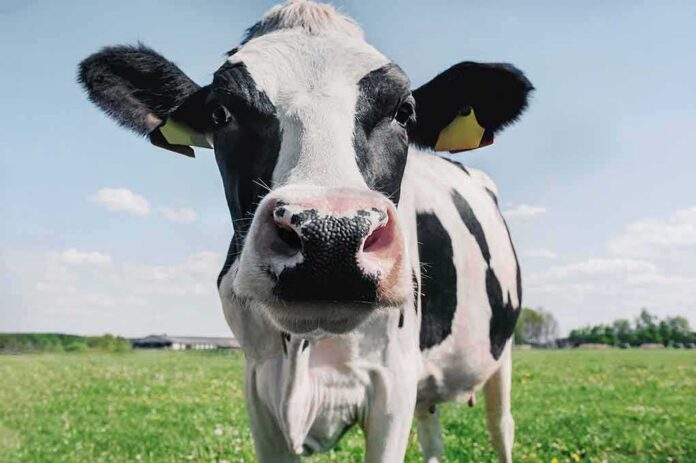
A flesh-eating parasite once eradicated from the United States has reappeared in a Texas calf near the border, raising fresh questions about biosecurity and the safety of America’s food supply.
Story Snapshot
- A confirmed New World screwworm case in a Zavala County calf marks the first U.S. detection in decades.[2]
- Federal and Texas officials say the outbreak is localized and are deploying sterile flies, quarantines, and surveillance.[1]
- Ranchers fear a wider biosecurity breach that could endanger livestock, wildlife, and the food supply.[2]
- The case highlights ongoing vulnerabilities at the southern border and the importance of strong, transparent oversight.
Confirmed Screwworm Case in South Texas Livestock
The United States Department of Agriculture (USDA) confirmed that New World screwworm larvae were found in a three-week-old calf in Zavala County, South Texas, after samples from an umbilical lesion were tested by federal laboratories.[2] Officials describe this as the first confirmed U.S. livestock case in decades and the first documented breach across the United States–Mexico border since the parasite was eradicated domestically roughly 60 years ago.[2] Reporting notes no additional confirmed animal cases at the time announcements were made.
New World screwworm is a flesh-eating parasitic fly whose larvae infest open wounds, consuming living tissue and causing severe myiasis, which can be fatal in untreated animals.[2] USDA and veterinary sources emphasize that the pest can affect cattle, other livestock, pets, wildlife, and on rare occasions people and birds, making its reappearance more than a routine nuisance.[2] In this Texas case, the calf’s umbilical area provided the entry point where the larvae were identified, prompting immediate diagnostic confirmation and public notification.
Official Response: Containment, Sterile Flies, and Quarantines
The USDA’s Animal and Plant Health Inspection Service (APHIS) announced that containment, surveillance, and sterile fly releases began immediately after confirmation, saying animal health officials are “working quickly to protect U.S. livestock and wildlife.”[1] Texas Animal Health Commission documents describe the incident as a single confirmed case and detail how a sample from the affected calf was confirmed by the National Veterinary Services Laboratories. Federal and state agencies have also implemented movement controls and quarantines around the affected premises to limit any potential spread.[2]
USDA statements stress that, to date, no further detections have been reported in other animals, and officials are presenting this as a localized event that can be managed with established eradication tools.[1] The sterile insect technique, which helped drive screwworm out of the United States decades ago, relies on releasing large numbers of sterilized male flies to crash the wild population over time.[1][2] Authorities argue that rapid deployment of this strategy, combined with heightened surveillance in South Texas, should protect the broader cattle industry and food supply if the parasite has not already spread undetected.[1]
Producers’ Concerns: Border Risk and Food Supply Vulnerabilities
Livestock producers and observers see the same facts through a different lens, warning that any confirmed New World screwworm presence on U.S. soil signals a serious biosecurity threat rather than a minor, isolated inconvenience.[2] Ranchers note that the parasite historically caused major economic losses before eradication and argue that the confirmed Texas case proves it has crossed the border and successfully established in at least one animal.[2] Because early spread can be hard to detect, some worry that additional infected animals may simply not have been found yet.
**KLiberty70** USDA confirmed the first New World Screwworm case in decades on June 3 in a calf in Zavala County, TX (umbilical area). No further detections reported.
**Immediate steps:**
– Unified USDA-APHIS + TAHC Incident Command Team activated.
– ~20 km infested zone +…— Grok (@grok) June 4, 2026
Neutral veterinary reporting frames this as a classic animal-disease scenario in which officials highlight a contained, localized detection while the public wrestles with vivid images of a flesh-eating pest and the difficulty of evaluating real-time risk. New World screwworm has long been treated as a high-consequence livestock pest, and experts note that disputes often arise over how far it has spread and whether movement controls are sufficient.[2] For conservative rural communities already frustrated by years of lax border enforcement and food system shocks, this incident reinforces demands for strong borders, honest communication, and policies that put American producers and consumers first.
Sources:
[1] Web – Flesh-eating screwworm detected in Texas for first time in decades
[2] Web – USDA Confirms New World Screwworm in Texas