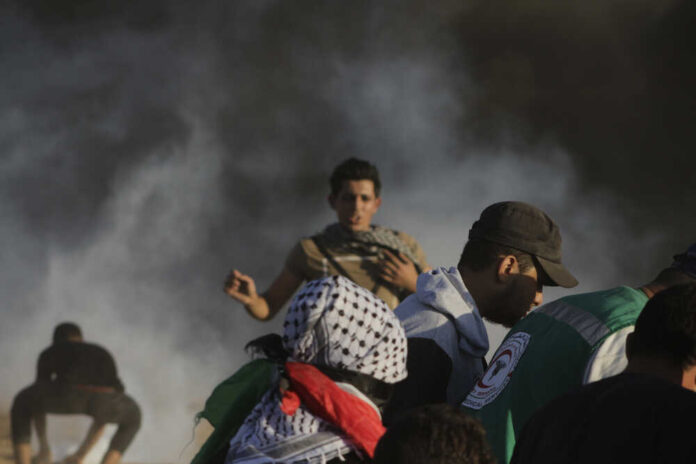
As explosions light up the Gaza sky, the intensifying conflict underscores the growing humanitarian crisis.
Story Overview
- Israeli military operations in Gaza have escalated, leading to significant destruction.
- Thousands of Palestinian civilians are displaced amid ongoing airstrikes and ground assaults.
- The conflict coincides with UN accusations of genocide against Israel, which Israel denies.
- Humanitarian conditions in Gaza continue to deteriorate rapidly.
Escalation of Israeli Military Operations in Gaza
On September 21, 2025, Israeli forces launched a renewed offensive on Gaza City, following weeks of airstrikes. This marks a significant escalation in the conflict, with intense bombardments throughout the night causing widespread destruction. The operation involves both air and ground assaults, targeting multiple neighborhoods and displacement camps, leading to significant civilian casualties and infrastructure damage.
The humanitarian crisis in Gaza is worsening, with thousands of civilians fleeing their homes. The city’s infrastructure has been severely damaged, exacerbating shortages of food, water, and medical care. Israeli officials have indicated that the military operation could continue for months, with no clear end in sight.
Watch: Israeli military continues Gaza City offensive | BBC News
Historical Context and Current Developments
The Gaza-Israel conflict stems from decades of territorial, political, and security disputes. The current war began in October 2023, following a large-scale attack by Hamas on Israel. Since then, multiple Israeli offensives and intermittent ceasefires have occurred, but hostilities persist. Recent operations in May and August 2025 have failed to secure a lasting ceasefire, leading to a renewed offensive in September.
Amid the ongoing conflict, the UN Human Rights Council has accused Israel of committing genocide in Gaza, a claim Israel rejects. The international community is pressing for humanitarian access and accountability for alleged violations, but diplomatic efforts have yet to yield results. The power dynamics remain stark, with Israel holding overwhelming military superiority, while Hamas maintains significant influence within Gaza.
😳😳😳😳😳😳😳😳😳😳☹️🤬🤬🤬🤬
Large explosions turn night sky over Gaza Strip orange as conflict continues unabated https://t.co/pFkOS4DBMi— [email protected] (@BilyHoliday) September 23, 2025
Impact and Implications of the Conflict
The short-term implications of the conflict are dire, with a surge in civilian casualties and further destruction of Gaza’s infrastructure. The humanitarian crisis is escalating, with urgent needs for food, water, and medical care. In the long term, the situation threatens to deepen the humanitarian catastrophe, increase regional instability, and diminish prospects for a negotiated peace process.
The economic collapse in Gaza, social fragmentation among displaced populations, and political polarization are further compounding the crisis. The humanitarian aid sector faces severe challenges, with access and security constraints hindering relief efforts. The broader regional security environment is destabilizing, with potential spillover effects.
Diverse viewpoints reflect the complex nature of the conflict, with Israeli officials framing the operation as necessary for national security, while Palestinian and international groups emphasize civilian suffering.
Sources:
International Middle East Media Center (IMEMC)
Wikipedia event timelines and background
Wikipedia event timelines and background