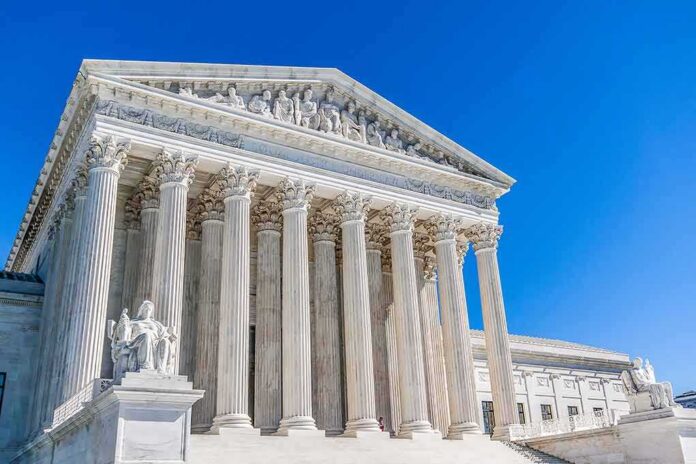
New research confirms that America protects even offensive speech far more than Europe does, reinforcing President Trump’s Mount Rushmore call to defend our liberty.
Story Highlights
- European Union law criminalizes hate speech across core categories, while U.S. law protects most offensive speech.
- Supreme Court precedent bars the government from punishing speech just because it offends listeners.
- U.S. limits are narrow: true threats, incitement, and defamation remain unprotected.
- President Trump tied free speech to American culture and national strength in his 2026 Mount Rushmore address.
What U.S. Law Protects That Europe Often Punishes
Comparative law summaries report a clear split. The United States protects even harsh or offensive ideas, unless the speaker crosses narrow lines like true threats or direct calls for imminent violence. The European Union requires member states to criminalize hate speech tied to race, religion, descent, or national or ethnic origin, and many nations go further. That means a statement that is legal political speech here can be a crime there. The gap is real, not rhetoric.
U.S. doctrine also rejects viewpoint discrimination. The Supreme Court has said government cannot punish speech just because some people find it offensive. That principle shields unpopular ideas from censors who want a safe, polite public square. Europe’s framework moves the other way by carving out broad hate-speech rules. Those rules may come from a desire to avoid social harm, but they give officials power to police words. Americans know where that can lead.
Why This Matters for Everyday Americans
Free speech is not about being nice; it is about keeping government in check. When leaders decide which views are allowed, citizens lose their voice first and their rights next. Narrow U.S. limits target real dangers, like threats and incitement, and leave room for tough debates. European rules try to prevent offense and hostility, but that approach risks turning prosecutors into culture referees. Our model trusts adults to answer bad speech with better speech, not handcuffs.
President Trump underscored that link between culture and liberty at Mount Rushmore. He said our freedoms endure not only because of “words on paper,” but because of America’s “culture and character,” calling this nation the most exceptional in history. That message fits the legal record. Courts have drawn hard lines that protect dissent, satire, and even ugly speech. Those lines sustain the open debate that fuels accountability, innovation, faith, and family life without a speech police at the door.
Limits, History, and Honest Caveats
America’s protection is strong, but not blind. True threats, incitement, and defamation remain unprotected for good reason. Critics also point to low points like the 1798 Sedition Act and other crackdowns in our past. Those failures remind us that liberty survives only when people defend it. The key fact stands today: current U.S. doctrine and practice shield offensive ideas far more than European systems that criminalize large categories of speech about identity and belief.
Some scholars argue that European models better address private pressure on speech. They warn that strong limits on government do not stop employers or platforms from silencing voices. That debate deserves attention. But it does not change the central legal divide on government power over words. Here, the First Amendment blocks the state from punishing speech because it offends. There, the government often can. For citizens who value constitutional limits, that is the crux of the issue.
What Patriots Should Watch Next
Parents, veterans, faith leaders, and small-business owners want a country where they can speak plainly without fear of a government knock. The European path sets a precedent that offense equals a crime. The American path says adults can hear hard truths and argue back. Lawmakers, prosecutors, and judges must hold the line. Schools and civic groups should teach the habit of debate, not cancellation. Vigilance, not silence, keeps our republic strong and our rights intact.
Should Trump be carved into Mount Rushmore!?
YES or NO pic.twitter.com/YR3IYfvulB
— AXEL VASA (@Thewestcoanp) November 26, 2026
As culture fights and “hate speech” campaigns spread, demand bright legal lines that punish violence, not viewpoints. Demand due process, not speech codes. And remember what the Court has said and the record shows: in the United States, even offensive words are protected, because the power to ban them always lands hardest on dissenters. That is why America remains the global refuge for free minds, and why Thanksgiving for the First Amendment is more than a tradition—it is a duty.
Sources:
reason.com, govinfo.gov, europarl.europa.eu