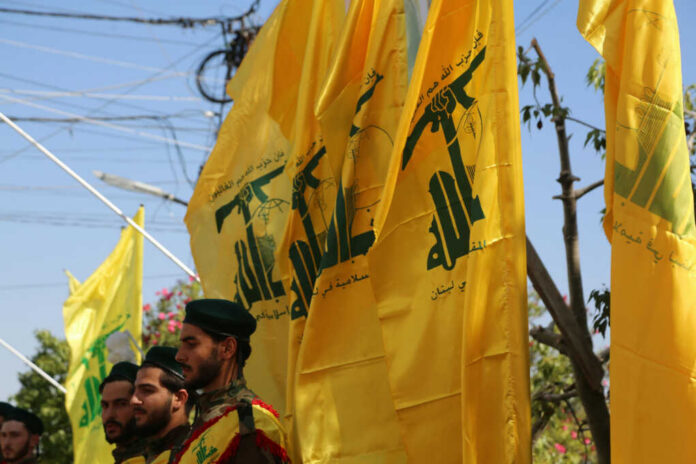
Hezbollah’s guerrilla infrastructure in southern Lebanon is colliding with Israel’s widening air campaign—pushing the region toward a ground war that could redraw the border’s security reality.
Story Snapshot
- Hezbollah fired missiles toward Haifa on March 1, helping trigger a major Israeli escalation.
- Israel carried out more than 250 airstrikes and issued large-scale evacuation orders in southern Lebanon and parts of Beirut in early March.
- Israeli forces signaled preparations for a potential ground invasion aimed at creating a buffer zone south of the Litani River.
- Lebanon’s leadership warned Hezbollah’s actions could push the state closer to collapse and floated options including a truce and disarmament support.
Missile Fire and Airstrikes Signal a Shift Toward Direct Confrontation
Hezbollah’s March 1 missile attack toward Haifa marked a sharp moment in an already unstable post-ceasefire environment. Conflict tracking and reporting cited the strike as a catalyst for Israel’s intensified response, including a wave of air operations aimed at Hezbollah-linked targets. Israel’s posture shifted from limited, episodic actions to a larger campaign that appears designed to degrade Hezbollah’s ability to operate near the border and to set conditions for possible ground action.
Israeli evacuation orders that followed underscored how quickly the fight expanded beyond tactical exchanges. Reporting described orders affecting large populations, including warnings tied to airstrikes in southern Lebanon and a separate evacuation warning for parts of southern Beirut that impacted hundreds of thousands. Those moves suggested Israel expected sustained operations rather than brief retaliation, while also increasing the risk of humanitarian strain and political shock inside Lebanon as families were pushed to flee.
Israel’s Buffer-Zone Goal Meets Hezbollah’s Village-Based Guerrilla Model
Israel’s stated intent to establish a buffer zone south of the Litani River reflects a strategic objective: reduce cross-border fire and protect northern communities by pushing Hezbollah’s effective reach farther back. Analysts cited preparations by multiple Israeli divisions and described “next weeks” as a timeframe discussed for expanded operations. That matters because a buffer-zone concept typically demands persistent control or repeated clearing operations—both of which can pull militaries into prolonged, grinding engagements.
Hezbollah’s comparative advantage in southern Lebanon has long been tied to defensive networks embedded in towns, hills, and fortified positions. Conflict analysis anticipated that a ground incursion would likely meet resistance shaped by terrain and village fighting, echoing patterns seen in earlier escalations. That kind of battlefield heavily favors guerrilla tactics—small units, ambushes, anti-armor threats, and short-range fire—rather than set-piece battles. The result is usually higher risk for civilians caught near launch sites and contested routes.
Ceasefire Claims Collide With Evidence of Re-Armament and Infrastructure Rebuilds
Lebanese officials previously asserted that disarmament steps had been taken south of the Litani, but subsequent attacks and counterattacks raised immediate credibility problems for that claim. Security reporting described Israeli strikes in February targeting Hezbollah operatives allegedly involved in restoring infrastructure in southern locations such as Yanouh, Ayta Ash Shaab, and Tiri. Those operations, along with later missile launches, reinforced Israel’s argument that Hezbollah retained or rebuilt operational capacity despite political assurances.
Israel also framed parts of its air campaign as targeting Hezbollah’s “military/financial infrastructure,” a formulation that signals a broader target set than launch teams alone. A wider target set can weaken a militant organization’s sustainment, but it can also increase blowback risks—especially in a fragile state where Hezbollah is intertwined with political and social systems. The available reporting does not fully detail independent verification for every target struck, so the public record remains incomplete on specific damage and on-the-ground attribution in each location.
Lebanon’s Leadership Warns of State-Level Consequences
Lebanon’s President Joseph Aoun publicly blamed Hezbollah for endangering the country and warned the trajectory could push Lebanon closer to collapse. He proposed options that included a truce, international support for disarmament efforts, and even the possibility of direct talks with Israel. Those statements highlighted Lebanon’s central dilemma: the state is expected to control armed groups within its borders, yet it often lacks the leverage to enforce that control when powerful militias operate outside normal chains of command.
For Americans watching from afar—especially after years of foreign-policy drift and “no consequences” globalism—this is a reminder that weak states become staging grounds for proxy conflict. The reporting describes Hezbollah as Iran-backed, and the escalation was linked in one account to external shocks involving Iran’s leadership. While some triggering details remain difficult to independently confirm across sources, the overall pattern is clear: when terrorist and militia networks embed inside civilian areas, wars escalate fast, and ordinary families pay first.
Sources:
Israel prepares ground invasion Lebanon, Hezbollah formally joins war
Israeli Operations in Lebanon Against Hezbollah: February 9–15, 2026