Iran may have just tested President Trump’s red line by bringing down a U.S. Apache over the Strait of Hormuz, and Washington is now weighing how hard to hit back.[1][2][3][8]
Story Snapshot
- President Trump says Iran shot down a U.S. Apache helicopter over the Strait of Hormuz and vows that America “must respond.”[1][2][6]
- The U.S. Central Command confirms the Apache went down near Oman and both crew members were rescued, but its public wording stops short of blaming Iran so far.[2][7][8]
- The cause is officially “under investigation,” even as media headlines and social posts race ahead with talk of an Iranian “attack.”[1][2][3][8]
- The episode raises the risk of fast escalation with Iran in a region already tense from missile strikes, naval blockades, and past clashes like the Soleimani operation.[2][4][6][7]
What We Know About the Downed Apache
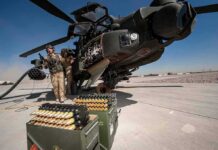
U.S. officials say a U.S. Army AH-64 Apache attack helicopter went down near the Strait of Hormuz, off the coast of Oman, during a patrol over regional waters.[1][2][7][8] U.S. Central Command reported that two American soldiers on board were safely rescued within about two hours and are in stable condition.[2][7][8] Central Command’s statement said only that the helicopter “went down” and that the cause is under investigation, without publicly naming Iran as the shooter in its own wording.[2][7][8]
President Donald Trump has gone further in public than the initial military statement. In a Truth Social post and later comments, he said he had been informed that “the Iranians shot down one of our highly sophisticated Apache helicopters while patrolling over the Strait of Hormuz.”[1] He stressed that both pilots are safe and “fine,” but added that the United States “must, of necessity, respond to this attack,” making clear he views it as hostile action by the Iranian regime.[1][3][6]
Why Trump’s Statement Raises the Stakes
News outlets across the world quickly echoed Trump’s framing that Iran shot down a U.S. Apache and that Washington is now preparing a response.[2][3][4][6] One report from Anadolu Agency still called it an “alleged Iranian attack,” which shows that not every outlet treats the Iranian role as fully proven yet.[3] Central Command’s careful language about a helicopter that “went down” while the cause is under investigation adds to that public uncertainty about exactly how the Apache was lost.[2][7][8]
This kind of gap between fast political statements and slower technical proof is common in sudden military incidents. In the Strait of Hormuz and nearby waters, both sides have strong incentives to shape the story early, before investigators finish their work.[7][8] For the United States, calling it an Iranian shootdown sends a deterrent message and builds support for retaliation. For Iran, staying quiet or denying involvement can cloud the picture and try to dodge the cost of escalation.[1][7]
Remembering the Track Record With Iran
Conservatives remember that this is not the first time Trump has faced Iranian aggression and drawn a line. During his first term, he ordered a drone strike that killed Islamic Revolutionary Guard Corps commander Qasem Soleimani after a series of attacks on Americans, signaling that U.S. blood is a red line.[4] Today’s claims about an Apache being brought down come on top of an already hot conflict that includes Iranian attacks, missile exchanges, and harassment in key sea lanes.[2][6][7]
Reports describe Iran and Israel trading missile barrages while U.S. forces maintain a naval blockade in the Strait of Hormuz to choke off Iran’s ability to use that waterway as a weapon against global energy flows.[2][7][8] American Apache helicopters have been deployed to the area as part of efforts to protect U.S. bases, ships, and oil traffic from Iranian drones and other threats.[8] Losing even one of these aircraft, whether to hostile fire or a crash, underlines how dangerous the front line is for U.S. crews.[1][7][8]
Next Steps: Evidence, Retaliation, and Avoiding a Trap
The public record so far does not include a finished mishap report, wreckage analysis, or sworn crew testimony that explains exactly why the helicopter went down.[1][2][7][8] Central Command says the cause is still under investigation, and outside analysts are waiting for more details, such as radar tracks, satellite images, or debris testing, that could clearly prove whether Iranian fire was responsible.[2][7][8] No clear public denial or alternative story from Iranian officials has appeared yet in the available coverage.[1][2][3]
Trump vows retaliation against Iran for shooting down US helicopter https://t.co/FgGZBsz4sG
— Parrot Newspaper (@ParrotNewspaper) June 9, 2026
For American conservatives, two things can be true at once. First, any Iranian shootdown of a U.S. military aircraft is an attack on our people and our deterrence that must be answered in a way Tehran understands.[1][2][6] Second, rushing into a wider war without a solid factual record would hand our enemies a propaganda win and risk American lives on unclear terms.[1][2][7][8] Getting the facts out, backing our troops, and enforcing real red lines are all part of the same job.
Sources:
[1] Web – The Iranian regime may have just crossed President Trump’s red line.
[2] Web – Trump says Iran shot down US military helicopter over the Strait of …
[3] Web – Live Trump vows retaliation after Iran shoots down US Apache
[4] Web – Trump says US ‘must’ respond after alleged Iranian attack on …
[6] YouTube – Trump: We will respond to Iran’s downing of a US Apache …
[7] Web – Trump blames Iran for downing US helicopter off Oman, vows response
[8] Web – US Military Says Helicopter Crash Near Strait Of Hormuz ‘Under …