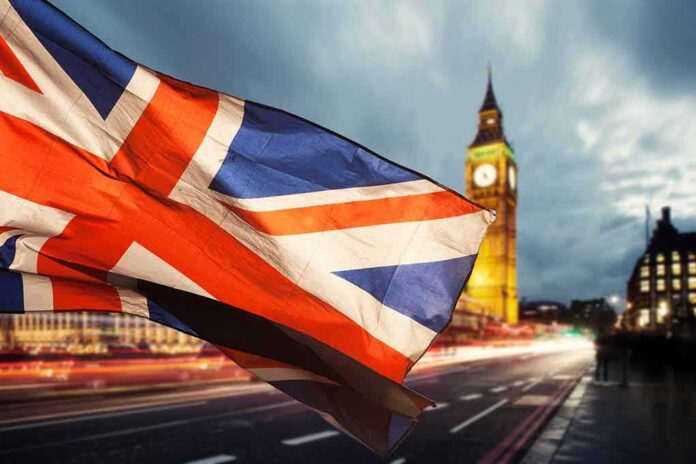
When the Kremlin says it has “no hope” for better ties with a new British prime minister, it is not just reacting to one leader’s views; it is expressing a structural judgment on a relationship Moscow now treats as adversarial by design.
Key Points
- Kremlin spokesman Dmitry Peskov has stated that Russia has “no hope” for improved relations with the UK under Prime Minister Andy Burnham, explicitly tying this to Burnham’s firm support for Ukraine.
- Burnham arrives in Downing Street as a long‑standing critic of the Kremlin, and Russian state outlets already frame him as part of a British political consensus that is deeply hostile to Russia.
- Moscow’s pessimism over Burnham continues a pattern: the Kremlin issued similarly bleak assessments when Liz Truss and Keir Starmer took office, insisting no UK leader is likely to change London’s stance.
- Behind the rhetoric lies a broader doctrine: Russia now positions the UK as one of its most hostile Western adversaries, with relations described by analysts as “broken” and structurally adversarial.
Peskov’s “no hope” message and what Moscow is really saying
Asked directly whether Andy Burnham’s arrival in Downing Street could improve relations, Dmitry Peskov’s answer was blunt: “No, we do not have such hopes.” Russian and international reporting of that briefing is consistent: the Kremlin is formally ruling out any prospect of a thaw with London under the new prime minister. Peskov did more than offer a pessimistic prediction. He anchored his response in Burnham’s early conduct, highlighting that one of Burnham’s first steps was to issue unambiguous statements of support for Ukraine and to signal an intention to maintain, and if necessary intensify, British backing for Kyiv. In the Kremlin’s narrative, that is not a neutral policy choice; it is proof that the UK intends to “continue the war” against Russia by proxy in Ukraine.
That framing matters. Moscow is not saying that personal chemistry or a clever diplomatic breakthrough is missing. It is saying that as long as Britain arms Ukraine and backs sanctions, any British leader will be treated as the political face of a hostile camp. Burnham, in Russian eyes, simply steps into a role defined by the structural confrontation between Russia and the Western coalition supporting Kyiv.
Burnham’s profile in Moscow: a “consistent critic of Russia”
By the time Burnham was on course for No 10, Russian officials and media had already sketched the outline of their case against him. Rossiyskaya Gazeta, a government newspaper, described him as “a consistent critic of Russia, who constantly calls for the West to adopt a tougher stance on Russia.” That is not casual invective; it signals to a domestic Russian audience that Burnham belongs to the same category as his predecessors: an ideologically committed adversary rather than a pragmatist open to compromise.
Peskov, speaking as Starmer’s premiership was collapsing, made the broader point explicit. Starmer, he argued, had “maintained relations at the very lowest level” and had done nothing to distinguish himself in terms of improving ties. But, crucially, Peskov added that it was “unlikely that anyone on Britain’s political scene will have a position on our bilateral relations that differs significantly from Keir Starmer’s.” This is the template Burnham inherits. When he speaks to Volodymyr Zelensky and publicly promises there will be “no change” in London’s policy on Ukraine and that Britain will stand with Kyiv “100%,” he confirms exactly what the Kremlin said it expected. From Moscow’s perspective, Burnham is not a fresh variable; he is evidence that the UK political class is locked into a long-term anti-Russian alignment.
A pattern of pre‑emptive pessimism on UK leaders
The “no hope” line is not new. When Liz Truss became prime minister in 2022, Peskov told reporters that Russia did “not expect any positive changes” and warned that relations, already at a low, could “not be ruled out” from getting even worse. He pointed to the way contenders for the premiership had competed in anti-Russian rhetoric, promising tougher steps against Moscow. The message was that the problem lay not with a single individual but with the political incentives inside Britain.
Later, when Keir Starmer took office and then resigned, the Kremlin struck the same note. Peskov said Starmer would not be remembered in Moscow for efforts to improve ties and dismissed the idea that his departure would unlock any improvement, arguing that there was no one in UK politics who would substantially diverge from his hostile stance. The Burnham statements fit cleanly into that pattern. Moscow has learned that every British change of prime minister since the mid‑2010s has coincided with continuity, not reversal, in the UK’s Russia policy: sanctions have tightened, military and intelligence cooperation with allies has deepened, and support for Ukraine has only grown more robust. Publicly disavowing any “hope” of better ties is a way to set domestic expectations and signal to Western interlocutors that Russia views the relationship as frozen at a confrontational baseline.
How relations became structurally adversarial
To understand why Peskov can speak so categorically, you have to see how far the relationship has deteriorated over the past two decades. Analysts at Chatham House, writing before the full‑scale invasion of Ukraine, described UK–Russia political relations as effectively “broken,” after a long downward trend stretching back to the early 2000s. Key milestones include the 2006 poisoning of Alexander Litvinenko in London and the 2018 Novichok attack in Salisbury, both of which the UK publicly attributed to Russian state agencies, triggering diplomatic expulsions and a deep collapse of trust. Since 2014, Russia’s annexation of Crimea and the broader Russo‑Ukrainian war have entrenched Britain’s view that Russia is a revisionist power to be deterred, not a partner to be cultivated.
On the Russian side, policymakers have come to see the UK as both hostile and strategically influential. Security Council secretary Nikolai Patrushev in 2019 branded Britain the “standard bearer” of an anti-Russian Western campaign, reflecting a wider elite perception that London drives some of the most hawkish positions in NATO and the EU, particularly on sanctions, intelligence sharing, and support for Ukraine. Research on Russian threat narratives shows the UK now functions as a central villain in Kremlin propaganda, cast variously as a Russophobic saboteur, a manipulator of NATO, or an irrelevant but malign “Anglo‑Saxon” power whose real influence must nevertheless be contained.
When that is your baseline, a new British prime minister who pledges deeper support for Ukraine is not an opportunity; he is an incoming chief antagonist. Burnham’s individual record is almost secondary to the larger storyline in Moscow: Britain is structurally positioned as a hostile actor, and any leader who does not overturn that posture wholesale will be treated accordingly.
Burnham’s Ukraine stance and why it matters so much in Moscow
For the Kremlin, British policy on Ukraine is the central litmus test. Since 2022, the UK has been at the forefront of arming Kyiv, often taking steps—supply of advanced anti‑tank weapons, long‑range missiles, and main battle tanks—before larger allies moved, effectively pulling the rest of NATO along. Russian strategists increasingly describe this as a “locomotive” effect: London sets the pace, and others follow. In that context, Burnham’s immediate reaffirmation of full support for Zelensky is not just a moral or political gesture; it signals continuity in a strategy Moscow blames for heavy battlefield and strategic costs.
Peskov’s claim that Burnham intends to “do everything possible to continue the war” is propaganda shorthand for this view. Russian officials regularly invert Western narratives of defensive support into accusations that the UK is deliberately prolonging conflict to weaken Russia. Once framed that way, any UK leader who does not reverse course on Ukraine is, by definition, an architect of continued confrontation. Burnham’s early choices—prioritising a call with Zelensky, stressing “no change” in policy—lock him in, from Moscow’s perspective, as a combatant leader rather than a potential broker.
Why Moscow talks this way: signalling, deterrence, and domestic politics
There is also a signalling logic behind the stark “no hope” language. Externally, it warns Western capitals not to interpret a change in British leadership as an opening for rapprochement. By publicly rejecting any such opening, the Kremlin raises the political cost for any UK policymaker who might privately contemplate a softer line: they would risk looking naïve or being accused of unilateral concession without any corresponding shift from Moscow.
Internally, the rhetoric serves a familiar purpose. Russian media have spent years portraying Britain as a leading “Russophobic” power, bent on encirclement and regime change. Admitting that relations might improve would sit uneasily with that narrative. Far easier to tell domestic audiences that London remains implacably hostile, that a changing cast of British politicians makes no difference, and that the Kremlin, in response, must hold firm. Burnham becomes another name on a long list of British leaders who supposedly confirm Russia’s darkest suspicions.
Is there any room left for pragmatic engagement?
None of this means practical contact has vanished entirely. Even amid harsh rhetoric, British and Russian officials have at times found ways to communicate on narrow shared interests—arms control, counter‑terrorism, or specific regional crises. More recently, Reuters reported on contacts between senior UK and Russian advisers that “failed to develop,” suggesting there are still channels, even if they are politically sterile at present. The pattern in UK parliamentary and think‑tank analysis is clear: policymakers on both sides can carve out pockets of cooperation when global stakes are high enough, but those pockets sit on top of an adversarial foundation that neither side expects to change soon.
Under Andy Burnham, that structural picture is unlikely to shift. His domestic agenda—on economic reform, social policy, and constitutional issues—does not hinge on Russia, and his foreign policy mandate is largely defined by sustaining Britain’s role in the Western coalition backing Ukraine. In that context, the Kremlin’s declaration of “no hope” is less a personal indictment than a statement that, from Moscow’s vantage point, Britain has chosen its side for the foreseeable future. For now, at least, UK–Russia relations are not a problem either capital expects to solve; they are a risk to be managed, and occasionally weaponised, in a much larger confrontation.
BREAKING – Kremlin sees 'no hope' for better UK-Russia ties under PM Burnhamhttps://t.co/ZsXys3SW56
— Insider Paper (@TheInsiderPaper) July 21, 2026
This is a header
This is a paragraph.
Sources:
insiderpaper.com, wikidata.org, bbc.com, dw.com, independent.co.uk, euronews.com, youtube.com, aljazeera.com, thehill.com, hollywoodreporter.com, monitoring.bbc.co.uk, theguardian.com, washingtonpost.com