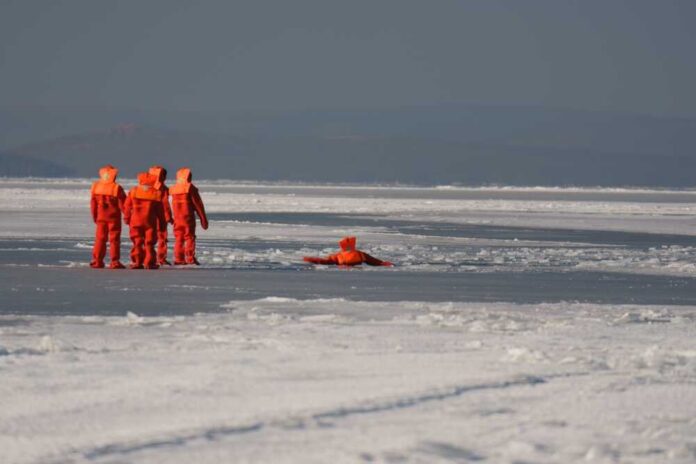
Daring Ice Stroll Ends in CHAOTIC Helicopter Save
Three young men ignored clear warnings, and New York’s taxpayers still had to bankroll a high-risk helicopter rescue when the ice gave way beneath them.
Story Snapshot
- Three 22-year-old men fell through thin ice on Jamaica Bay near Far Rockaway, Queens, after walking roughly a football-field distance from shore.
- NYPD Aviation hoisted the men out one-by-one as FDNY and NYPD scuba teams worked below; two rescuers also fell in but self-rescued.
- Witnesses said the men had been walking the ice repeatedly for days despite neighbors warning them to stop.
- Officials said the last victim had been in the water for nearly 40 minutes and stopped moving before being pulled out; all were reported conscious afterward.
Thin-Ice Thrill Turns Into a Race Against Time in Jamaica Bay
FDNY received a call around 4:15 p.m. Friday, Feb. 6, reporting multiple people in the water near 13-10 Norton Dr. in Far Rockaway. Witnesses said three men had walked out from near nearby homes onto Jamaica Bay’s ice and then plunged through when it gave way. Video released afterward shows a coordinated response with air and water units, reflecting how quickly a recreational mistake can become a life-or-death emergency.
NYPD Aviation used a helicopter hoist to lift the victims from the icy water one at a time. FDNY arrived first and managed to pull one man from the water before the responder also fell in; that member was able to get out. During the operation, an NYPD scuba team member also ended up in the water after a line detached and had to self-rescue. The overall sequence underscores how easily one bad decision can multiply into several dangerous situations.
Earlier this evening, members of our Scuba Team, Aviation Unit, Emergency Service Unit, and the @FDNY rescued three individuals from frozen waters in Far Rockaway.
No matter the conditions, our officers are always ready to answer the call. pic.twitter.com/kA42EU2srT
— NYPD NEWS (@NYPDnews) February 6, 2026
Witness Accounts Point to Preventable Risk-Taking
Local witnesses described panic as the men struggled in the freezing water, with one neighbor recalling screams for help and another trying to coach them to stay calm and minimize movement. Those warnings weren’t only during the rescue. Neighbors reportedly had been telling the men for days that walking the ice “is not a good idea,” yet the group kept going back for fun. That pattern matters because it suggests the emergency wasn’t unavoidable—it was invited.
Jamaica Bay’s winter ice can look solid while remaining dangerously thin due to tides, salinity, and shifting temperatures. That variability is why city waters are widely treated as unsafe for ice recreation and why rescues in urban areas tend to repeat each winter when people underestimate conditions. In this case, the men walked far enough from shore that a simple throw-rope rescue was not realistic, pushing the response toward specialized resources like scuba personnel and an aviation hoist.
What the Rescue Shows About Public Safety and Government Priorities
Officials said the third victim had been in the water for nearly 40 minutes and “stopped moving” before being lifted out, yet all three were ultimately reported conscious and alert and taken to hospitals—two to Mount Sinai South Nassau and one to St. John’s Episcopal. The outcome highlights the professionalism of NYPD and FDNY teams that still prioritize saving lives even when the danger stems from reckless choices. Their performance is exactly what taxpayers expect from essential services.
The incident also raises a practical question that cities rarely want to confront directly: repeated risky behavior can drive repeated high-cost responses. The research provided cites estimates from similar operations that a helicopter response can run into five figures, and cold-water rescues also consume manpower, equipment, and recovery time. New York leaders talk constantly about “public safety,” but real public safety includes consistent enforcement and clear deterrence—especially where predictable, repeatable hazards keep pulling first responders into the line of fire.
Bottom Line for Families: The Lesson Isn’t Political, It’s Personal
The strongest takeaway for families is straightforward: tidal ice is not a neighborhood pond, and “it held yesterday” means nothing when currents and temperature swings change by the hour. Witnesses pleading for the men to stay calm—because movement accelerates heat loss—reflect a basic truth about cold-water incidents: the margin for error is measured in minutes. This rescue ended with three survivors, but it also showed how quickly a “just for fun” walk can become a near-fatal ordeal.
For a country that’s trying to get back to competence and common sense, the story is a reminder that everyday responsibility still matters. First responders should never be treated like an unlimited safety net for repeat thrill-seeking. New York’s aviation and dive teams did their jobs with courage and skill, and the public can be grateful for that. The better outcome, though, is fewer calls like this—because the next time, luck may not hold.
Sources:
3 people rescued by NYPD helicopter after falling through ice
3 rescued after falling through ice in Queens
Video shows rescue from icy water in Far Rockaway