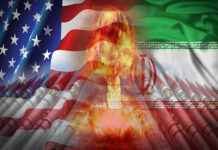
Iran’s regime is digging in—rejecting U.S. talks outright—while President Trump sends a carrier strike group to the Middle East and the protest death toll inside Iran keeps rising.
Story Snapshot
- Iranian Foreign Minister Abbas Araghchi said negotiations with the U.S. are not possible “in an atmosphere of threats,” citing U.S. military pressure.
- President Trump announced a major U.S. naval deployment, including the USS Abraham Lincoln carrier strike group, and warned Iran that “time is running out.”
- Iran denied recent contact with U.S. Middle East envoy Steve Witkoff, contradicting Trump’s public claim that Tehran wants to talk.
- Rights monitors reported thousands killed and tens of thousands arrested amid Iran’s crackdown on anti-government protests that began in late 2025.
Iran’s Hard “No” as Trump Signals Deterrence
Iranian Foreign Minister Abbas Araghchi told reporters on January 28, 2026 that there is no prospect of negotiations with the United States while Washington applies what he described as threats. Araghchi pointed directly to U.S. military posturing as the context for his position, and he said Tehran is not seeking talks. He also stated there has been no recent contact with U.S. Middle East envoy Steve Witkoff, keeping diplomacy frozen.
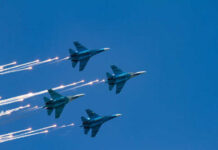
President Donald Trump’s posture has been public and forceful. On January 27, Trump announced a “massive armada” heading to the Middle East that includes the USS Abraham Lincoln carrier strike group, and he warned Iran that “time is running out.” Reporting also reflects Trump declining to rule out military action, including against sensitive targets, as Iran faces scrutiny over its violent internal crackdown. The carrier’s precise location was not publicly disclosed in the reporting.
BREAKING – Iran rejects negotiations with US in 'atmosphere of threats': foreign minister https://t.co/IcoUDU0qbD pic.twitter.com/6744WKZKLm
— Insider Paper (@TheInsiderPaper) January 28, 2026
Competing Narratives: “They Want to Talk” vs. “No Contact”
The U.S.-Iran messaging clash matters because it signals how close—or how far—each side is from de-escalation. Trump has publicly suggested Iran wants a deal, with one report citing his claim that Tehran called “numerous occasions.” Iranian officials, by contrast, have insisted there were no recent contacts with Witkoff and no Iranian request for negotiations. With no verified direct channel described in the research, the public sees posturing rather than a documented track toward talks.
That uncertainty increases the risk of miscalculation, especially when both sides are communicating through warnings. Iran has framed U.S. moves as destabilizing and has warned of a response that would induce “regret,” while U.S. actions emphasize deterrence and leverage. The research does not confirm any active mediation breakthrough, but it does show multiple regional governments urging restraint as the security environment tightens around the Gulf and key shipping lanes.
Protests and Crackdown: The Domestic Crisis Driving the Standoff
The diplomatic freeze is unfolding alongside a brutal internal Iranian crisis. Protests that began in late December 2025 reportedly peaked around January 8–9, with thousands killed in the crackdown. A rights group cited in the research reported 6,221 confirmed deaths and 42,324 arrests, while also indicating additional cases under investigation that could push totals higher. The same research describes tactics such as internet shutdowns, hospital raids, and forced confessions.
Iran’s government response has also included executions tied to alleged espionage. On January 28, Iran executed a man accused of Mossad-linked spying, and the research ties the broader environment to earlier conflict dynamics, including Israel’s June 2025 war with Iran and subsequent hangings on spying charges.
Regional Diplomacy and U.S. Interests: Avoiding War Without Rewarding Abuse
Regional leaders have moved quickly to push de-escalation. The research describes outreach involving Saudi Arabia, Qatar, and Egypt, with Iranian leadership communicating with key Arab counterparts as fears of wider conflict mount. For U.S. interests, the immediate stakes include protecting forces and shipping, preventing spillover, and limiting the chance that Tehran or proxy networks escalate across the region. Any surge in Gulf tensions can also rattle energy markets and ripple into prices at home.
Watch: https://youtu.be/VXUz1s9COro?si=Xu2B5GL4mIhCk_cm
Sources:
Iran rejects negotiations with US in ‘atmosphere of threats’ says FM
Iran rejects talks with US amid military threats
Iran rejects negotiations with US in atmosphere of threats: foreign minister
Iran denies recent contacts with US amid war fears
Trump urges Iran negotiate or face escalated military response
Iran rejects negotiations with US in atmosphere of threats: foreign minister