President Trump is demanding China deploy warships to help reopen the Strait of Hormuz—now completely blockaded by Iran—and he’s threatening to postpone a critical summit with Xi Jinping until Beijing steps up to protect its own oil supply.
Story Highlights
- Iran has shut down the Strait of Hormuz completely for the first time, blocking 20% of global oil flows and sending prices above $100 per barrel
- Trump is pressuring China to send warships since Beijing imports most of its Gulf oil through the Strait, arguing nations must share the burden of keeping it open
- China refuses to deploy forces, calling for de-escalation while denying Trump has formally linked the blockade crisis to their planned summit
- The standoff exposes Beijing’s refusal to protect its own economic interests while enjoying cheap Iranian oil during U.S.-led military operations
Trump’s Reasonable Demand for Burden-Sharing
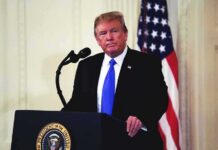
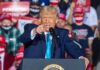
President Trump posted on Truth Social Saturday demanding China, the United Kingdom, France, Japan, South Korea, and other nations send warships to help reopen the Strait of Hormuz after Iran’s blockade halted all vessel traffic for the first time. Trump announced U.S. strikes on Iranian targets including Kharg Island oil terminal while making clear America should not bear sole responsibility for protecting global oil flows. In a Sunday Financial Times interview, Trump explicitly tied the upcoming Beijing summit to Chinese cooperation, arguing the world’s largest Gulf oil buyer must share the risk. This common-sense approach reflects Trump’s “America First” doctrine—if China profits from Gulf oil, Beijing should help secure the routes instead of free-riding on U.S. military protection.
China’s Hypocritical Refusal to Act
China’s Ministry of Foreign Affairs responded Monday by calling for de-escalation and emphasizing the summit’s importance without committing any forces to reopen the Strait. Beijing claims no formal U.S. postponement request exists and denies any linkage between the Hormuz crisis and summit scheduling, dismissing such reports as “misguided” despite Trump’s public statements. This exposes China’s hypocrisy—Beijing imports the majority of its Gulf oil through the Strait, creating massive economic vulnerability as prices surge past $100 per barrel, yet refuses to protect its own supply chain. China’s traditional non-interference policy conveniently allows it to benefit from American military efforts while avoiding any cost or risk, a pattern that undermines genuine burden-sharing among allies and trading partners.
Iran’s Asymmetric Warfare Strategy
Iran blockaded the Strait of Hormuz two weeks into ongoing U.S.-Israeli military operations against the regime, deploying drones, mines, and small boats to halt the 20% of global oil that flows through this 21-mile-wide chokepoint. The Iranian Foreign Minister mocked the United States for “begging” even China to help, claiming victory in forcing Washington to seek international assistance. U.S. forces demolished Kharg Island’s oil terminal and continue striking Iranian positions, yet Tehran retains asymmetric capabilities frustrating American efforts to guarantee safe passage. Unlike previous Hormuz tensions in 2019 involving tanker seizures, this represents a full blockade during active hostilities, creating unprecedented global supply disruptions that hit China’s economy hardest while Beijing sits on the sidelines watching American forces do the heavy lifting.
Economic and Diplomatic Consequences
Oil prices spiking above $100 per barrel hurt global markets, but China faces the most severe economic pressure given its dependence on Gulf imports now blocked by Iran. Trump’s leverage fuses the Middle East crisis with U.S.-China diplomacy, potentially forcing Beijing into its first Middle East military role or risking a summit delay that would strain relations. Shipping firms, energy markets, and Gulf states all suffer from the uncertainty, while naval insurance costs surge. If China refuses to contribute warships, it weakens the credibility of any U.S.-led coalition and demonstrates Beijing prioritizes ideology over its own economic security. The situation tests whether China will abandon its free-rider status or continue expecting American taxpayers to subsidize protection of Chinese commercial interests worldwide.
Trump’s demand reflects the reality that nations benefiting from open sea lanes must share responsibility for keeping them secure. China’s refusal reveals a regime willing to let Americans risk their lives protecting oil shipments destined for Chinese ports while Beijing maintains cozy relations with the Iranian regime causing the crisis. This underscores why Trump’s insistence on reciprocal burden-sharing resonates with conservatives tired of globalist arrangements where America provides security while other nations profit without contributing.
Sources:
China under pressure as Trump ties high-stakes summit to Strait of Hormuz crisis
Fox Business Video on Trump’s China Pressure
Global Times: Strait of Hormuz Crisis Analysis