
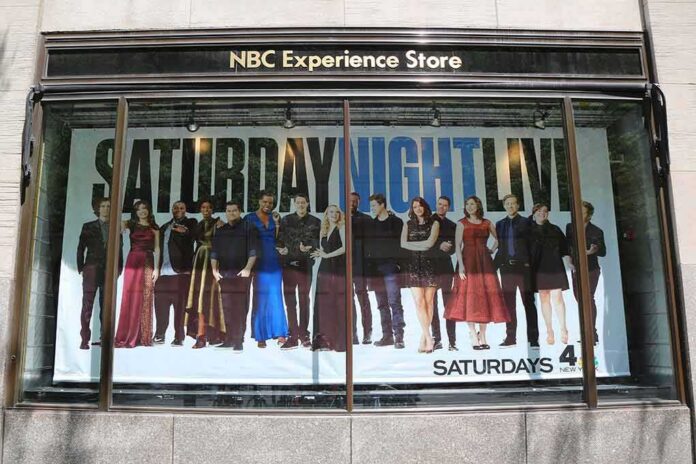
Saturday Night Live turned a post-election comedy sketch into a victory lap for a Democrat who just flipped a Texas Senate seat.
Story Highlights
- Texas senator-elect James Talarico made a surprise cameo in the first post-election Saturday Night Live cold open.
- Talarico joked about constant $5 fundraising texts and called for working together “to make life better”.
- The sketch centered on a Donald Trump impersonation, drawing cheers when Talarico appeared.
- Reports tied the cameo to Talarico’s win days earlier, which flipped a Texas Senate seat for Democrats.
SNL Cold Open Puts a Spotlight on Texas Democrat
Entertainment outlets reported that Texas senator-elect James Talarico appeared as himself at the end of Saturday Night Live’s first post-election cold open. Reports said the cameo came days after Talarico won his race and that the segment leaned on a Donald Trump impersonation by James Austin Johnson. Coverage described a clear staging: a familiar Trump sketch, then a surprise entrance by the Democrat who just won in Texas.
Variety reported that Talarico won his Texas Senate race with 55.09 percent of the vote and that the SNL bit linked directly to that result. The show used the moment to wrap politics into comedy. That approach fits SNL’s pattern: turn a real election into a stage beat, then hand the punchline to a new political name. The audience got the message. The timing and placement pushed his win to a national late-night crowd.
What Talarico Said On-Air
Coverage quoted Talarico greeting viewers as “the guy who’s been texting you every day asking for $5,” a nod to nonstop campaign asks. Reports said he pivoted to a unity line: if leaders work together, they can improve life for “everyday Americans,” and that people “want something new” and “something different”. The lines worked as self-aware satire and as branding for a newly elected Democrat. The blend of joke and message made the bit a neat campaign-style button.
Reports also noted a jab at SNL’s own habits. Talarico asked how many Trump-centered cold opens the show would keep doing, and the Trump character answered, “Infinity”. That exchange landed two points at once. It mocked the show’s repetition and kept Trump at the center of the joke. For viewers who are tired of the same sketch formula, the line stood out as a wink at the audience and the writers.
Audience Reaction and Why It Matters
Mediaite said the New York crowd erupted when Talarico appeared, estimating about 14 seconds of cheers. Other outlets described loud applause and clear energy in the room. That response shows how late-night stages can quickly boost a political figure’s profile. It also shows the room’s lean. A candidate who flipped a seat for Democrats drew star treatment in a venue that often frames political news through satire and celebrity moments.
Research on late-night politics finds that such appearances can reach people who do not follow daily news. Some studies suggest viewers may better recall positions after these segments, not just the personality. That is why these cameos keep coming. They mix laughs with brand-building. For a senator-elect, that is a low-cost way to lock in attention, even if the format avoids policy depth and leans into set pieces and crowd surges.
Equal Time Questions and the Line Between Comedy and Campaigning
Federal rules require “equal opportunities” for opposing candidates on broadcast when a candidate gets airtime, but there are long-standing exemptions for certain program types. The Federal Communications Commission has explained how shows are evaluated, and news or interview formats often receive relief. The agency has also reminded broadcasters that candidate appearances can trigger equal time obligations, depending on control and program type.
In the latest "SNL" cold open, President Donald Trump said "you're welcome" for Democrats' big midterm wins as James Talarico made a surprise cameo. https://t.co/TYkdYQxLCg
— USA TODAY (@USATODAY) November 8, 2026
Past guidance noted that equal time applies when the appearance is controlled, sponsored, or approved by the candidate, but not to every entertainment instance automatically. A Congressional Research Service brief outlines the Communications Act rule and how stations provide comparable access, not identical segments. The SNL cameo sits in that gray zone where comedy, message, and media rules meet, showing again how campaigns benefit from friendly formats without formal ads or policy debate.
Sources:
mediaite.com, deadline.com, variety.com, hollywoodreporter.com