
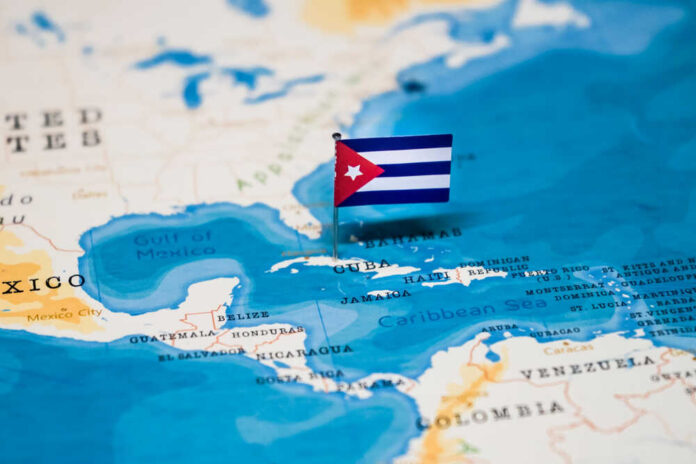
Cuba’s fuel collapse is forcing Havana into darkness, and the regime’s survival now depends on whether it can keep the lights on long enough to hold the country together.
Quick Take
- Cuban officials say the country has no diesel and no fuel oil left [1].
- Reports describe blackouts lasting as long as 20 to 22 hours a day in Havana [2][4].
- The government blames United States pressure and fuel-shipment risk, while critics point to years of economic decay [2][4][5].
- The crisis has already spilled into street protests and growing public anger [2][4].
Fuel Reserves Hit Zero
Cuban Energy Minister Vicente de la O Levy said the island had exhausted its diesel and fuel oil supplies, leaving the electrical grid in a critical state [1][3]. Reporters said the country still had limited gas and had to rely on domestic crude, natural gas, and renewable power to keep essential services running [1][4]. That is not a normal shortage. It is an admission that the system has reached a breaking point.
The immediate effect is obvious in the capital. News reports from Havana said some neighborhoods were going without electricity for 20 to 22 hours a day, with traffic lights dark, gas stations empty, and residents frustrated enough to block roads and bang pots from apartment windows [2][4]. Officials have tried to direct scarce electricity toward hospitals and protected facilities, but that only underscores how little margin remains in the grid.
Washington Pressure And Havana’s Blame Game
Cuban officials blame the United States for tightening the screws on fuel imports, and the reporting supports at least part of that claim [2][4]. The sources say U.S. pressure made shipments from countries such as Mexico and Venezuela harder to sustain, while shippers and financiers faced the risk of penalties. That matters because modern fuel trade depends on insurers, banks, and ports that prefer zero controversy over a political fight with Washington.
Still, the record also shows a deeper problem inside Cuba. The reports describe a country with aging infrastructure, weak reserves, and a power system that was already fragile before the latest fuel shock [2][5]. Britain’s Encyclopaedia Britannica notes that Cuba depends heavily on imported oil, especially from Venezuela and Mexico [5]. In other words, a government that cannot reliably supply energy has built its economy on a system with very little resilience.
Can The Regime Absorb The Shock?
The real question is not whether Cuba is suffering. It clearly is. The question is whether the regime can absorb the political damage before public anger spreads further. The reporting already shows demonstrations in Havana, where residents have protested blackouts and demanded power restoration [2][4]. When food, medicine, transportation, and electricity all come under stress at once, the government loses one of the few tools authoritarian systems rely on most: control through basic provision.
Cuba isn’t just in an economic crisis—it’s being systematically cut off from fuel and electricity. The U.S. has turned sanctions into a targeted energy blockade, removing Venezuelan oil, chilling third‑country suppliers, and weaponizing blackouts and inflation. The result is…
— J. C. Henry (@henry_jibunor) May 16, 2026
That does not mean collapse is automatic. Communist governments can survive prolonged hardship by rationing, policing dissent, and shifting blame to foreign enemies. But this crisis exposes how thin that strategy has become in Cuba. If the island truly has no diesel and no fuel oil left, and if the grid keeps failing for most of the day, then the regime is not facing a routine economic problem. It is facing a legitimacy test in real time.
Sources:
[1] YouTube – Cuba Faces Deepening Energy Crisis as Fuel Runs Out …
[2] Web – Cuba sinks into blackout crisis as fuel runs dry under US pressure
[3] YouTube – Cuba Runs Out Of Diesel & Fuel Oil Amid Worsening Energy Crisis
[4] YouTube – Cuba TURNS DARK After Trump BLOCKADE? Fuel Crisis Sparks …
[5] Web – Why are there fuel shortages in Cuba? – Britannica