A 67-million-year-old dinosaur bone was just unearthed—of all places—right under the Denver Museum of Nature & Science’s own parking lot, reminding us that sometimes, the rarest treasures are buried beneath the feet of those claiming to be “experts” on everything, yet seem to miss what’s right under their noses.
At a Glance
- Denver Museum of Nature & Science found a 67-million-year-old dinosaur bone beneath its parking lot during a geothermal drilling project.
- The fossil, a partial vertebra, was recovered from 763 feet below ground—making it one of the deepest and rarest urban dinosaur finds worldwide.
- This discovery occurred while the museum was attempting to “go green” by testing geothermal heating, not while looking for fossils.
- The find has drawn crowds, boosted civic pride, and sparked fresh debate about what really matters in public spending and priorities.
A “Green” Drilling Project Unleashes Prehistoric Irony
Picture this: the Denver Museum of Nature & Science, in their ongoing quest to signal their “commitment” to sustainability, launches a geothermal drilling project under their own parking lot. The goal? To ditch reliable natural gas and chase the latest “clean energy” trend. But as they drill down—blissfully unaware of what’s about to happen—they accidentally hit pay dirt: a 67-million-year-old dinosaur bone. That’s right, while trying to save the planet (and maybe pat themselves on the back for it), they stumble upon a piece of ancient history that, by all statistical odds, shouldn’t even be there. Only two similar finds have ever been made worldwide. The irony is almost too rich: in the process of drilling for “clean energy,” they dig up a fossil from the last era when giant lizards ruled the Earth.
The Denver Museum of Nature and Science discovered fossilized dinosaur bones in its parking lot in January while drilling test holes for a geothermal energy project, it announced.
Researchers determined they’d unearthed several pieces of vertebrae from a plant-eating dinosaur —… pic.twitter.com/4DjxO1engX
— The Washington Post (@washingtonpost) July 12, 2025
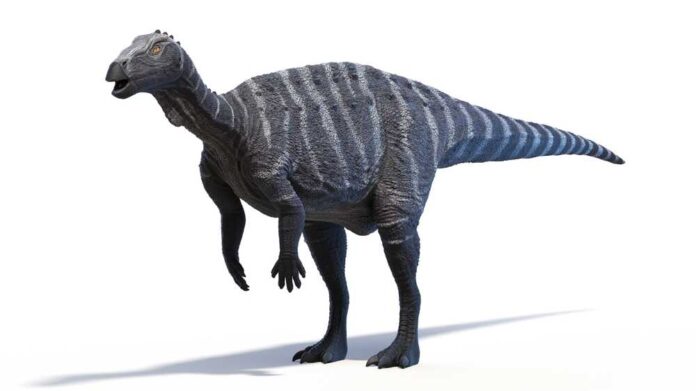
The find itself—a partial vertebra from a small, plant-eating dinosaur, possibly akin to Thescelosaurus or Edmontosaurus—was trapped in rock 763 feet underground. The museum’s team, led by Dr. James Hagadorn and Dr. Patrick O’Connor, described the discovery as “like winning the lottery and getting struck by lightning on the same day.” For the record, that’s about as likely as a government budget actually coming in under estimate. The fossil is now on display, drawing crowds and giving the museum a much-needed win, just as their “green” initiative was starting to look like another taxpayer-funded snooze-fest.
Watch a report: Drilling project in Museum of Nature & Science parking lot leads to ‘exceptionally rare’ fossil find
https://www.youtube.com/watch?v=vsUMzMXNlMY
The Deepest Dinosaur in Denver—and Why It Matters
This is no ordinary fossil. Not only is it the oldest and deepest dinosaur bone ever found within Denver city limits, but it’s also one of the rarest of its kind anywhere in the world. Most dinosaur bones are found at or near the surface—hardly ever through deep core drilling for infrastructure projects. But here, in the midst of yet another expensive urban upgrade, nature tossed the museum a bone—literally. The fossil’s age has been pegged at 67.5 million years, dating it back to the waning days of the Cretaceous, when the earth was hotter, politics were presumably simpler, and no one was worrying about “decarbonizing” their heating systems.
The local scientific community is predictably giddy, and the museum’s PR team is milking this for all it’s worth. But let’s not get swept up in the hype just yet. Peer reviewers—yes, those still exist—have admitted that while the find is “super rare,” it’s not necessarily a game-changer for paleontology. As Thomas Williamson of the New Mexico Museum of Natural History & Science put it, the context and depth make it noteworthy, but it doesn’t rewrite the scientific books. Still, for Denver, this is an unmistakable badge of civic pride—and a reminder that real value isn’t always found in the latest government-funded initiative.
Who Benefits—and Who Gets Left in the Dust?
Museum officials are quick to point out the “educational value” and “public engagement” the fossil brings. School groups are lining up, media coverage is spiking, and the museum’s “Discovering Teen Rex” exhibition suddenly has a star attraction. There’s even talk that this could inspire similar deep-drilling projects in other cities. All of which sounds great until you remember the price tag: how much taxpayer money gets funneled into “green” infrastructure projects, only to result in accidental discoveries that have nothing to do with their original intent? As always, the real winners are those who can spin a story—and the museum’s PR machine deserves an award for this one.