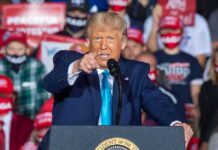

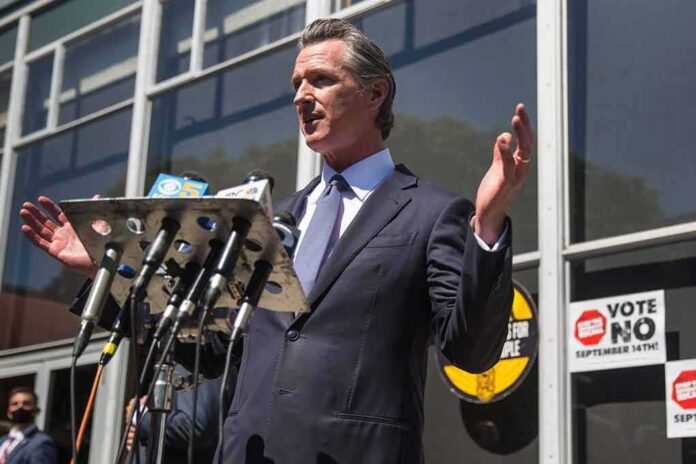
After the Supreme Court let President Trump’s election-integrity order move forward, Governor Gavin Newsom moved to block it in court, aiming to stop proof-of-citizenship and mail-ballot rules before November.
Story Snapshot
- California announced a new lawsuit after the Supreme Court allowed the order to proceed procedurally.
- Earlier rulings from a federal judge in Massachusetts blocked key parts of the order as unconstitutional.
- The dispute centers on proof-of-citizenship for voter registration and mail ballot deadlines.
- A Maryland-led coalition says an injunction protects the 2026 election in plaintiff states.
What Triggered California’s New Push
Governor Gavin Newsom said California would sue after the Supreme Court allowed the Trump administration to continue pursuing elements of its election order on mail-in ballots. The procedural action did not resolve the merits. It kept the fight alive and raised the stakes for fall elections. Newsom framed the lawsuit as a defense of state authority over election administration and voter access under federal law and the Constitution.
The White House has said the order targets noncitizen voting, sets enforcement priorities, and directs agencies to share data to verify eligibility. Official fact sheets say the Election Assistance Commission would require government proof of citizenship on federal registration forms. They also say the Attorney General may act against states that count ballots received after Election Day, where federal law sets deadlines. The administration argues each step relies on existing statutes and lawful tools.
What Federal Courts Have Already Said
A federal judge in Massachusetts ruled that core parts of the order were unconstitutional and beyond presidential authority. The court said the Constitution gives states, and Congress, not the President, power to set election rules. The judge also found a conflict between a documentary proof-of-citizenship mandate and the National Voter Registration Act, and flagged mail-ballot provisions as clashing with federal protections for overseas and military voters. Those findings cut to the heart of the legal clash.
Massachusetts and allied states have touted these rulings as wins for federalism. State attorneys general said the decisions block the order’s attempted federal control and protect upcoming federal elections in plaintiff states. A June update from Maryland’s attorney general said an injunction remains in place for the November 3, 2026 election and earlier federal contests in the coalition states. That means different legal realities may exist across the country as appeals continue.
The Fight Over Proof of Citizenship and Mail Ballots
California’s filings target the order’s requirement for documentary proof of United States citizenship on federal voter registration forms. Plaintiffs argue Congress designed a national registration form that states must “accept and use,” without extra documents layered on top. The Massachusetts court agreed that this mandate is inconsistent with federal law. On mail ballots, the judge found the order conflicts with rules that protect service members and citizens overseas from missing their vote.
The administration frames these steps as common sense checks to stop illegal voting and to set a clear Election Day deadline. It says agencies like the Department of Homeland Security and the Social Security Administration should share data so states can confirm eligibility. Supporters argue that citizenship is already a requirement, so verifying it simply enforces the law. Opponents answer that only Congress, not the President, can change federal registration rules or ballot timelines.
Why Conservatives Should Care
Election integrity is the backbone of self-government. President Trump’s team says it is using existing law to protect the vote and block noncitizen ballots. Blue-state leaders like Newsom are racing to stop those measures in court, even after the Supreme Court’s procedural green light. Conservatives want clean rolls, secure mail voting, and rules that are the same for everyone. The courtroom fight now decides how far a President can go to help states enforce those standards.
What Comes Next and Key Limits
Appeals will test how much of the order can be used for 2026 and beyond. The Supreme Court’s step was procedural, not a final ruling on legality. District-court injunctions limit enforcement in some states, but not all. The record is strongest on two fronts: documentary proof-of-citizenship on the federal form, and mail-ballot conflicts with military and overseas protections. Other enforcement tools, like funding conditions, remain less clear in published rulings so far.
Bottom Line for Voters
Here is the tight summary. The White House says it is enforcing laws against illegal voting and ensuring only citizens vote. California and allied states say the President cannot rewrite election procedures that Congress and states control. One federal court has already blocked core parts as unconstitutional, while the Supreme Court has allowed the administration to keep pressing its case. The outcome will shape what checks and timelines apply when you register and cast a ballot this year.
Sources:
redstate.com, gov.ca.gov, law.cornell.edu, caselaw.findlaw.com, thepostmillennial.com, wlos.com, townhall.com, whitehouse.gov, trumpwhitehouse.archives.gov