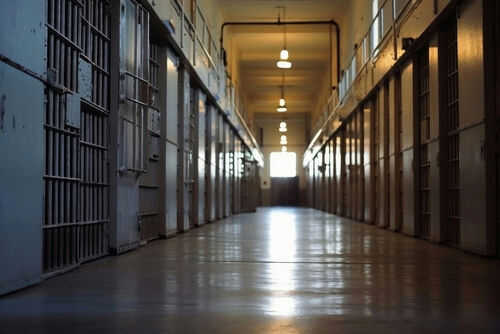
California quietly shuttered five prisons, but taxpayers are still on the hook for a corrections budget that has swelled into the tens of billions with no honest accounting for where the money went.
Story Snapshot
- California has closed multiple state prisons, yet overall corrections spending remains enormous and in some areas higher than before.
- Officials tout $150–$200 million in savings per closure, but analysts say those savings barely dent soaring staffing and healthcare costs.
- The prison system now holds tens of thousands fewer inmates, while per‑inmate spending has climbed to record levels.
- Advocates push for even more closures, treating prisons as budget pawns instead of addressing mismanagement and public safety.
Closures, Empty Beds, and a Still‑Bloated System
California politicians spent years bragging about closing prisons, yet the state’s corrections machine still devours a massive share of the budget. CalMatters reports that by the time Governor Gavin Newsom leaves office, California will have five fewer state prisons than when he took power, with the California Rehabilitation Center in Norco scheduled to close as the fifth facility by around October.[1][3] The Legislative Analyst’s Office found prisons have space for about 98,000 people, roughly 8,000 more beds than the state actually needs.[1]
Those numbers mean California taxpayers are helping maintain thousands of empty beds while the system still demands roughly $18 billion in prison spending in a single year, essentially flat at an extraordinarily high level.[4] The California Department of Corrections and Rehabilitation (CDCR) itself admits that as the prison population has decreased, it has moved forward with closing institutions and deactivating facilities, framing the process as “responsible” resource management.[4] Yet even after multiple closures, lawmakers and watchdogs describe corrections as a major driver of California’s broader budget problem.
Projected Savings Versus Real‑World Spending
CDCR and the Newsom administration repeatedly lean on projected savings to sell closures. Official material tied to the state budget says closing the California Rehabilitation Center is expected to yield about $150 million in annual General Fund savings.[4] Independent budget advocates estimate that closing five prisons could free up around $1 billion in ongoing yearly savings, enough to fund up to thirteen safety‑net and health programs that otherwise face cuts. On paper, that sounds like real relief for strapped taxpayers.
Reality looks different once those savings meet Sacramento’s spending habits. CalMatters notes that California is incarcerating about 70,000 fewer people than in 2011, enabling the closures, but corrections spending remains massive and stubborn.[1] Governing reports that the cost of imprisoning one person in California has increased by more than 90 percent over the last decade, hitting record levels per inmate. Another CalMatters analysis underscores that the savings from closures—about $200 million per facility—are not nearly enough to offset pay and benefits boosts that keep driving costs up. In other words, politicians take a victory lap for closures while the underlying spending culture barely changes.
Why Costs Keep Climbing Even as Population Falls
State analysts and reporters point to a mix of court mandates, staffing, and healthcare as key cost drivers. After a United States Supreme Court ruling against overcrowding, California had to reduce headcounts and could no longer pack inmates into aging facilities.[5] To comply, the state built or activated new capacity, contracted additional beds, and expanded medical and mental health services. The Legislative Analyst’s Office explains that CDCR’s operational budget, proposed at around $14.1 billion for 2026–27, is heavily shaped by staffing and healthcare obligations.
Those choices come with a steep price tag. Governing highlights that per‑inmate costs have soared, while closure savings are insufficient to offset higher wages, benefits, and pension costs for correctional staff. CDCR acknowledges it is still seeking extra General Fund money to cover projected overspending in the prison medical care budget, including a $40 million one‑time augmentation in 2024–25. Critics on both fiscal and public‑safety grounds see a system where the inmate population shrinks, but a powerful bureaucracy protects its payroll and programs—exactly the pattern that infuriates taxpayers who tightened their own belts during California’s economic swings.
Advocacy Campaigns and the Push for Even More Closures
While many conservatives worry about soft‑on‑crime policies, a well‑organized progressive network sees the current moment as an opportunity to go much further. Californians United for a Responsible Budget, a coalition of more than one hundred groups, openly campaigns to select ten prisons for closure by 2025 and insists that “the possibility of more prison closures has long been supported by all available data.”[8] Their “Close CA Prisons” campaign argues that CDCR’s budget has grown by over $5 billion in about a dozen years and points to roughly 15,000 empty beds as proof that downsizing is safe.[8]
Instead of focusing on how closing prisons can save them money, California legislators should be asking why it is that their prison system is so pricey to begin with. https://t.co/M4KxffgkKz
— Sarah Anderson (@smayranderson) May 21, 2026
Legislative analysts themselves feed this narrative by documenting excess capacity and stating that closing additional prisons would allow for “significant savings.”[1][5] But little in the public debate forces Sacramento to prove that previous closures actually produced net savings after accounting for ongoing maintenance, “warm shutdown” costs, or expanded rehabilitation programs. With California already struggling with crime, fentanyl, homelessness, and out‑migration, conservatives see a familiar pattern: progressive leaders shrink concrete law‑and‑order capacity, boast about theoretical savings, and then quietly pour the money back into government payrolls and social bureaucracies instead of relief for working families.
Sources:
[1] Web – Newsom closed 5 CA prisons. Why lawmakers might shut more
[3] Web – California names 5th prison to close in Newsom administration
[4] Web – Reduction/Closure Information – Prison Closures – CDCR
[5] Web – California may close another prison to cut costs – Sacramento Bee
[8] Web – Close CA Prisons – Californians United for a Responsible Budget